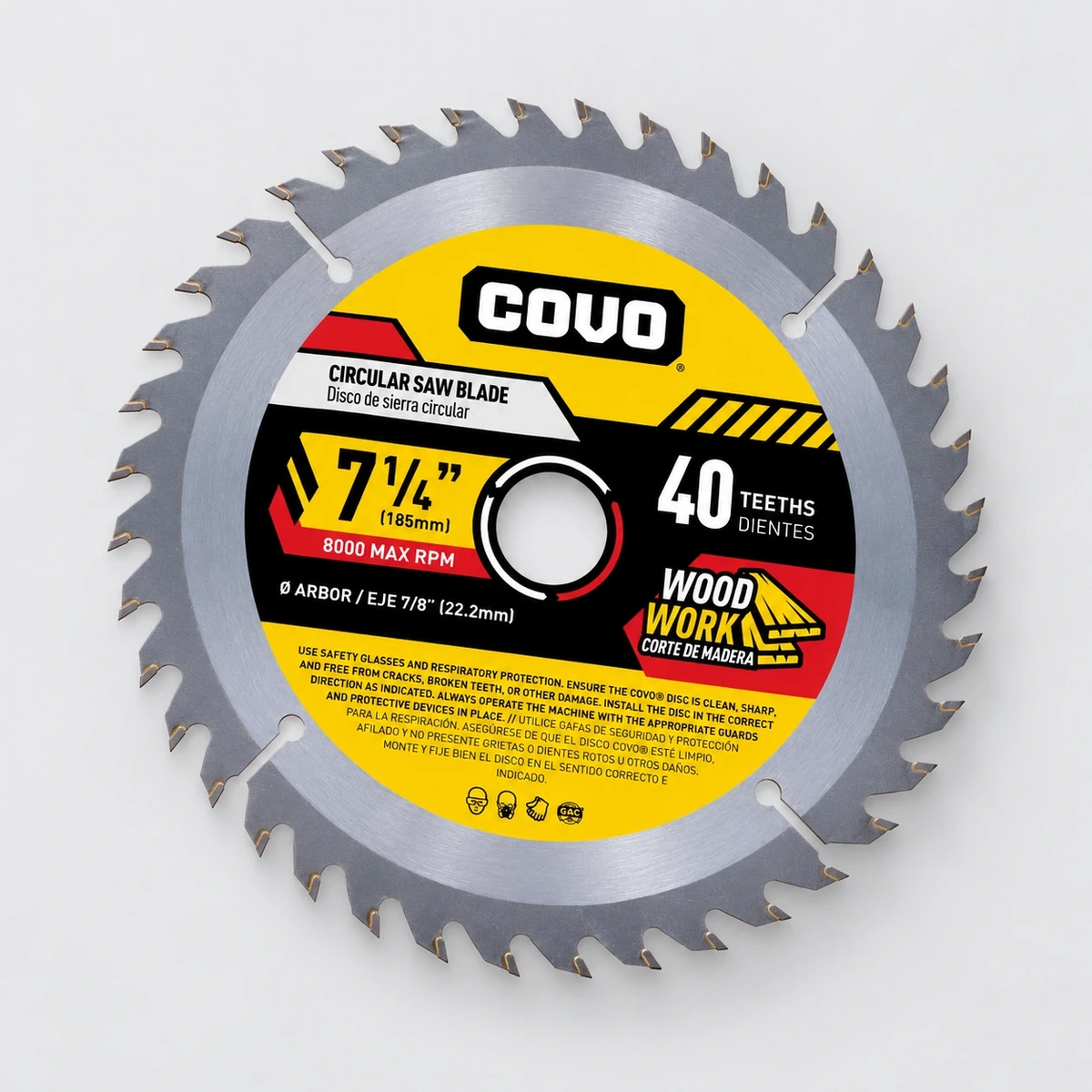
Product Specifications
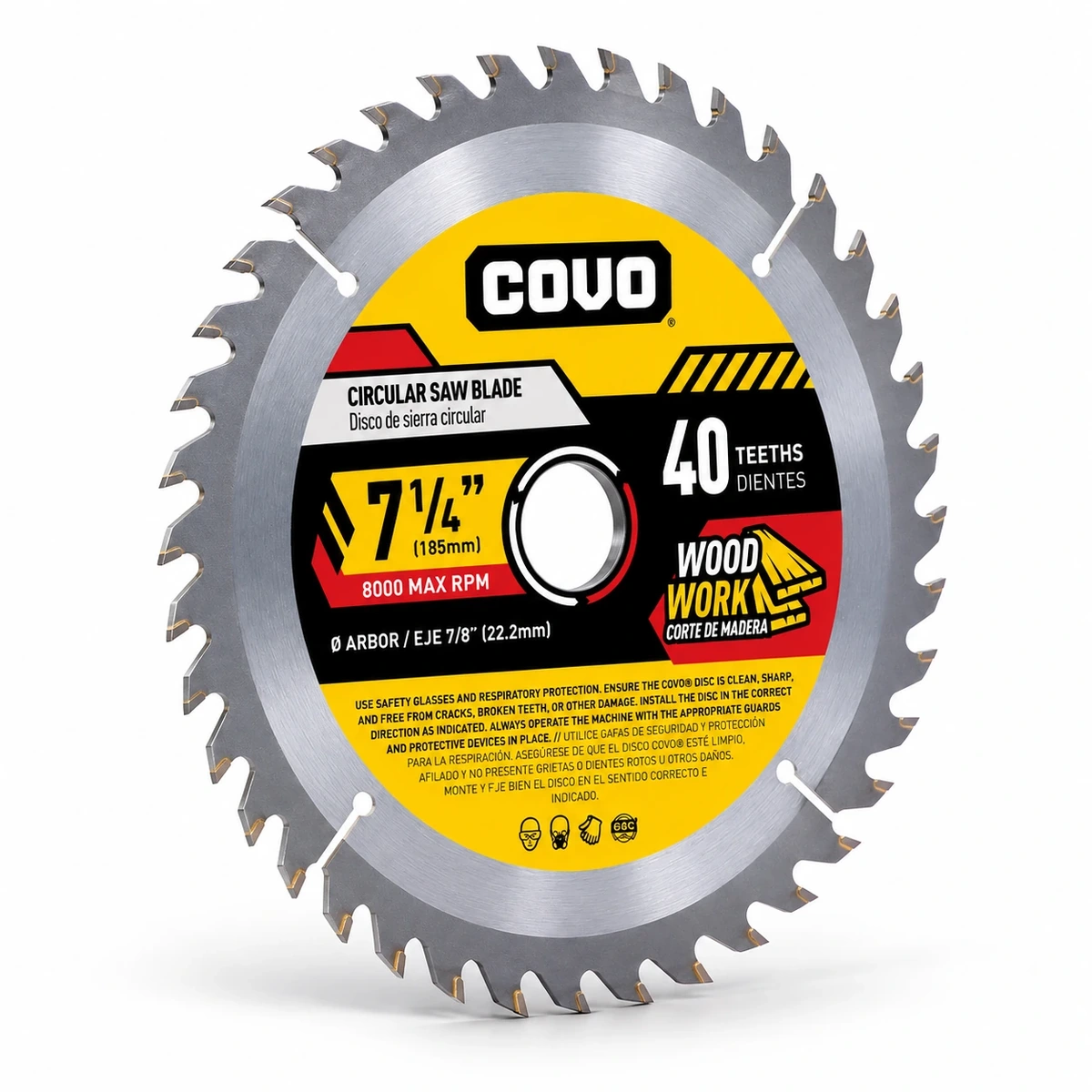
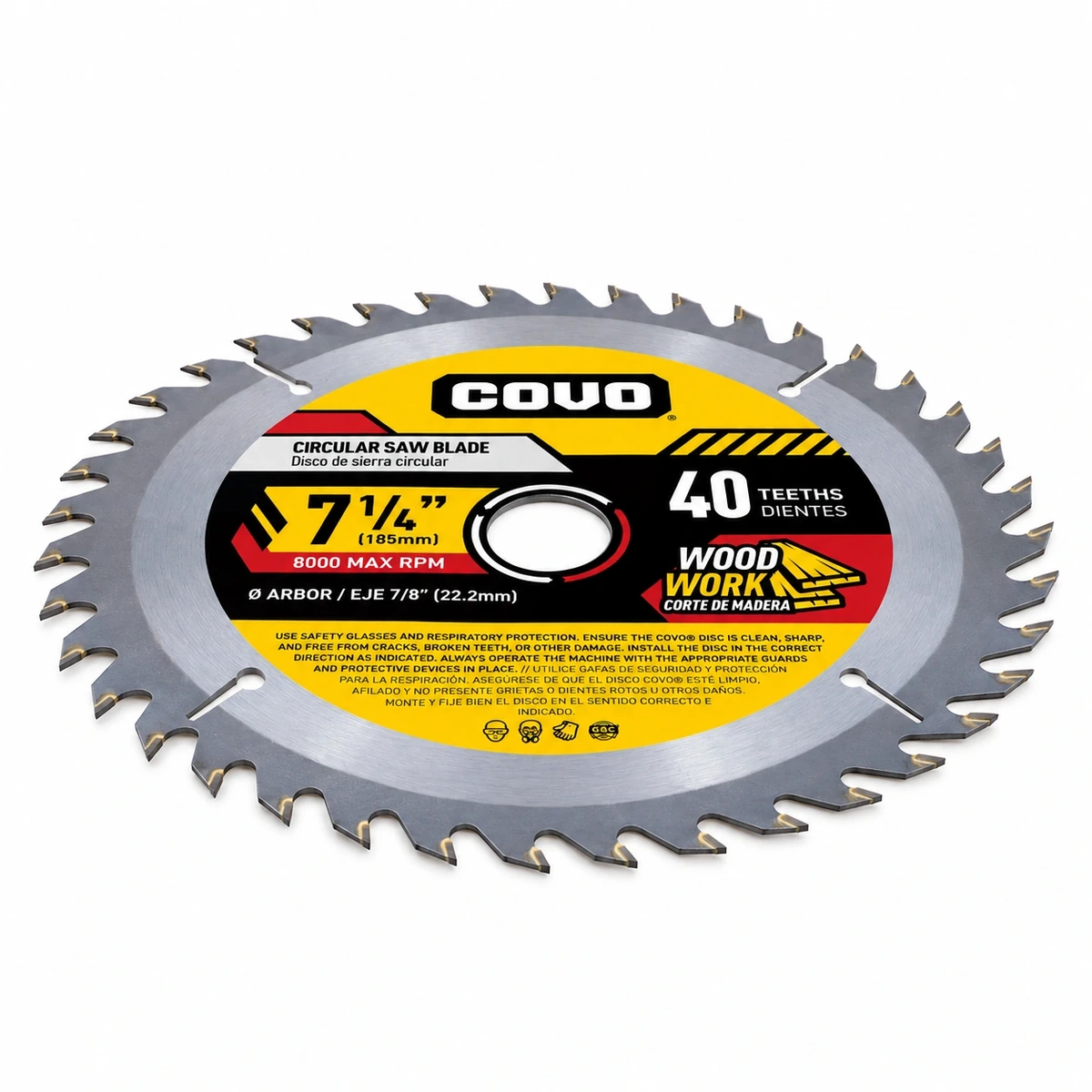
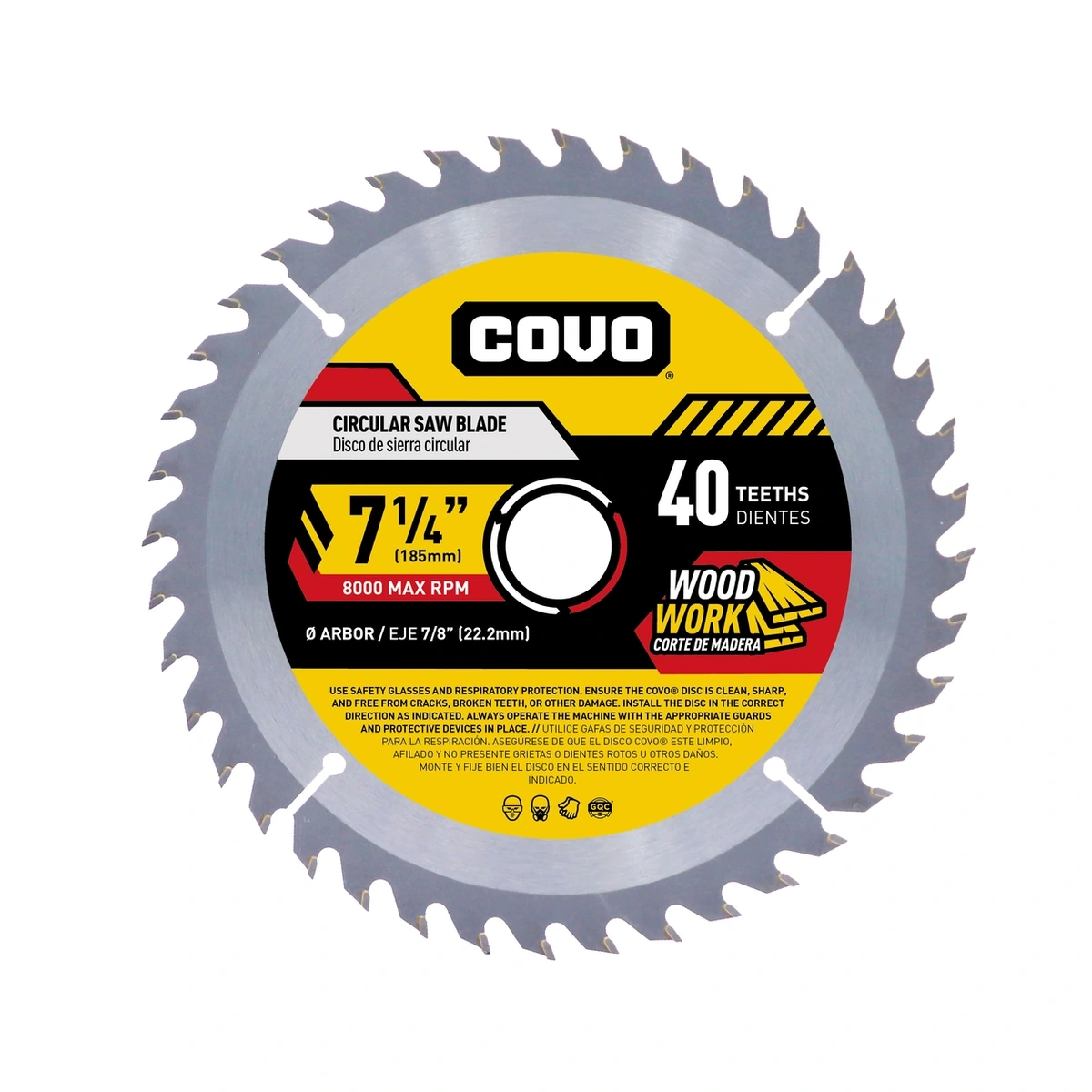
Specification | Details |
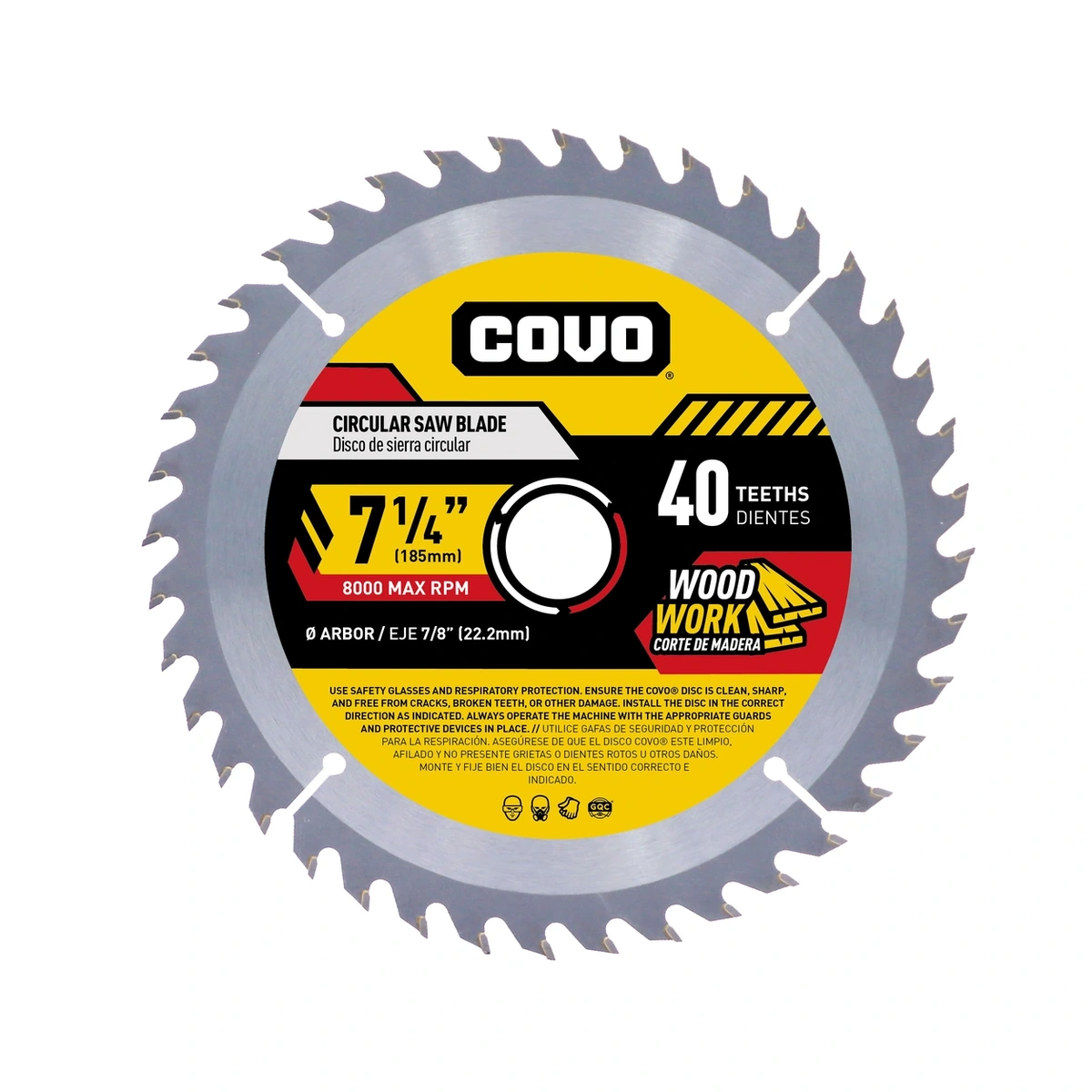
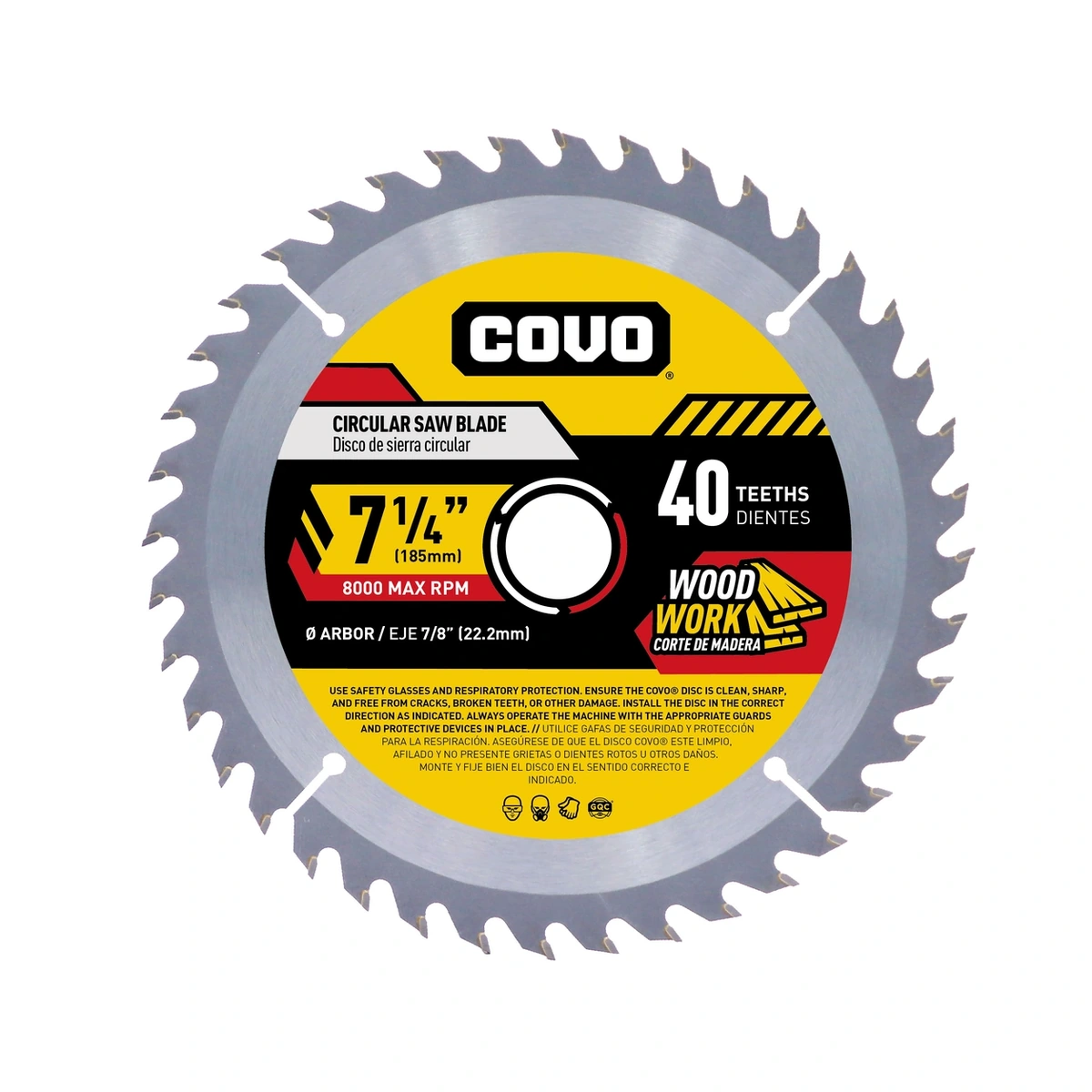
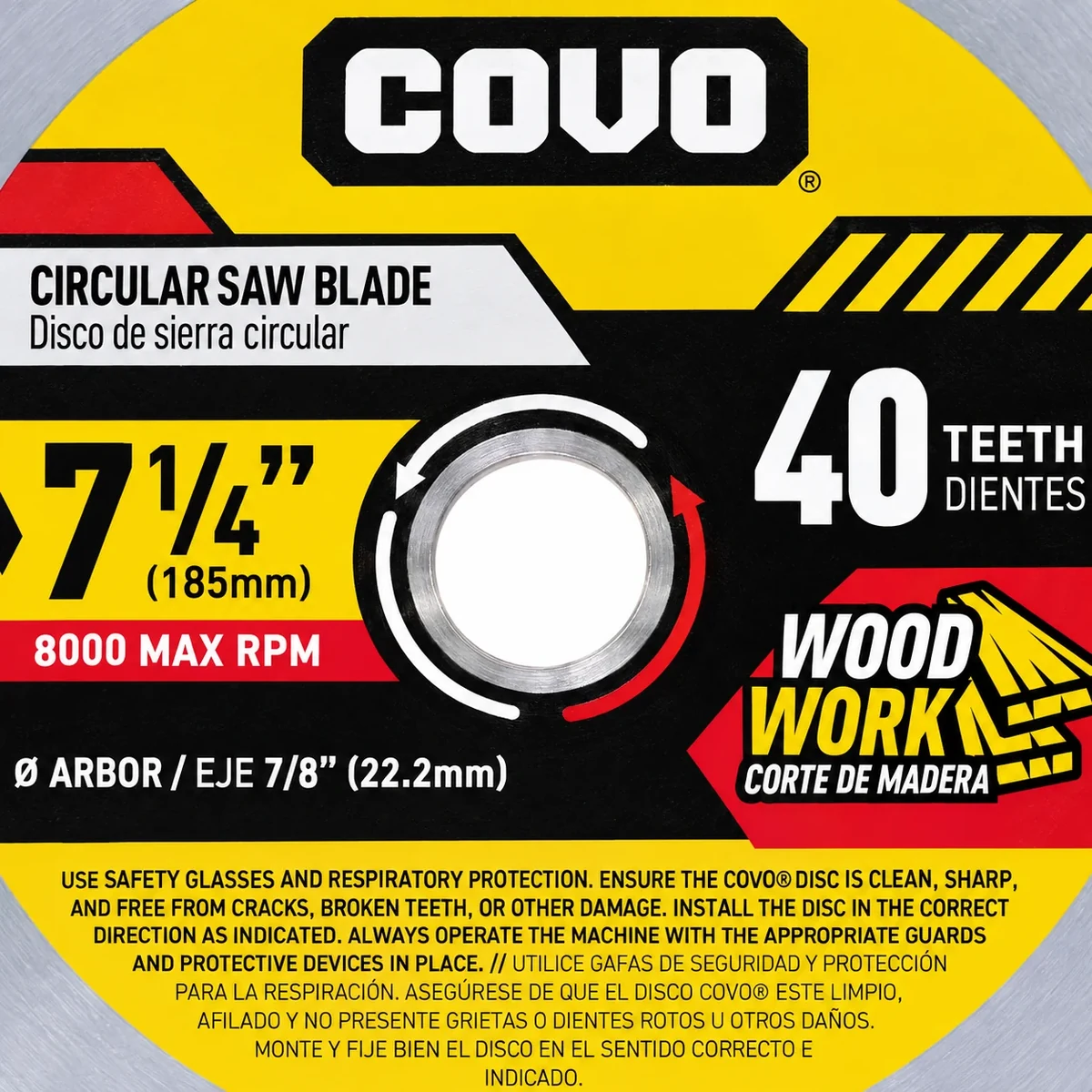
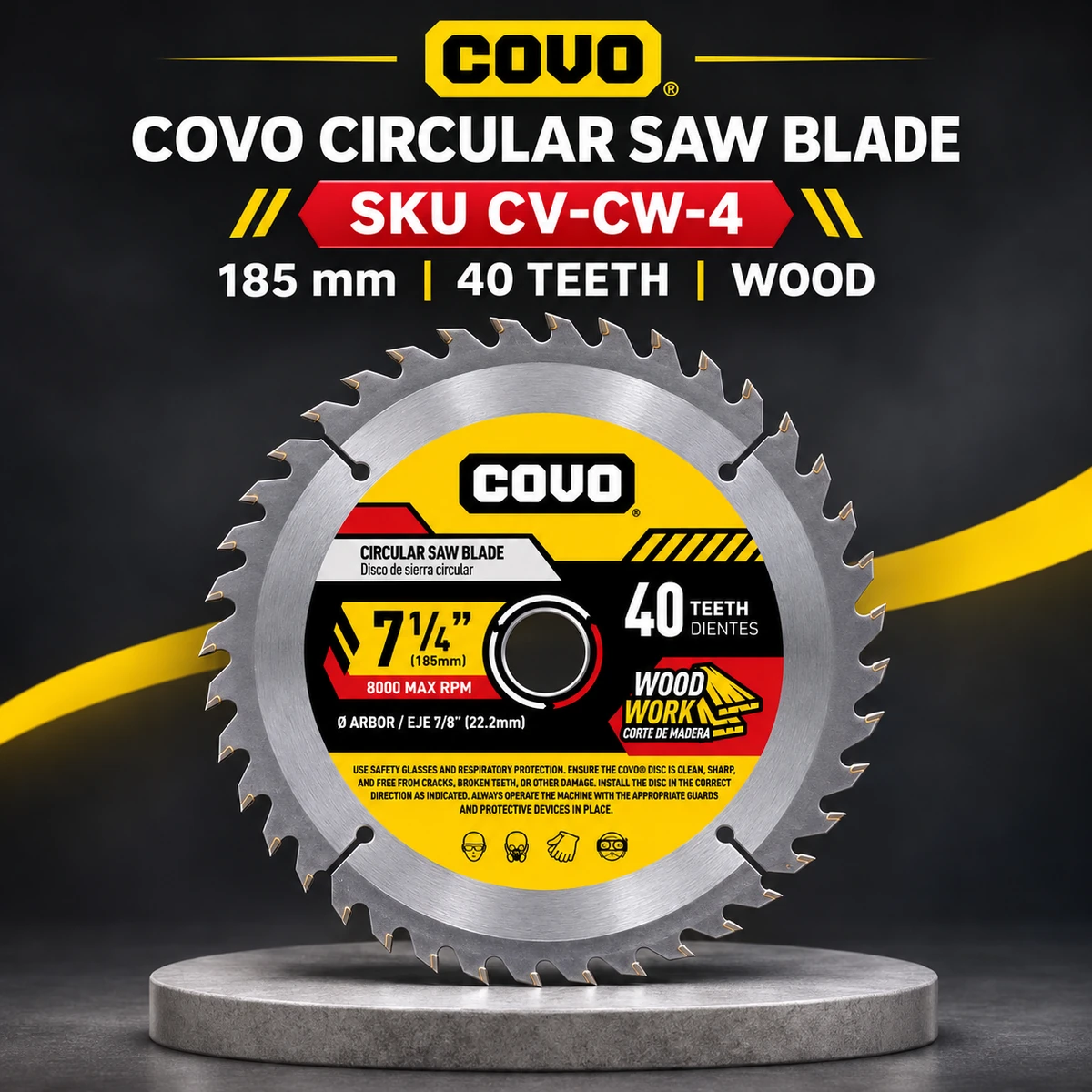
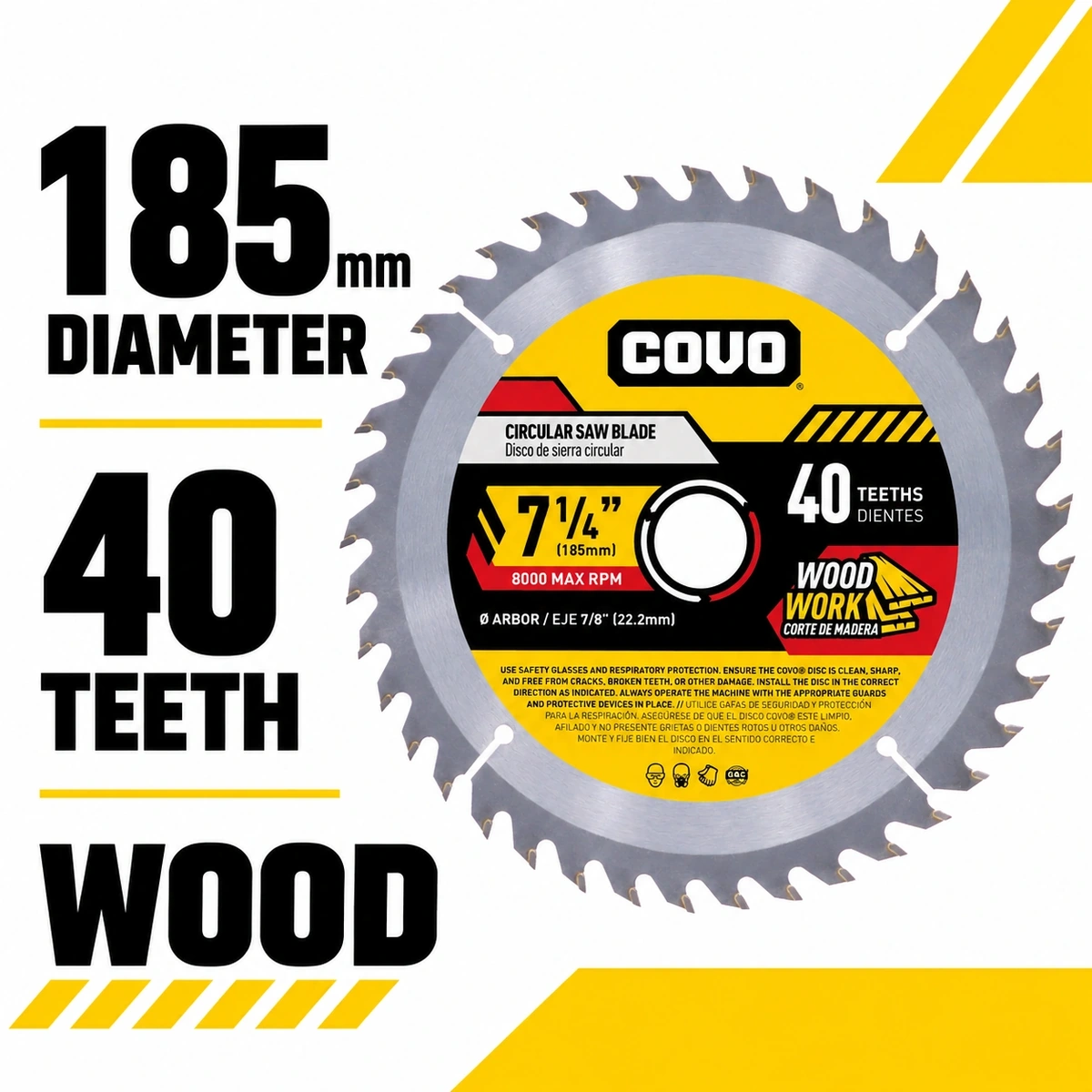
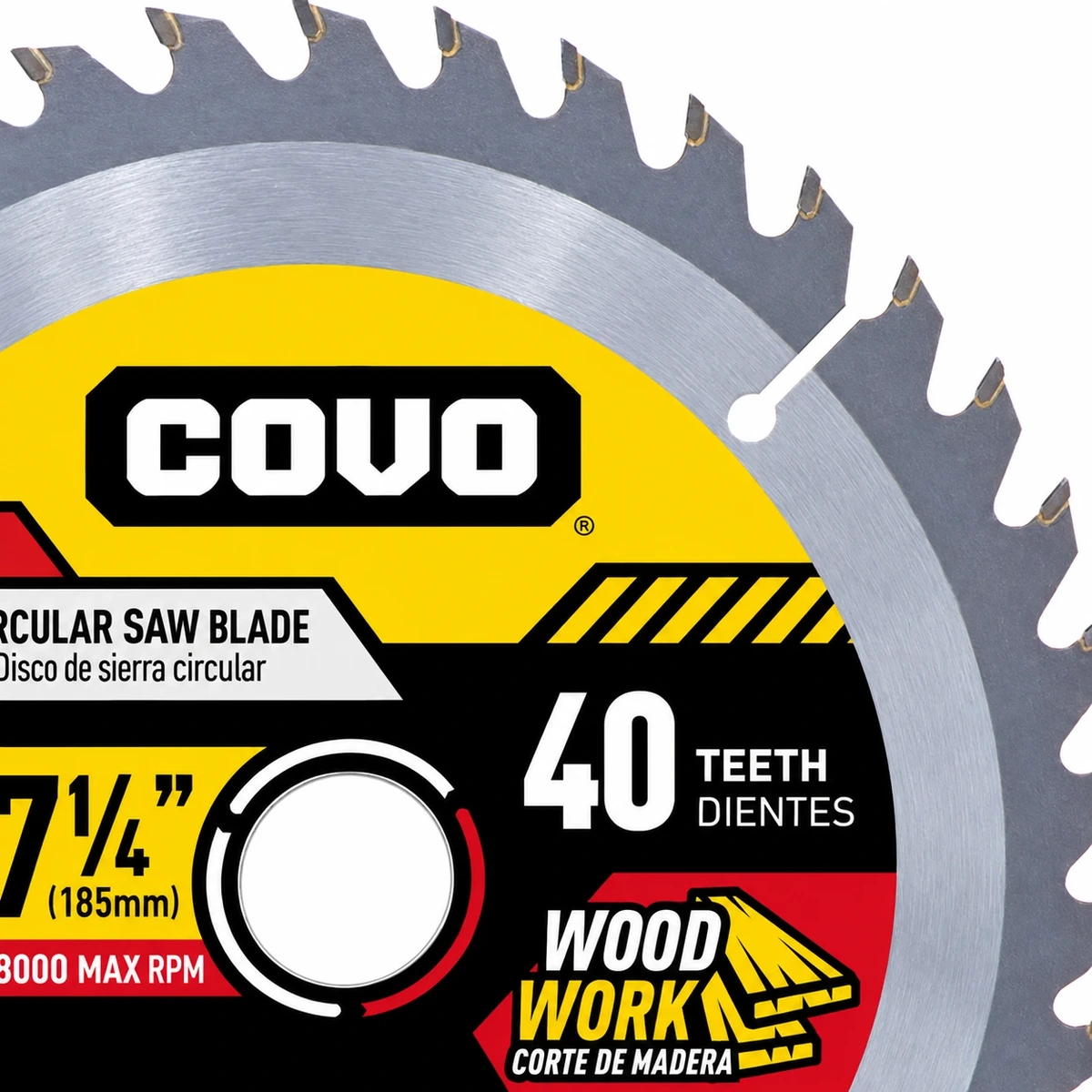
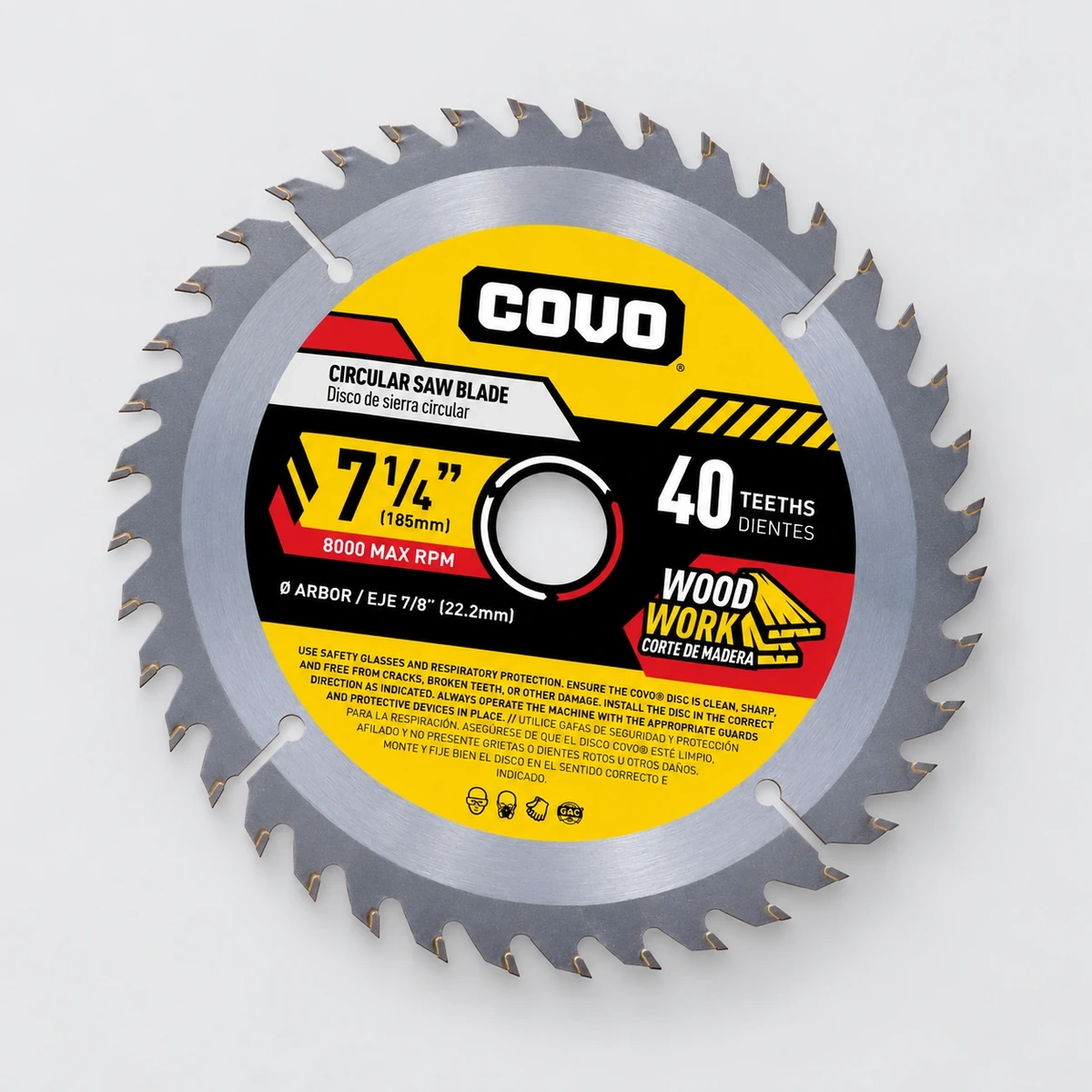
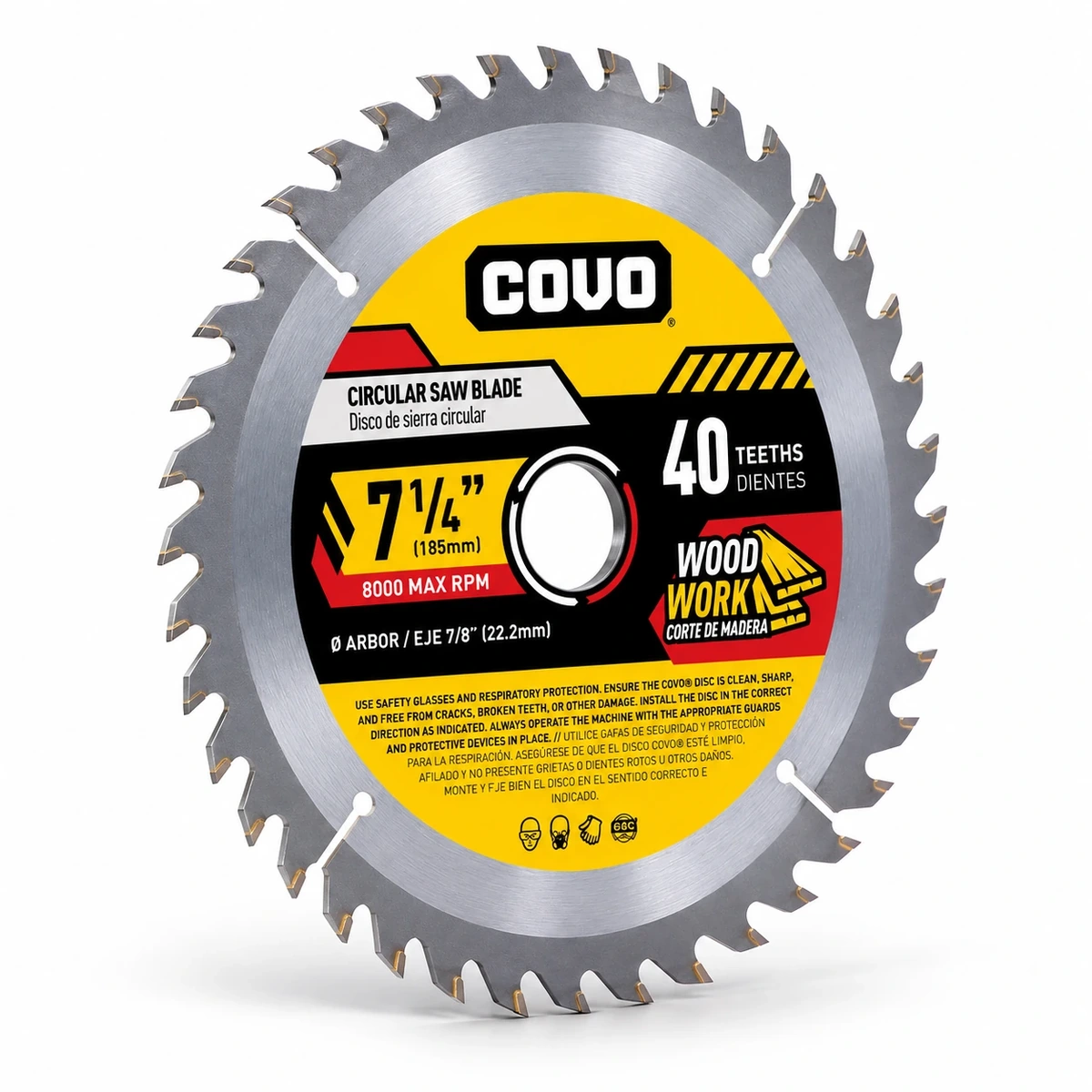
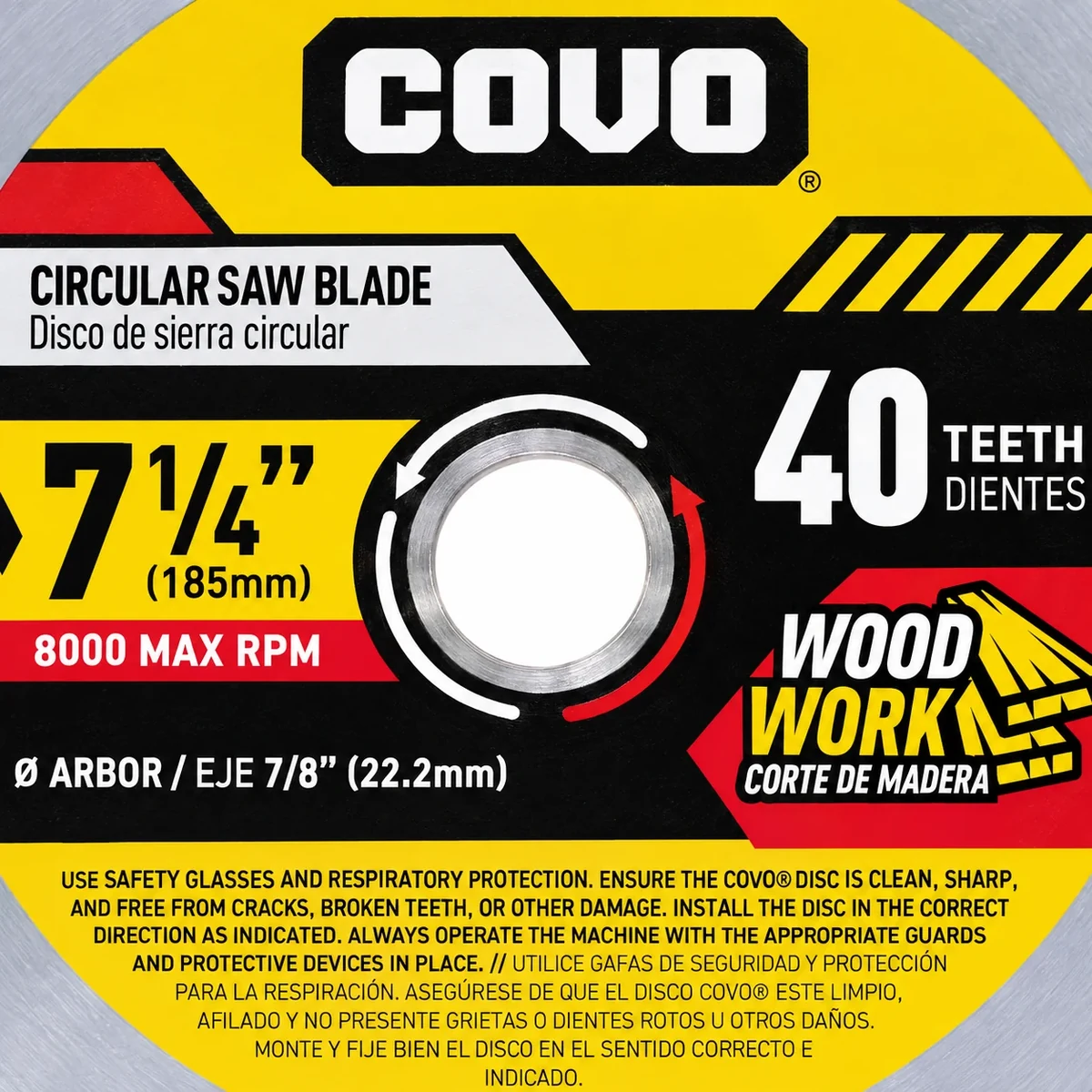
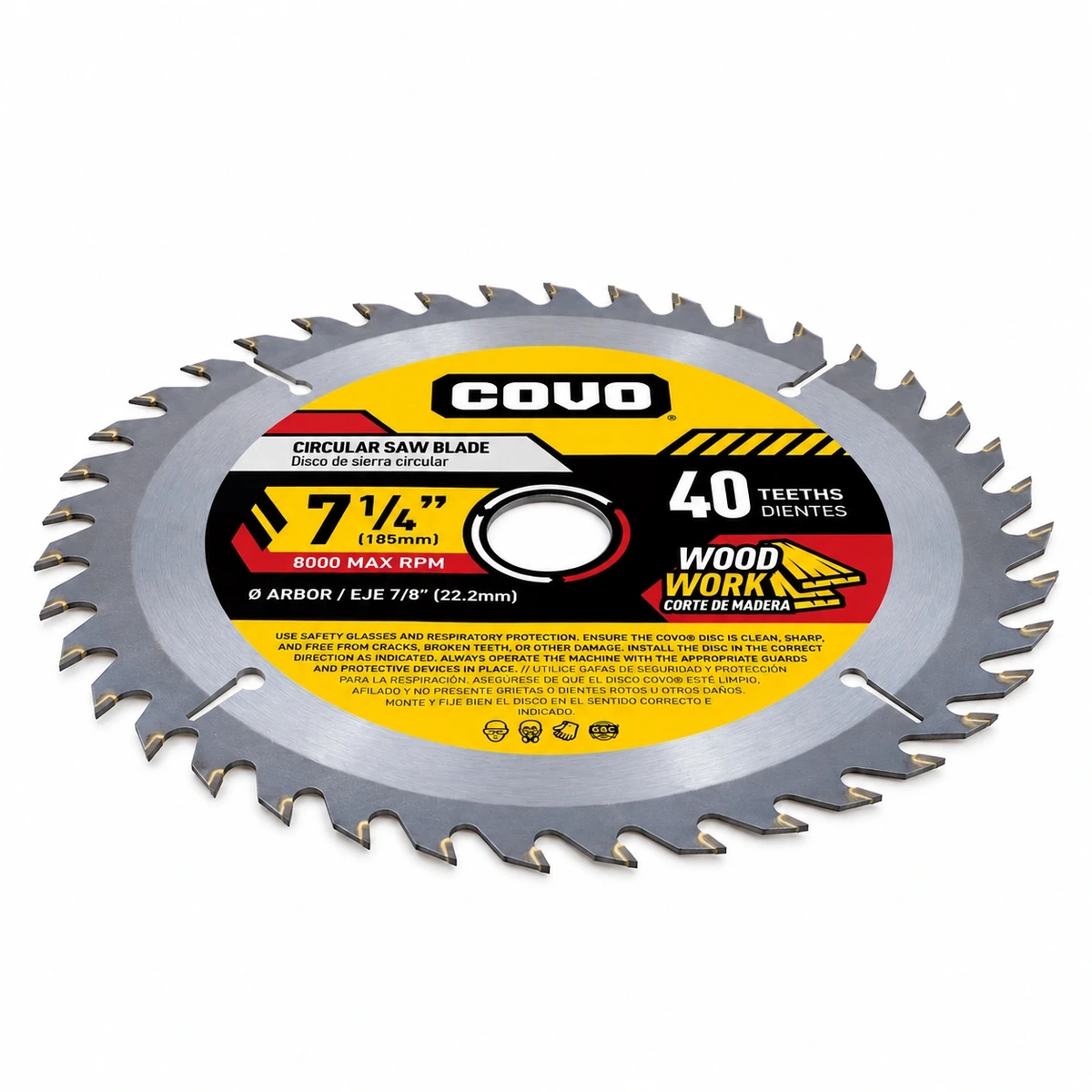
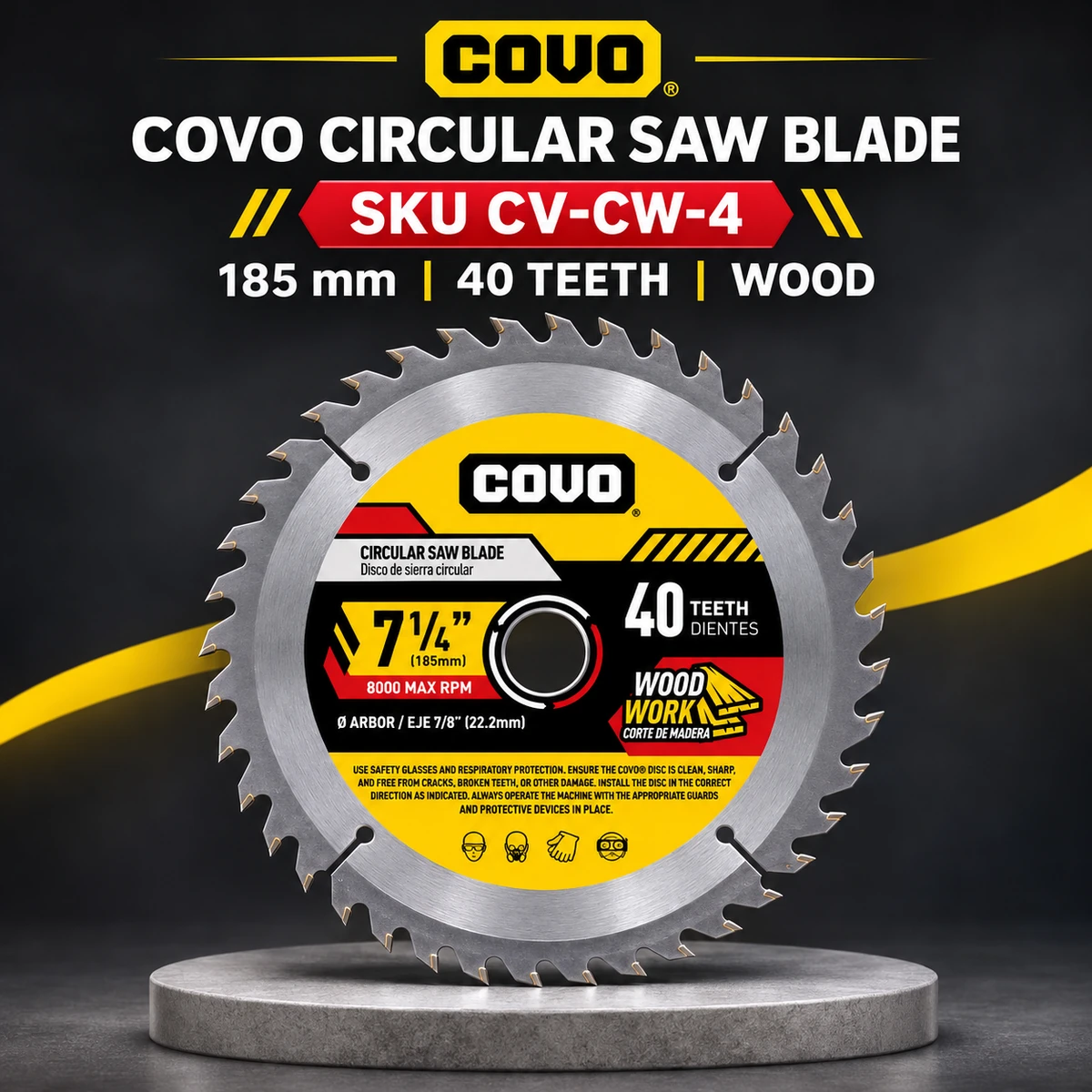
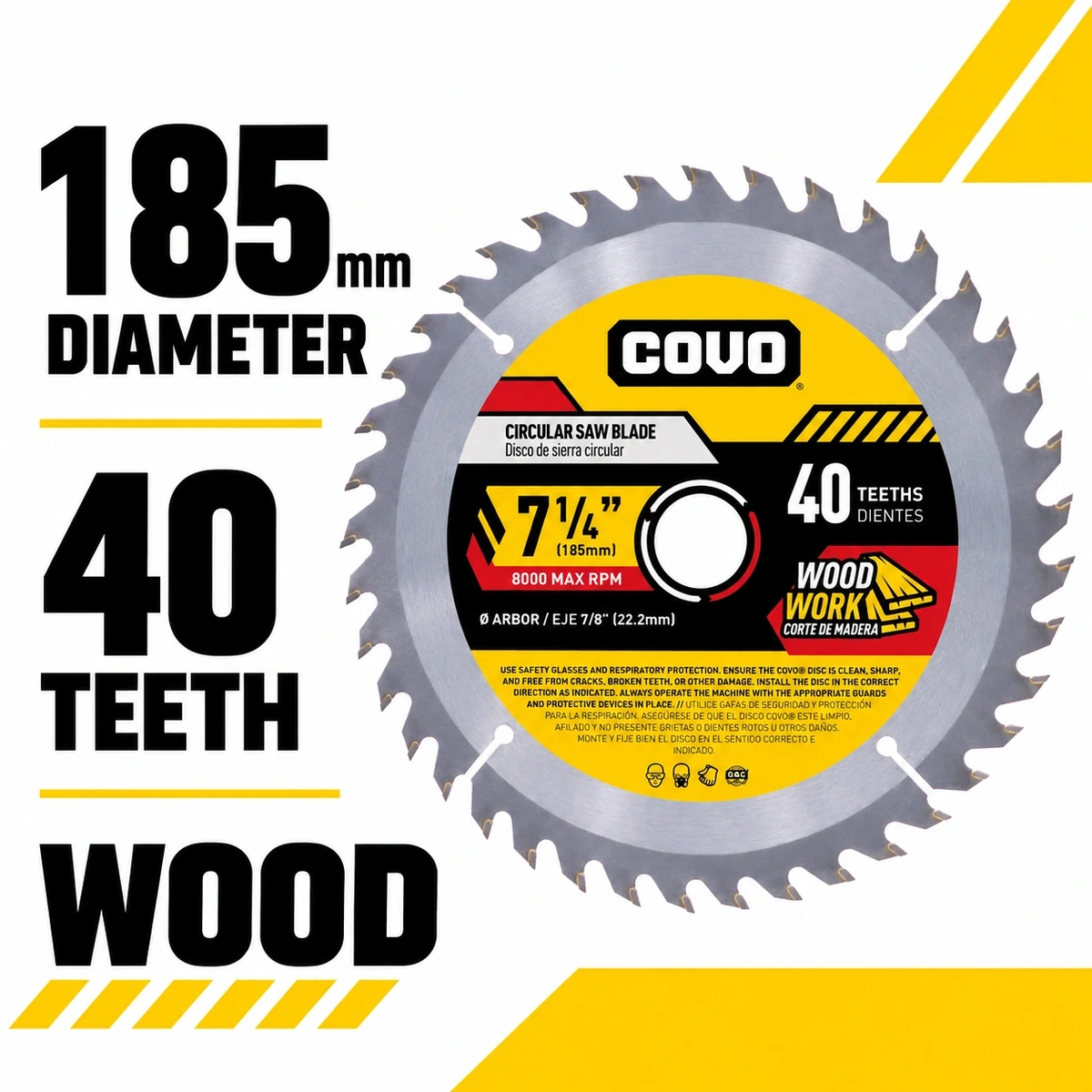
Blade Diameter | 185mm / 7‑1/4″ |
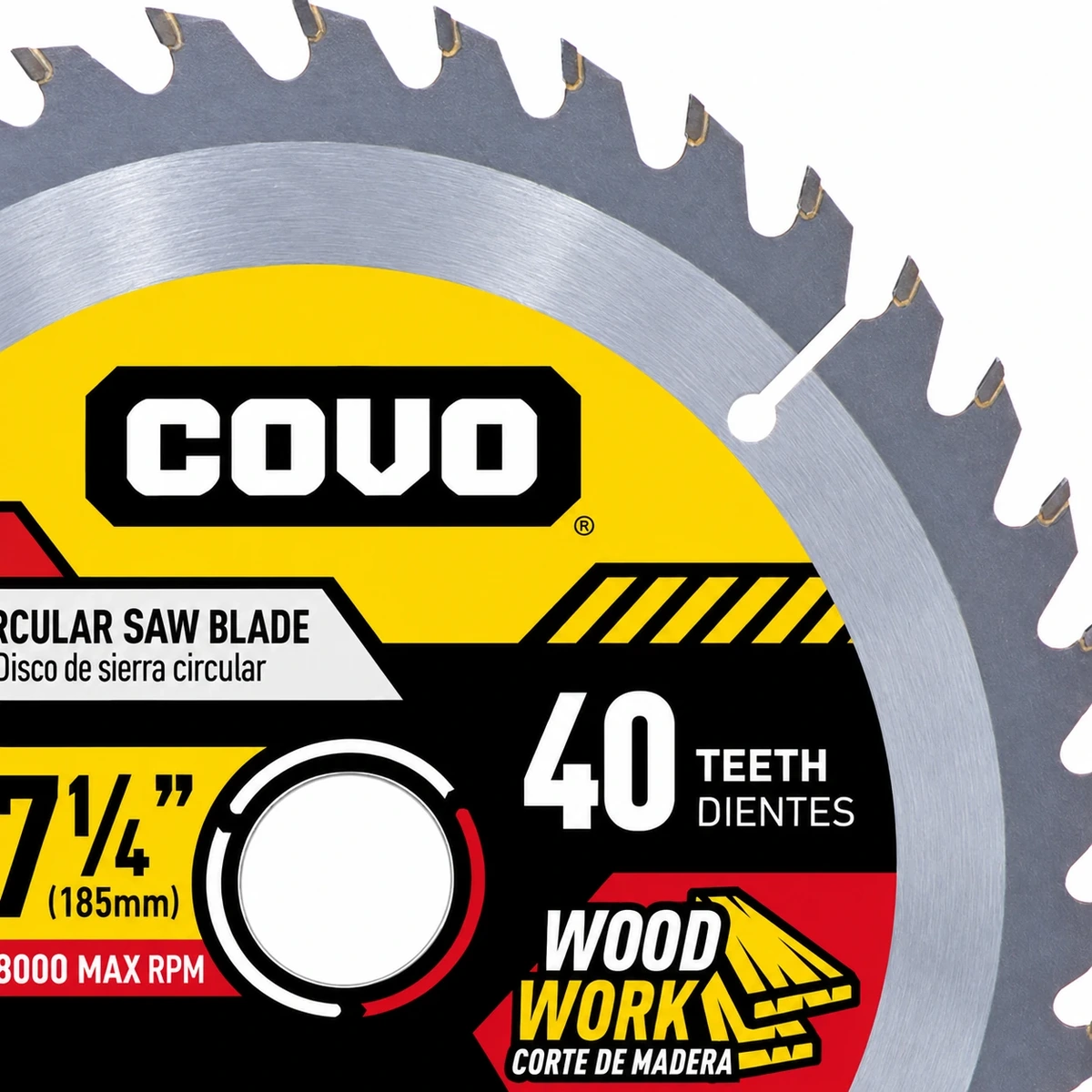
Number of Teeth | 40T |
Arbor Size | 25.4mm / 1″ |
Kerf Width | 2.2mm / 5/64″ |
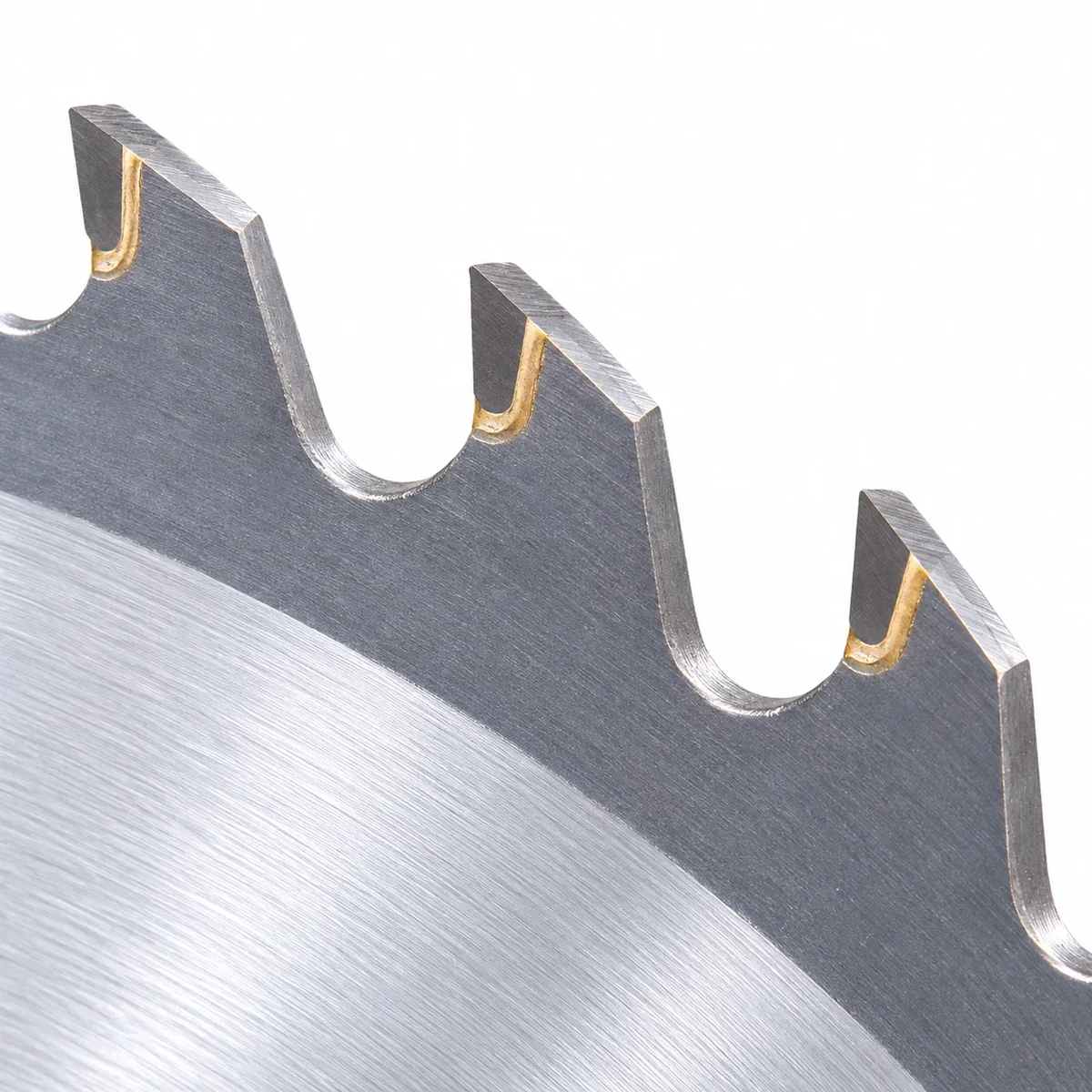
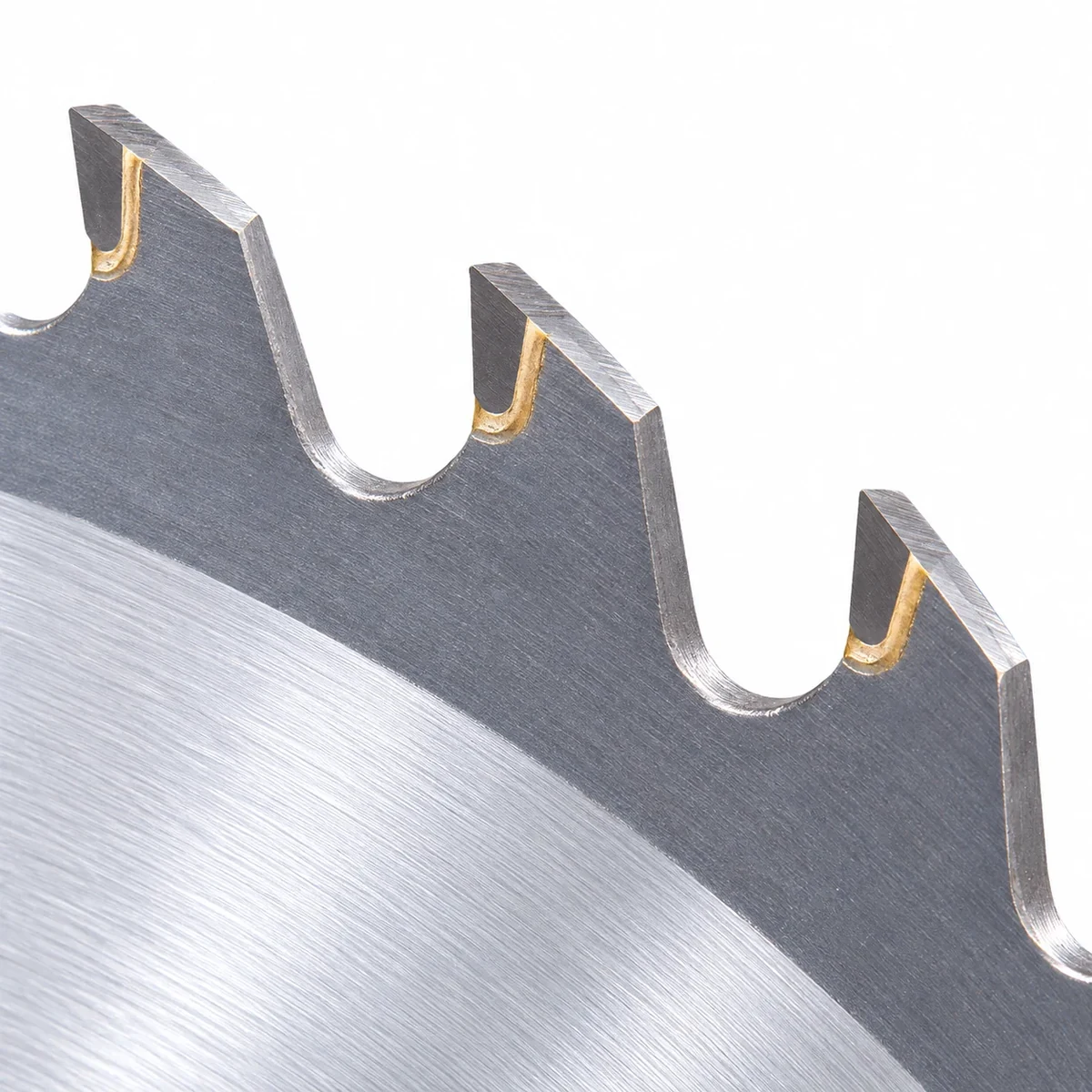
Tooth Material | TCT |
Tooth Geometry | ATB |
Max. Safe Speed | 8500 rpm |
Reduction Ring | 20mm / 3/4″ |
Cutting Result | Fine Cut |
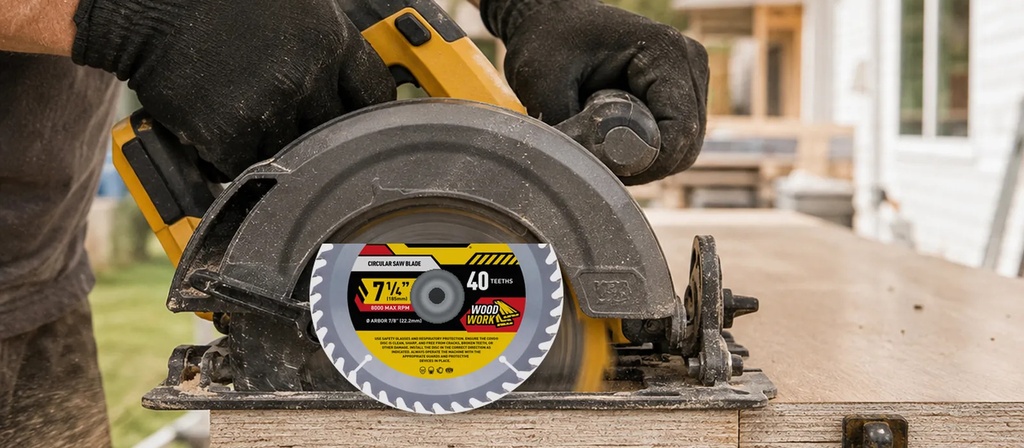
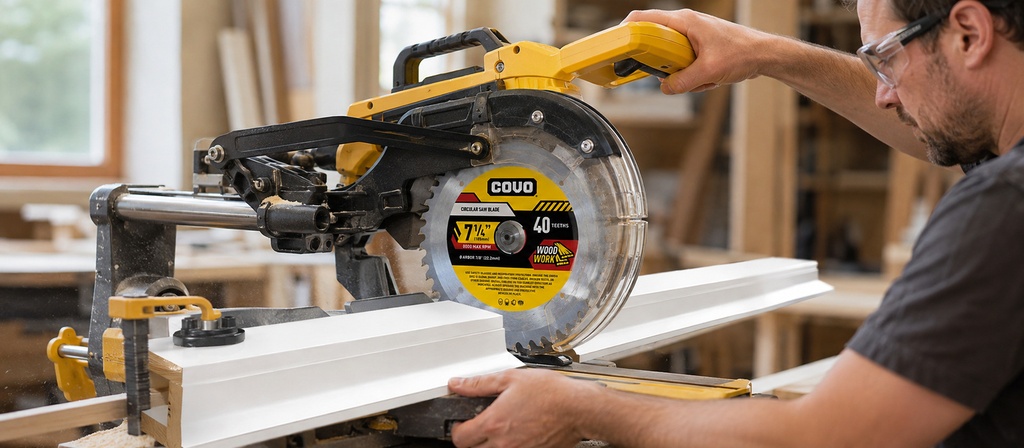
Compatible Machines


Application

Safety Instructions

Eye protection
Please wear safety glasses

Hand Protection
Please wear protective gloves

Proper Disposal
Dispose of damaged or worn blades safely

Respiratory Protection
Please wear face respiratory mask
Frequently Asked Questions
his 40-tooth blade has a significantly lower risk of chipping compared to a 24-tooth blade when cutting plywood or veneered panels. However, to achieve a truly smooth, chip-free finish, follow these tips:
- Use a dedicated crosscut blade: This blade is optimised for cross-cutting. For extensive ripping (with the grain), we recommend switching to a 24-tooth blade.
- Cut with the veneered side down: If the panel has veneer on only one side, cut with the veneer facing down. This way, any chipping will occur on the hidden underside.
- Use a zero-clearance insert: Installing a zero-clearance insert on your saw supports the wood fibres at the cut line, reducing tear-out.
- Control feed speed: Do not push too fast – let the blade cut at its own pace.
- Use masking tape: Apply a strip of masking tape along the cut line to hold the veneer fibres in place and reduce chipping.
Follow these practices to maximise blade life and ensure safe operation:
Longevity tips:
- Clean regularly: Resin and sap from wood can build up on the teeth, affecting cutting accuracy. Use a dedicated blade cleaner (or soak in an ammonia-based solution) to remove resin deposits regularly.
- Check tooth condition: Dull blades create friction, causing binding and kickback. Replace or have the blade professionally sharpened when cutting speed drops or the finish becomes rough.
- Set the correct cutting depth: Adjust the blade depth so that it extends only about 3mm (1/8") beyond the wood thickness – this reduces friction and extends blade life.
- Let the blade do the work: Do not force the saw – let the blade cut at its own pace.
- Use the right blade for the right material: This blade is for wood only – never use it on metal, concrete, or stone.
Safety precautions (critical):
- Check the guard: Before use, confirm that the lower blade guard retracts freely without sticking.
- Inspect the blade: Check for cracks, warping, or bending before each use. Never use a damaged, warped, or missing-tooth blade.
- Install correctly: Ensure the blade is concentric with the arbor, and the mounting flanges are at least 1/4 of the blade diameter.
- Avoid cutting wet or nail-embedded wood: Wet wood creates more resin buildup; nails damage carbide tips.
- Never use HSS (high-speed steel) blades: They can break easily and pose a safety hazard.
This 7-1/4" (185mm) 40-tooth carbide-tipped circular saw blade is designed for cross-cutting and fine cutting of wood. It performs best on softwood, hardwood, plywood, MDF (medium-density fiberboard), laminated wood, and fine joinery. It is the ideal choice for renovation projects, cabinet making, furniture manufacturing, door/window installation, and fine woodworking.
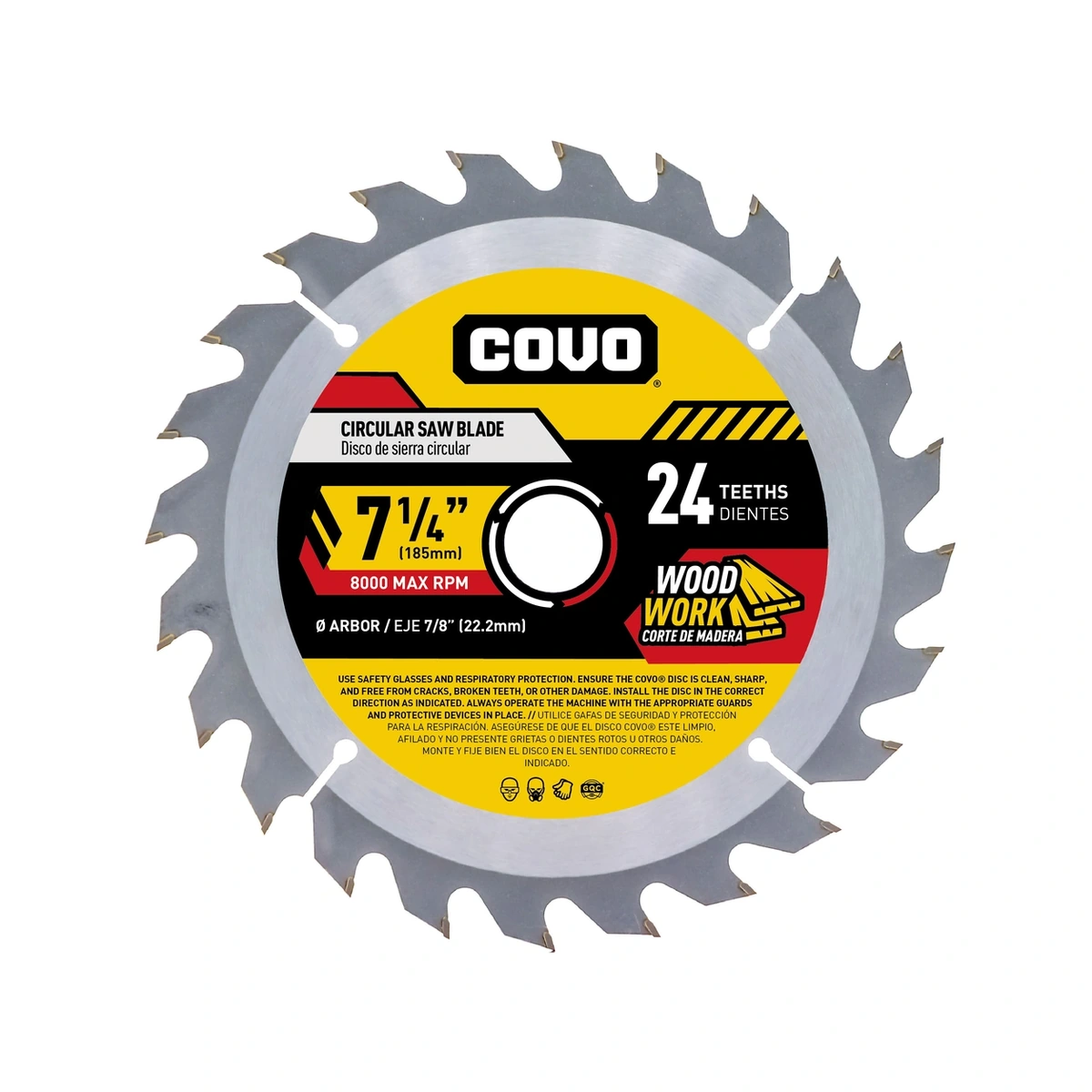
40 teeth vs. 24 teeth:
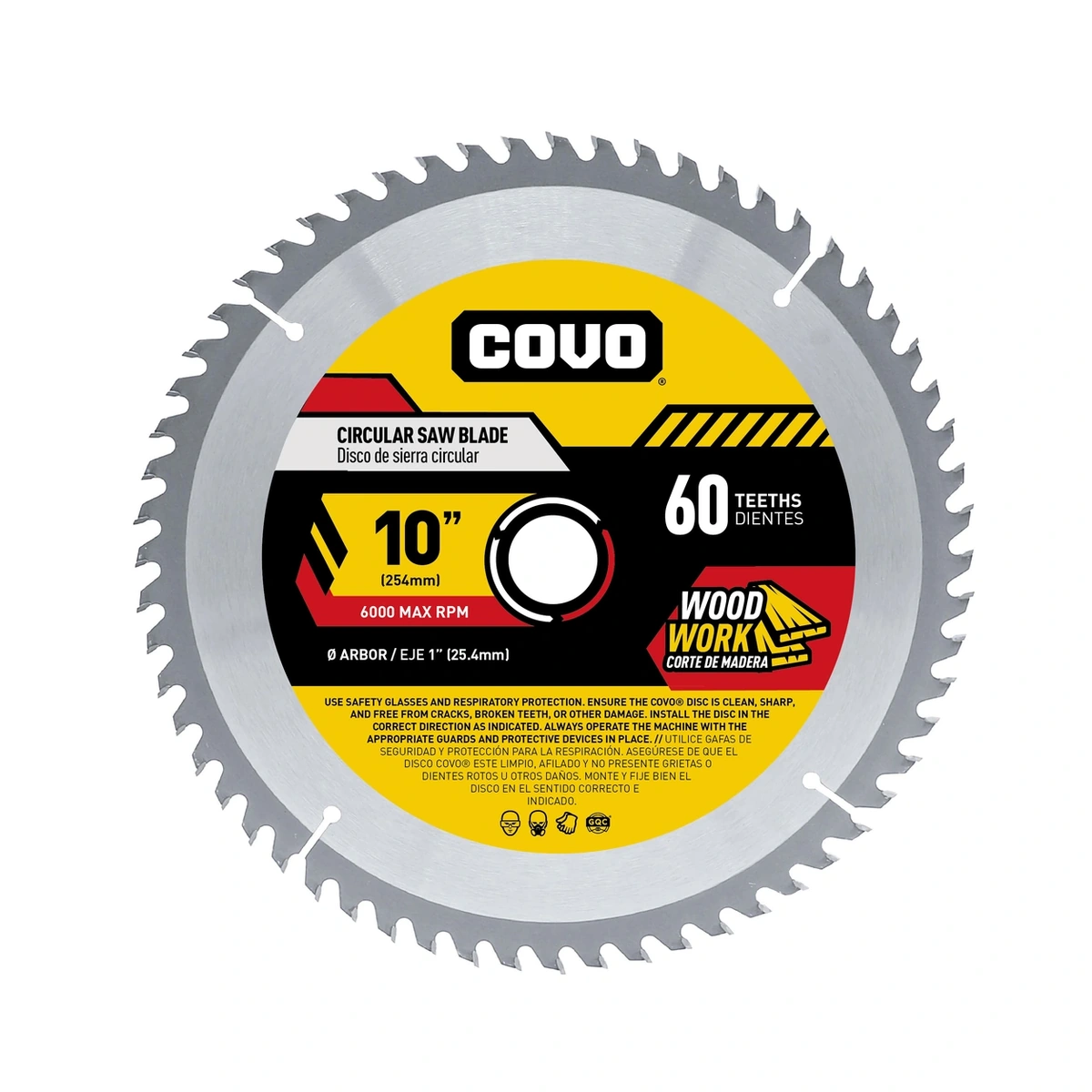
| Comparison | 24 Teeth (Rough Cut) | 40 Teeth (This Blade) | 60+ Teeth (Finish Cut) |
|---|---|---|---|
| Cutting Speed | Fastest | Medium | Slower |
| Finish Smoothness | Rough | Smooth | Ultra-smooth |
| Best Use | Ripping, framing | Cross-cutting, fine cutting | Veneer, laminates, ultra-fine |
| Chip Evacuation | Strong | Medium | Smaller |
In short: 40 teeth is the perfect balance of speed and smoothness – smoother than 24 teeth, faster than 60 teeth – making it the go-to choice for cross-cutting and general woodworking.