


Product Specifications
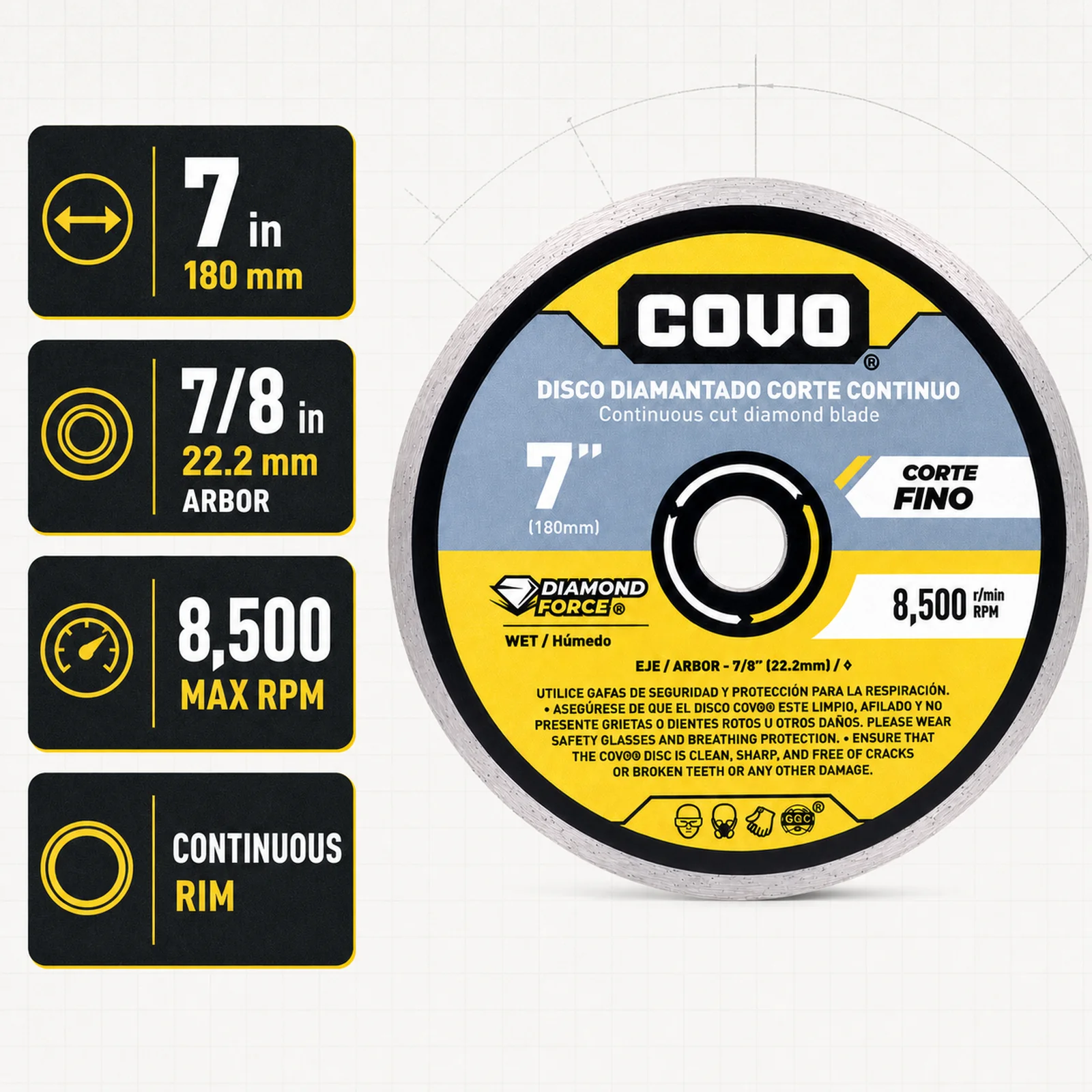
Specification | Details |
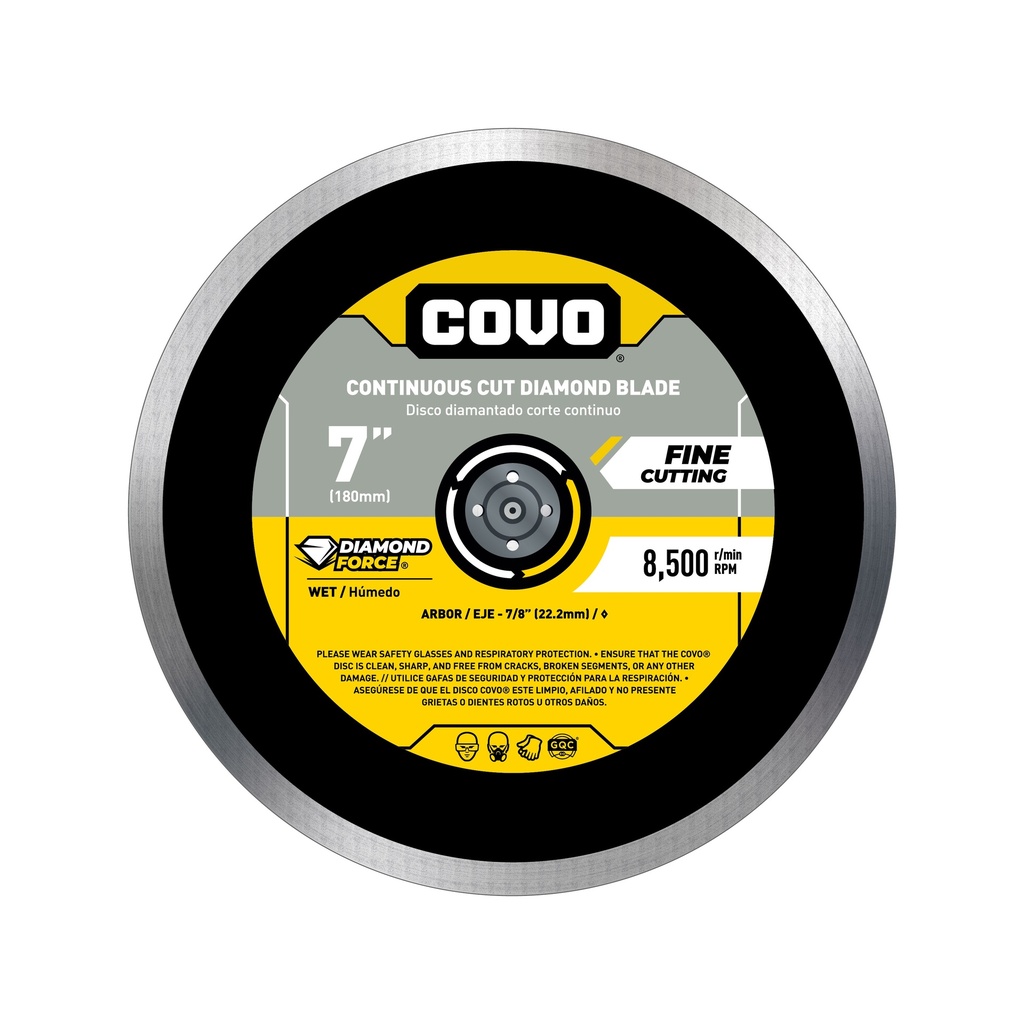
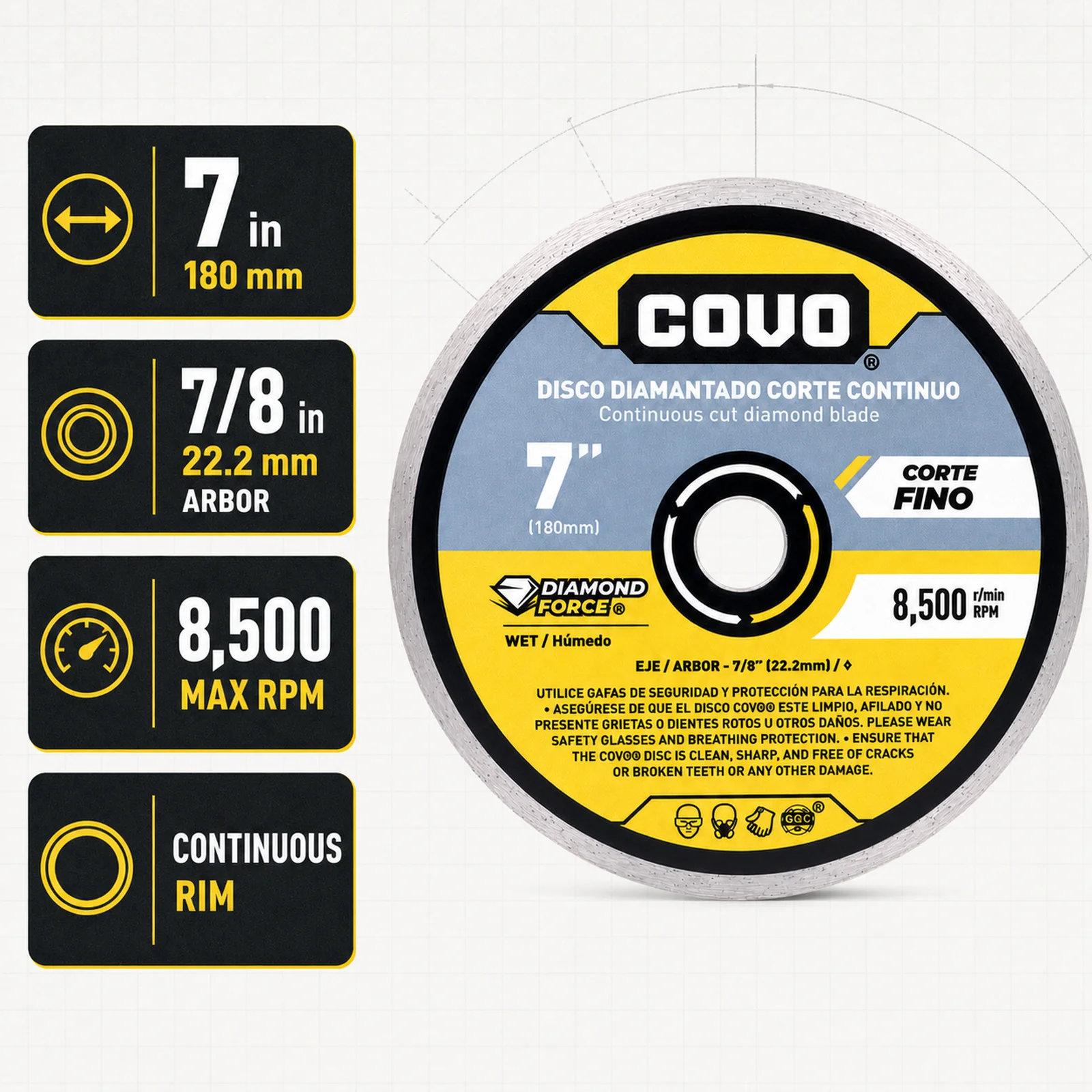
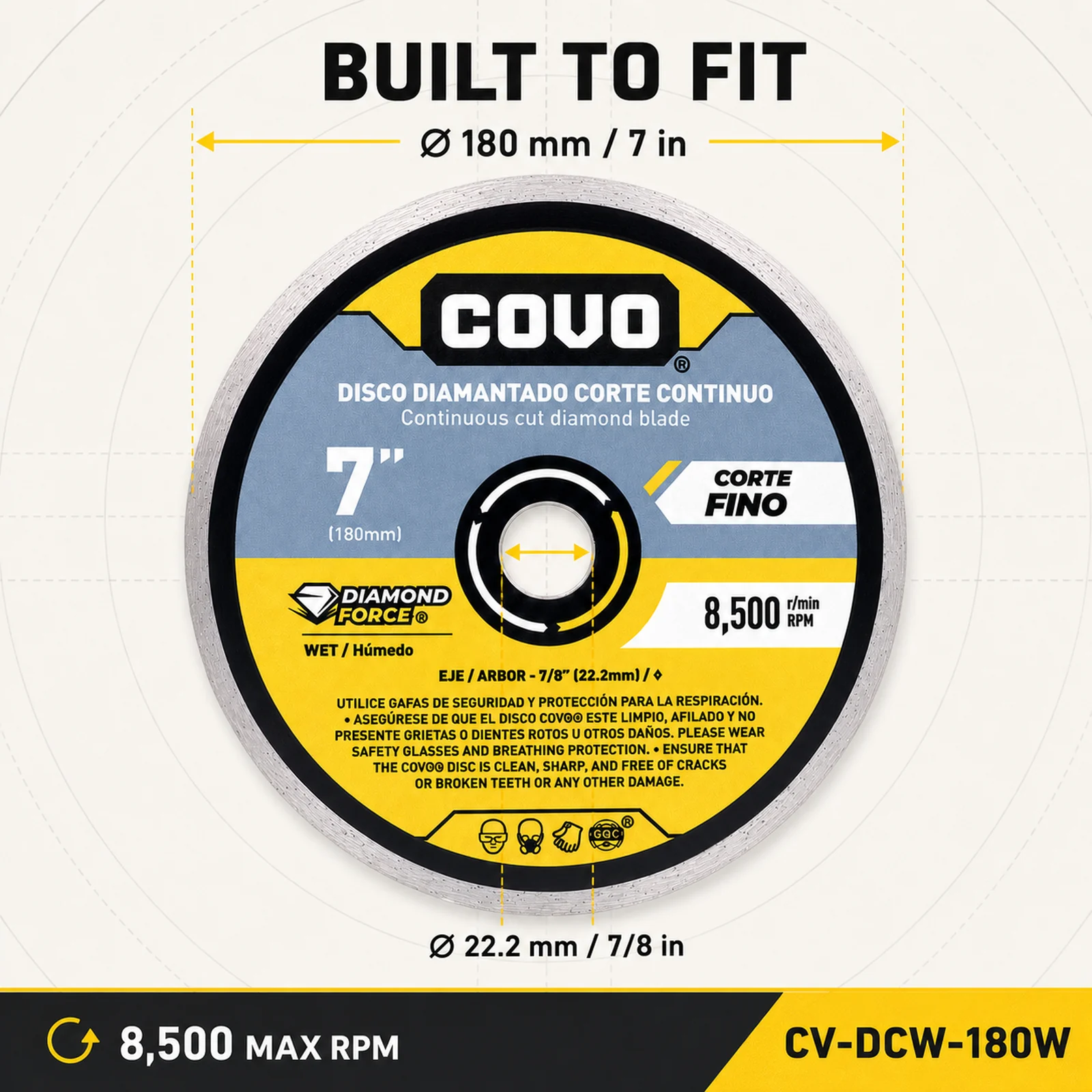
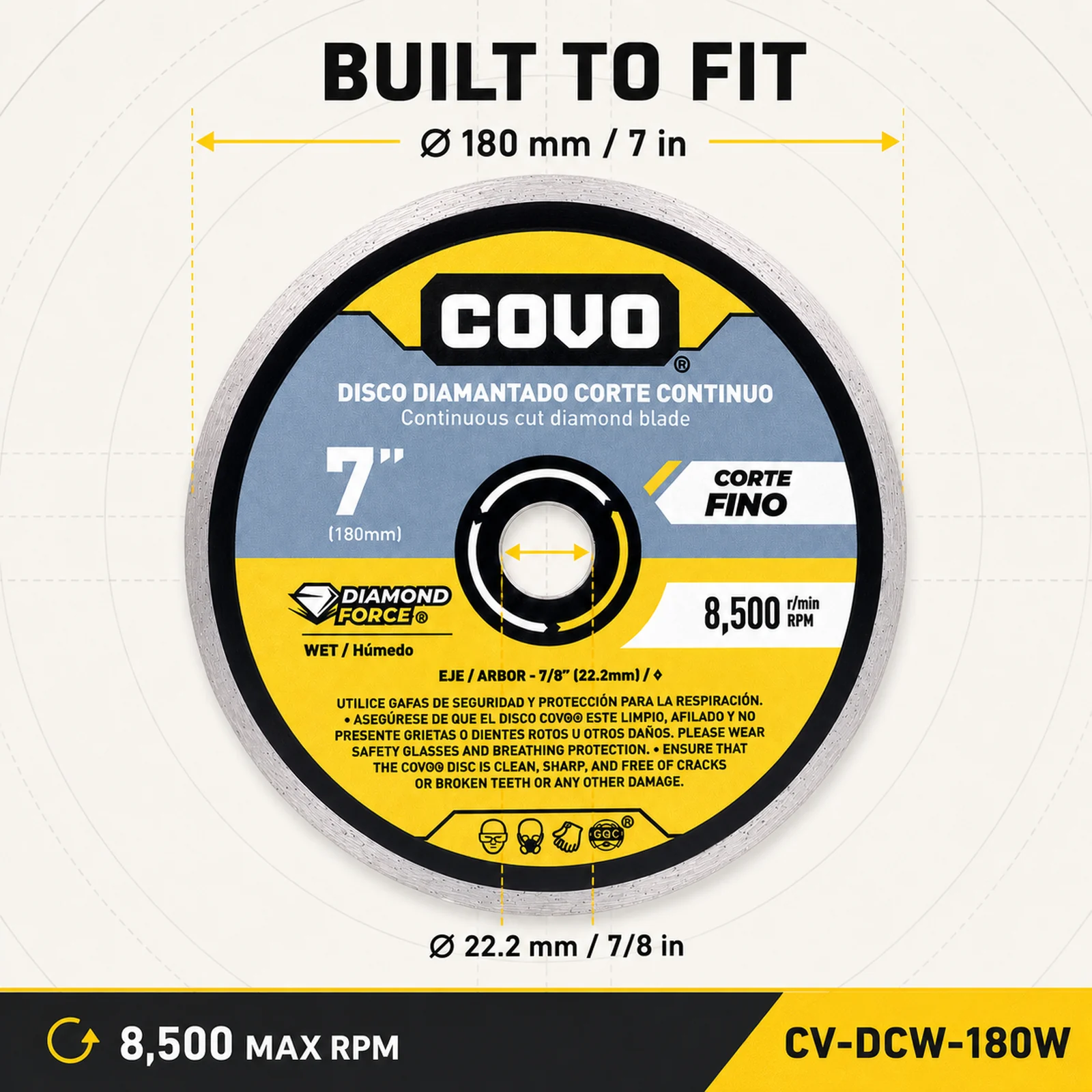
Diameter | 180mm / 7″ |
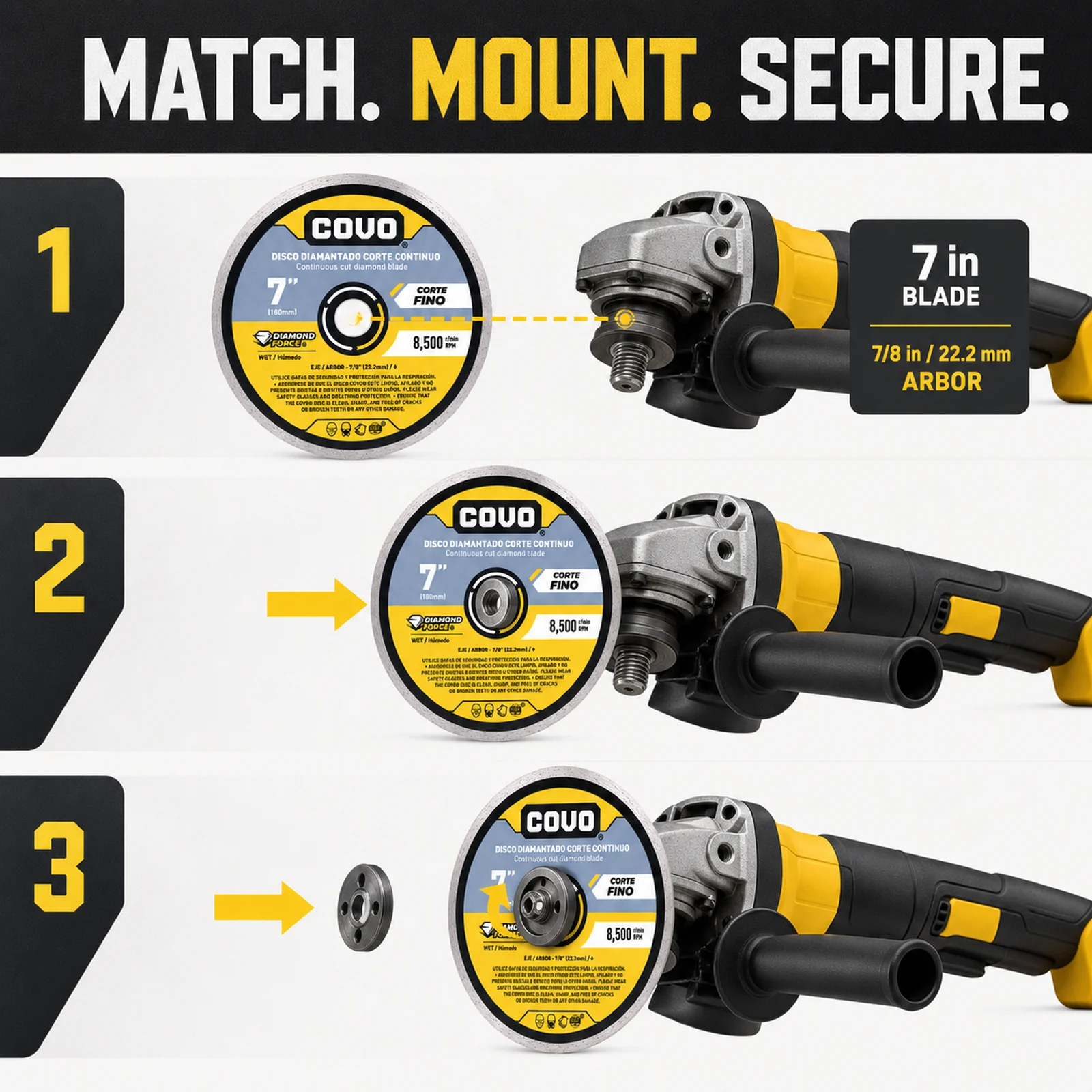
Arbor Size | 22.2mm / 7/8" |
Segment Height | 5mm / 13/64″ |
Segment Thickness | 2.2mm / 3/32″ |
Max. Safe Speed | 8,500 RPM |
Cutting Method | Wet Cutting |
Adapter Rings | 20mm / 5/8"+16mm / 3/4" |
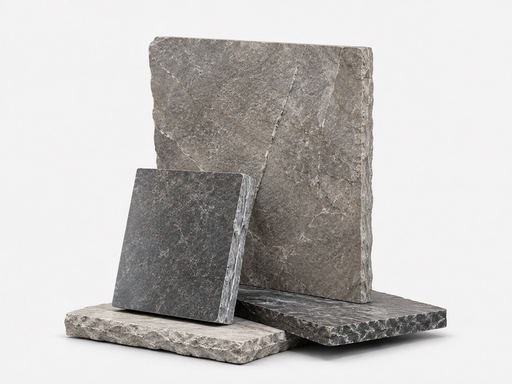
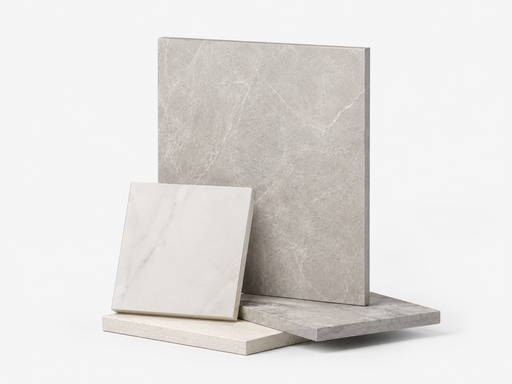
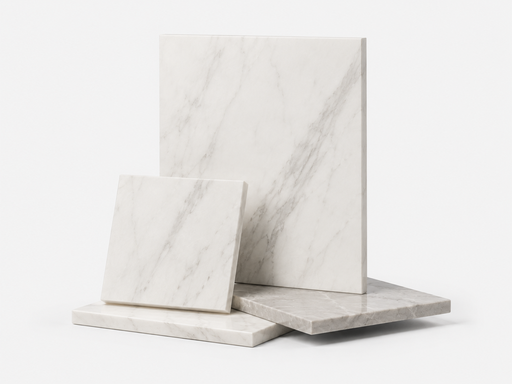
Suitable Materials
Compatible Machines




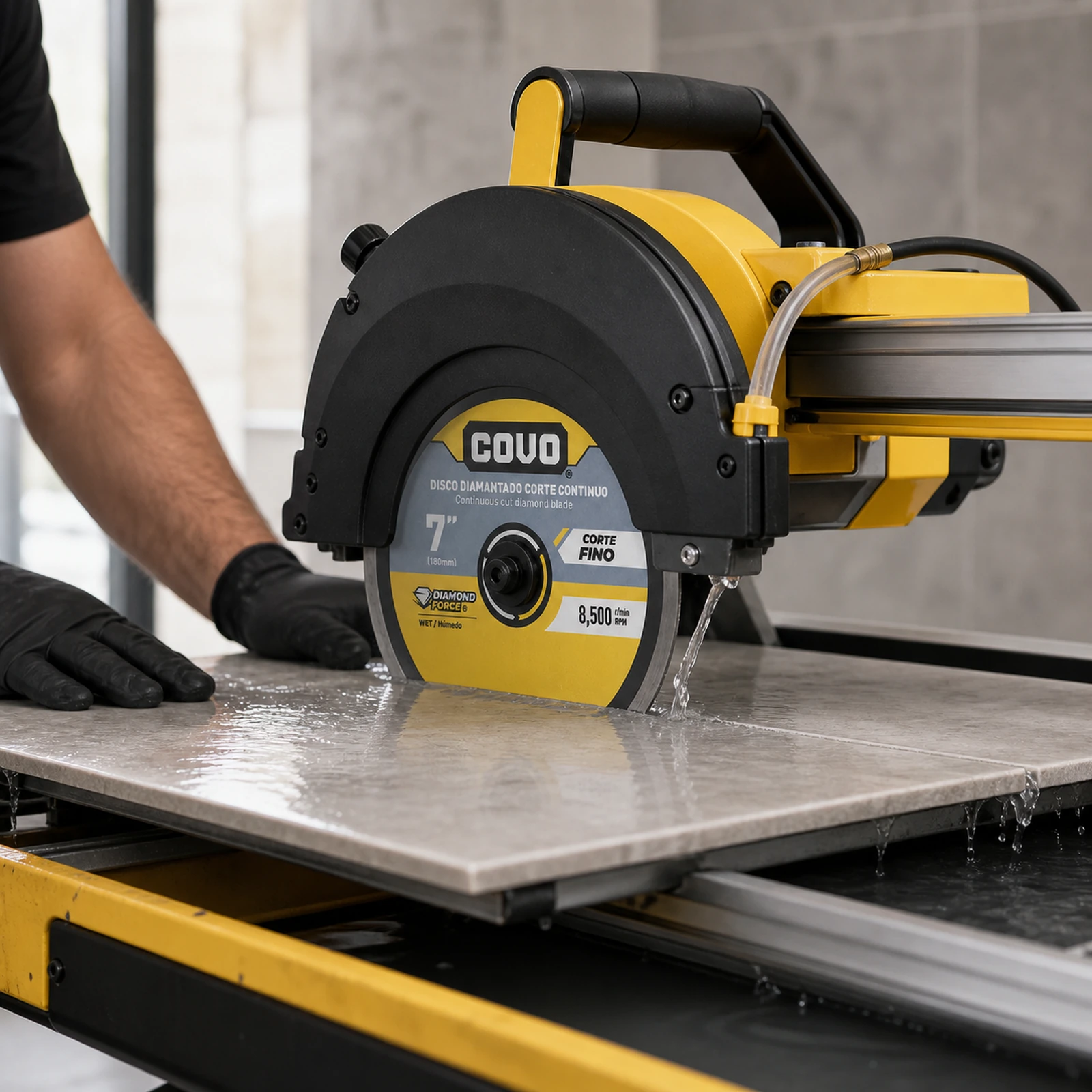
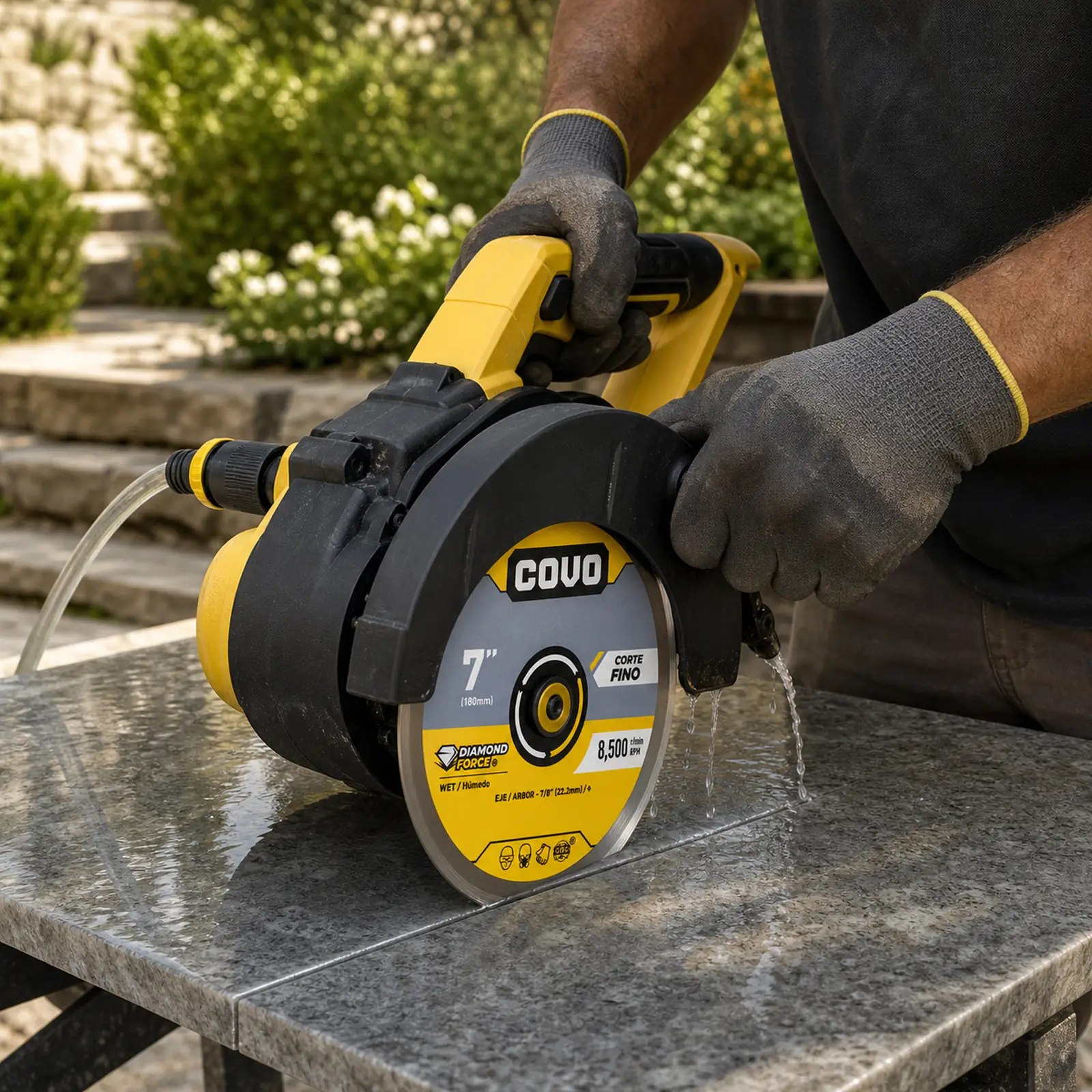
Application
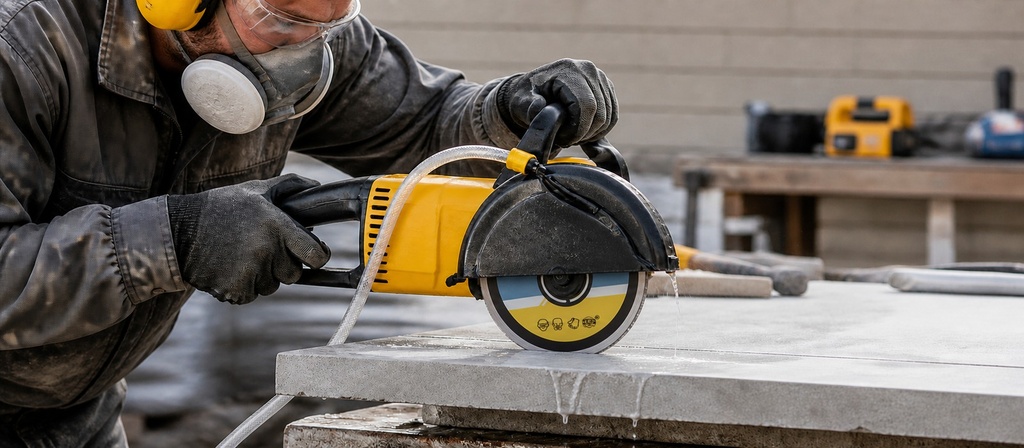


Safety Instructions

Eye protection
Please wear safety glasses

Hand Protection
Please wear protective gloves

Proper Disposal
Dispose of damaged or worn blades safely

Respiratory Protection
Please wear face respiratory mask
Frequently Asked Questions
Follow these practices to maximise performance and longevity:
Longevity tips:
- Ensure adequate water flow: Insufficient flow causes friction heat and accelerates wear. A flow rate of at least 2–3 L/min is recommended.
- Avoid forcing the blade: The continuous rim has higher resistance – let the machine's power and the blade's own weight do the work. Excessive pressure leads to segment loss and core fatigue.
- "Break in" new blades: Before first use, make a few shallow cuts on a soft material (e.g., old cinder block or sandstone) to expose the diamond grit and improve initial sharpness.
- Clean after each use: Rinse the blade with water to remove residual concrete slurry, preventing imbalance from dried deposits.
Special precautions (critical):
- Never cut rebar‑embedded concrete or metal – this will severely damage the diamond segments and is irreversible.
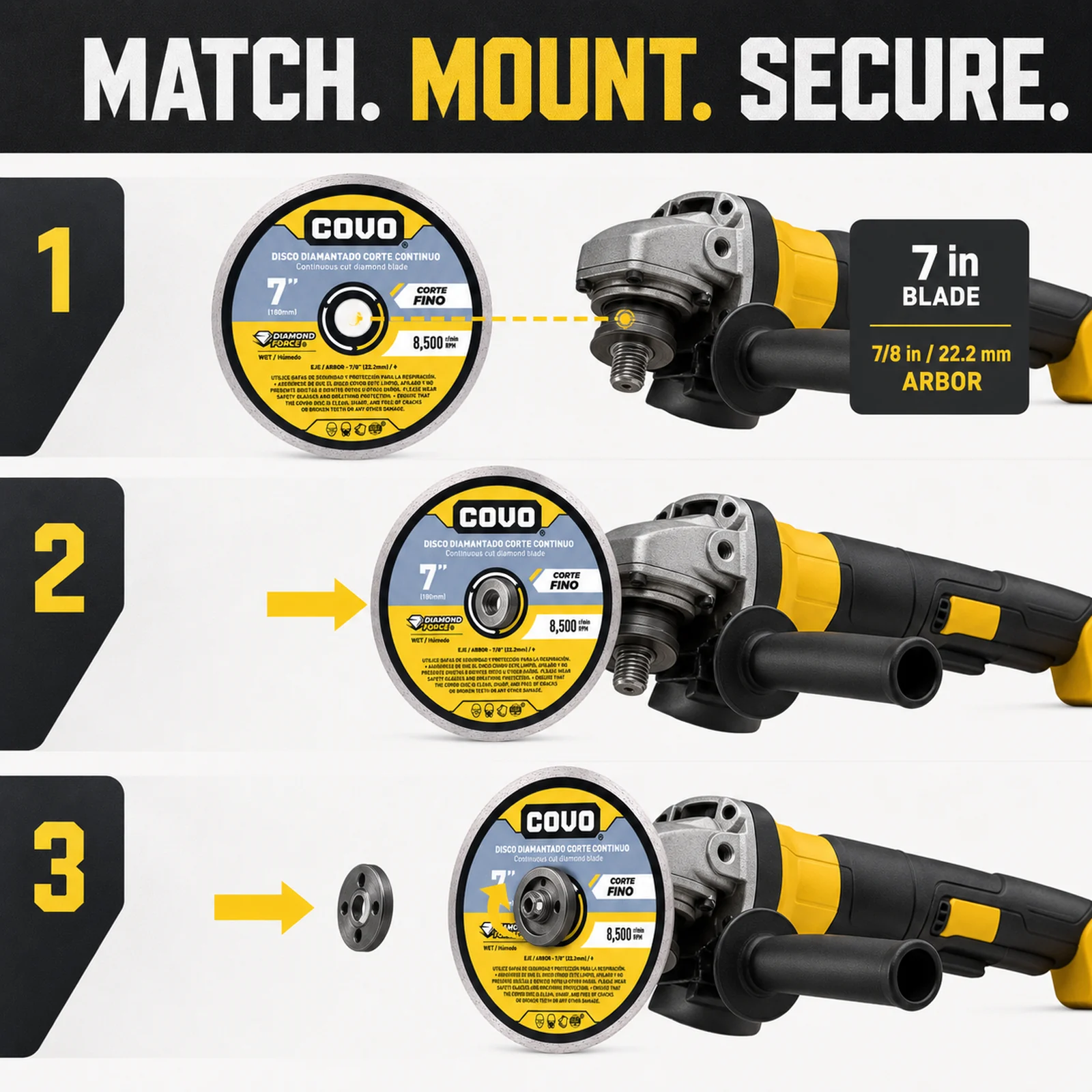
- Mounting direction: Ensure the rotation arrow on the blade matches the machine spindle direction.
- Check RPM rating: Confirm the grinder's no‑load speed does not exceed the maximum RPM marked on the blade (typically 6600 RPM) – over‑speeding is extremely hazardous.
- Always use the guard: A 7" blade has high inertia – never remove the machine guard.
- Inspect before each use: Check for cracks, warping, or segment damage – replace immediately if found.
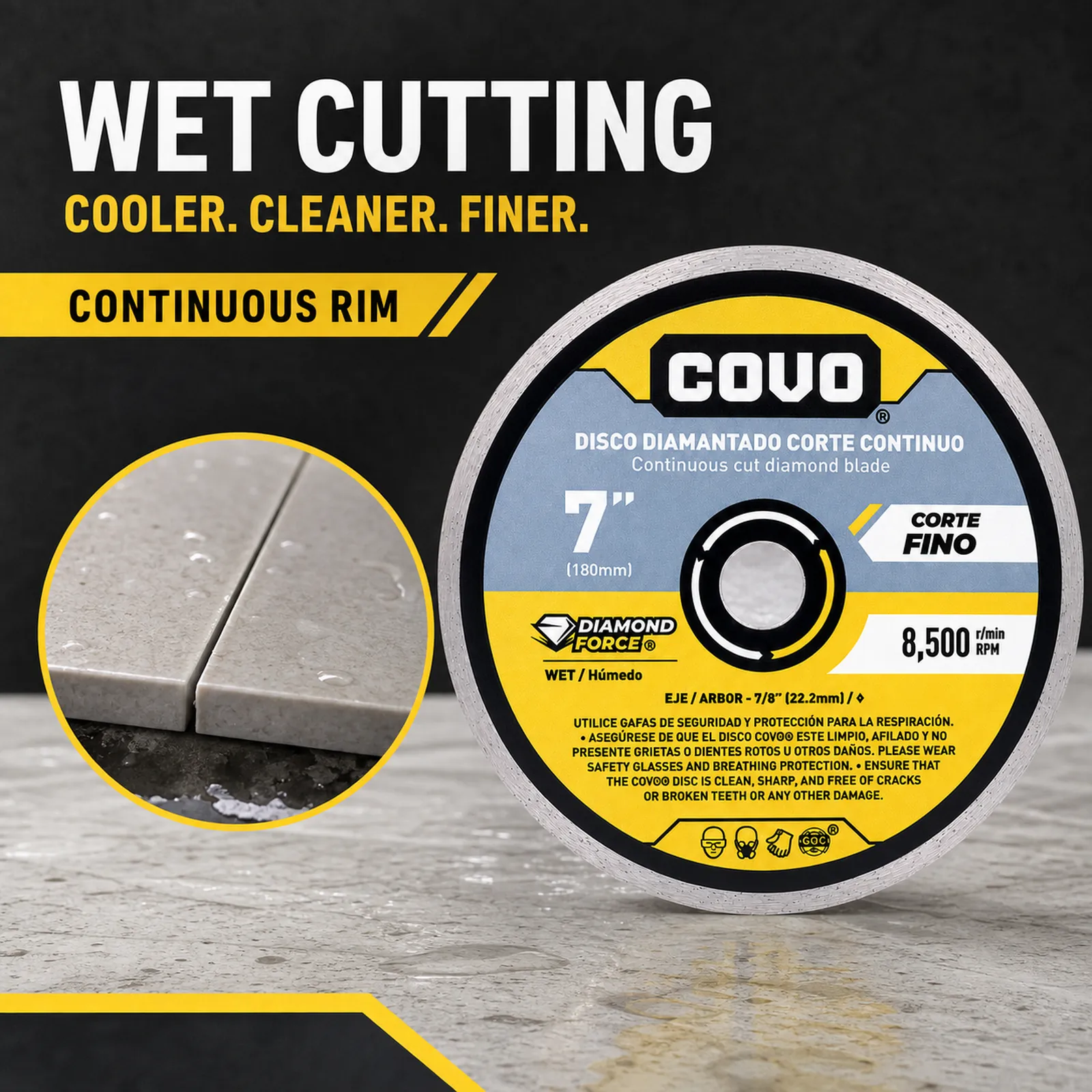
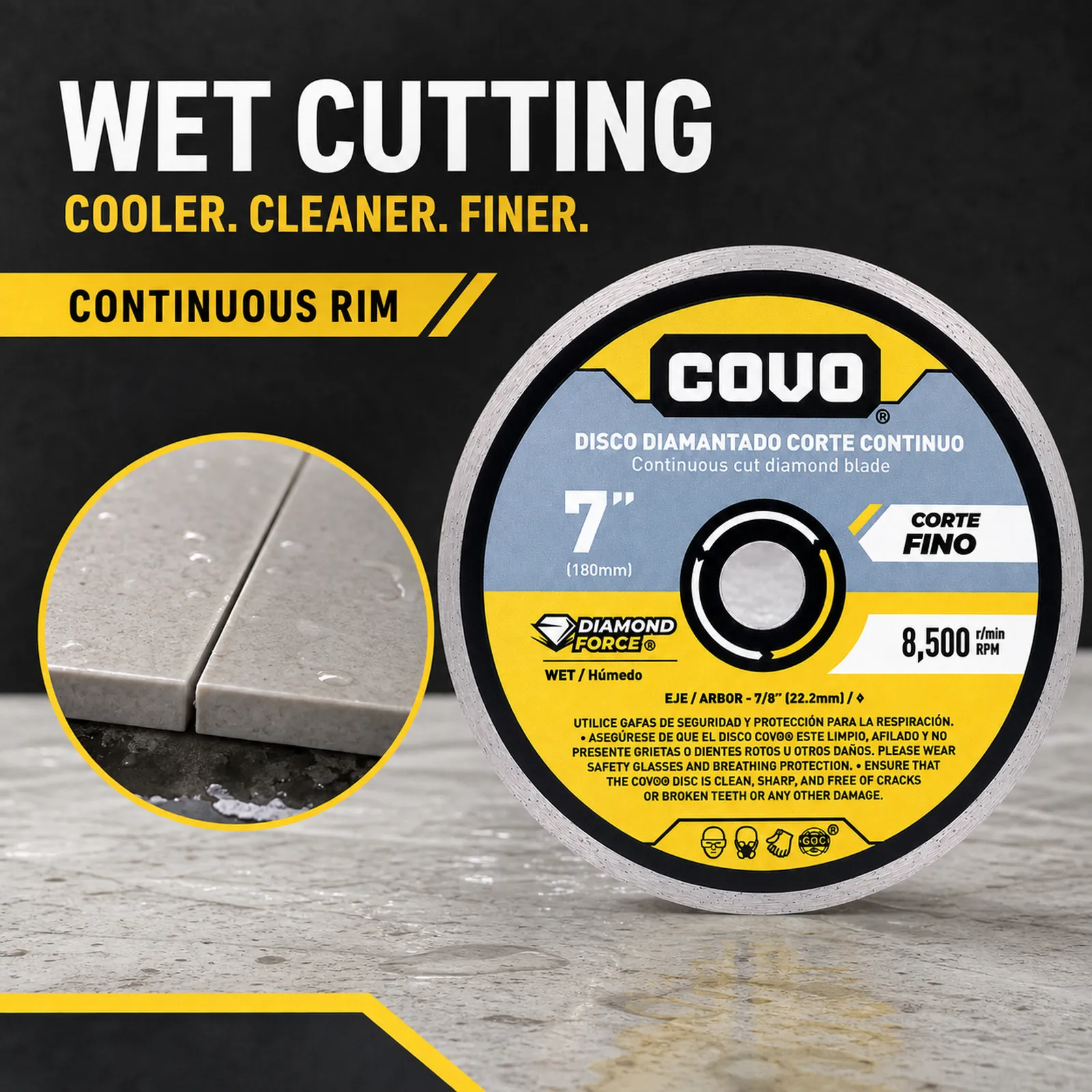
Yes, this blade is designed for wet cutting only – dry cutting is strictly forbidden.
Because the continuous rim has no gullets for debris evacuation, the generated dust and heat cannot be expelled quickly like on segmented blades. Without water for cooling and lubrication, dry cutting will cause the blade to overheat within seconds, leading to diamond segment loss, core warping, or even cracking – permanent damage that cannot be repaired.
Correct wet‑cutting procedure:
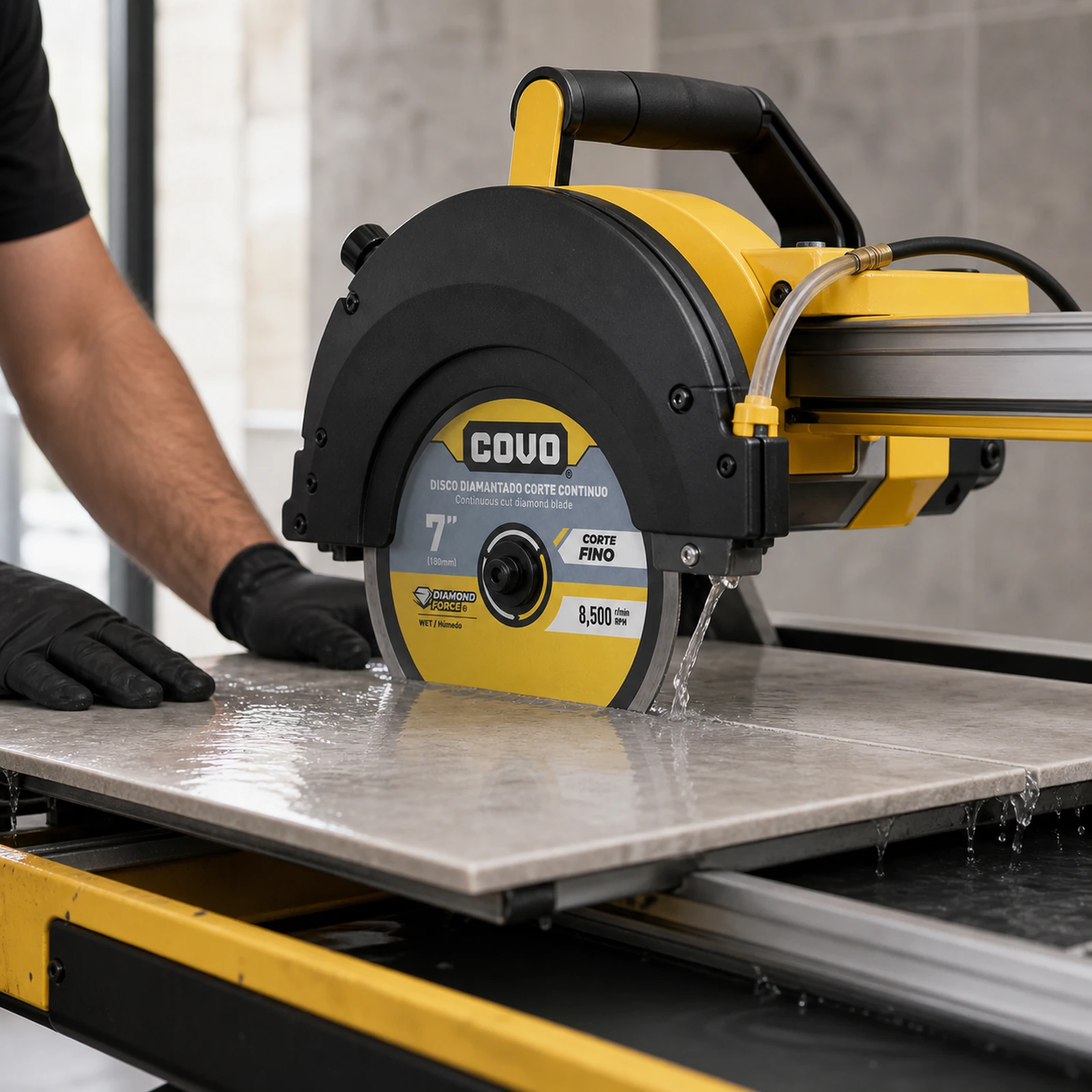
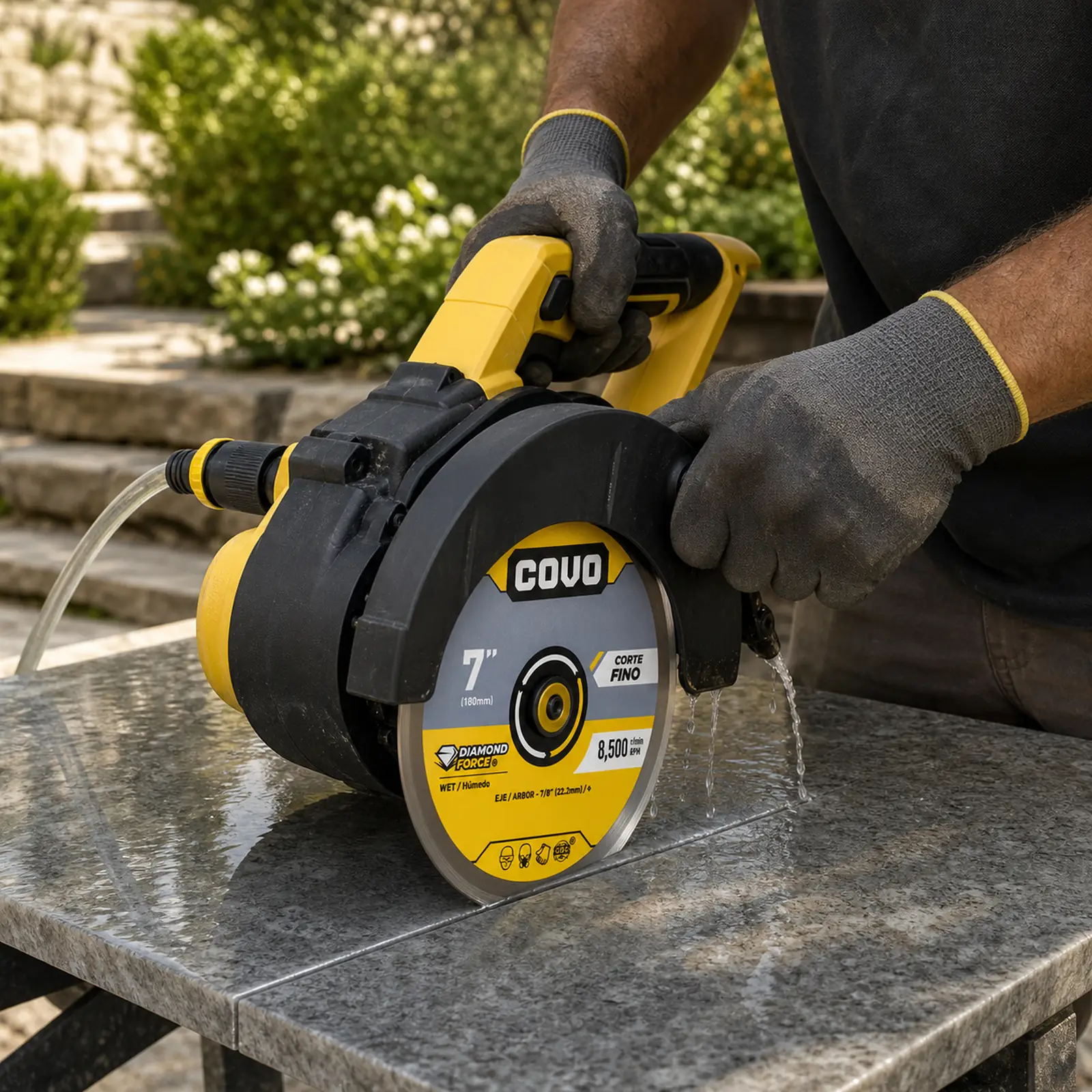
- Use an angle grinder or cutter equipped with a water cooling system, ensuring a continuous, steady, and sufficient water flow over the cutting zone.
- Direct the water outlet onto the entry point of the cut slot, allowing full coverage of the cutting line to cool the blade and flush away slurry.
- Maintain a steady feed rate without forcing – let the blade cut naturally. A 7" blade has higher resistance, so a machine with ≥ 1500W power is recommended to maintain stable RPM.
- After cutting, continue spraying water for a few seconds to rinse off residual debris, preventing it from drying and affecting the next use.
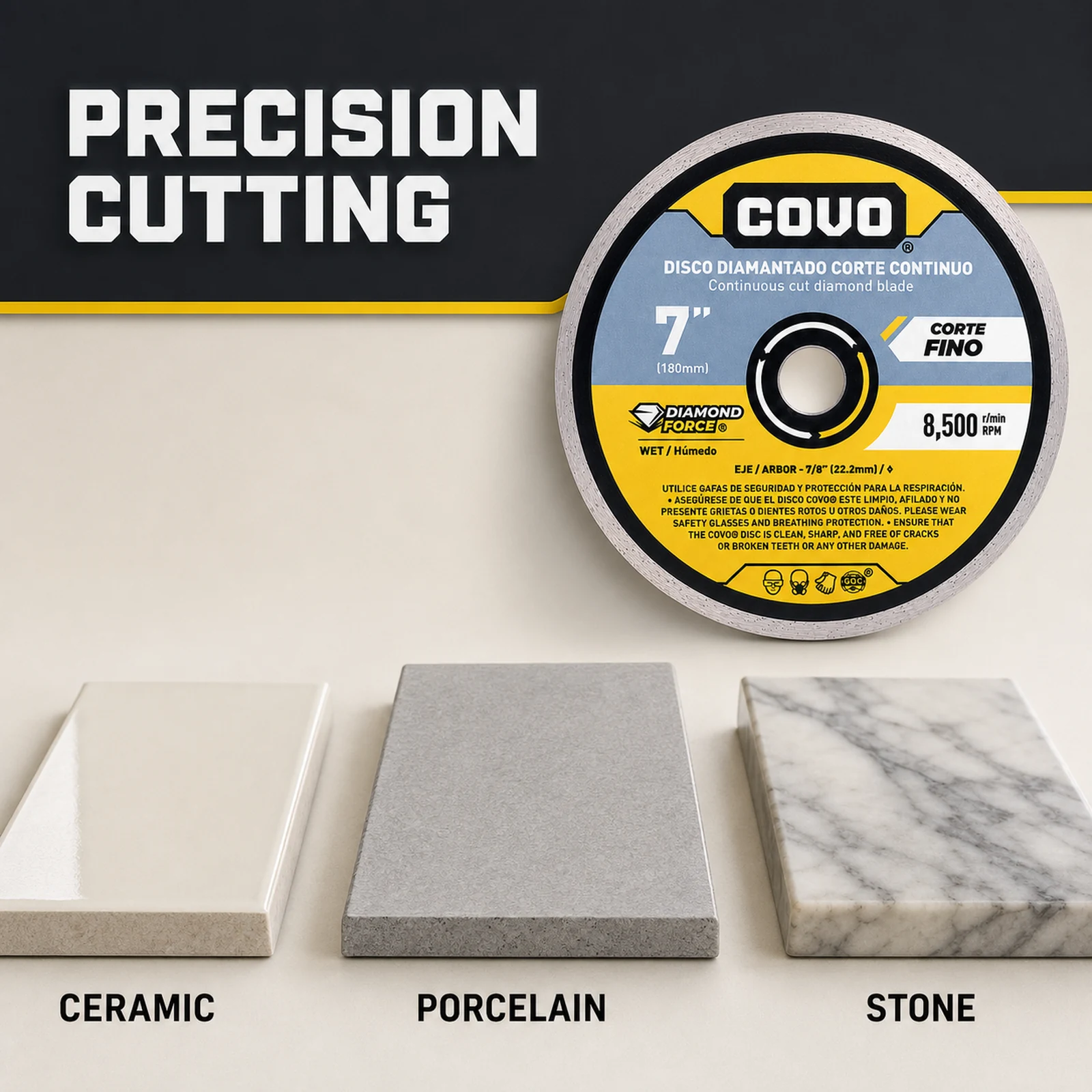
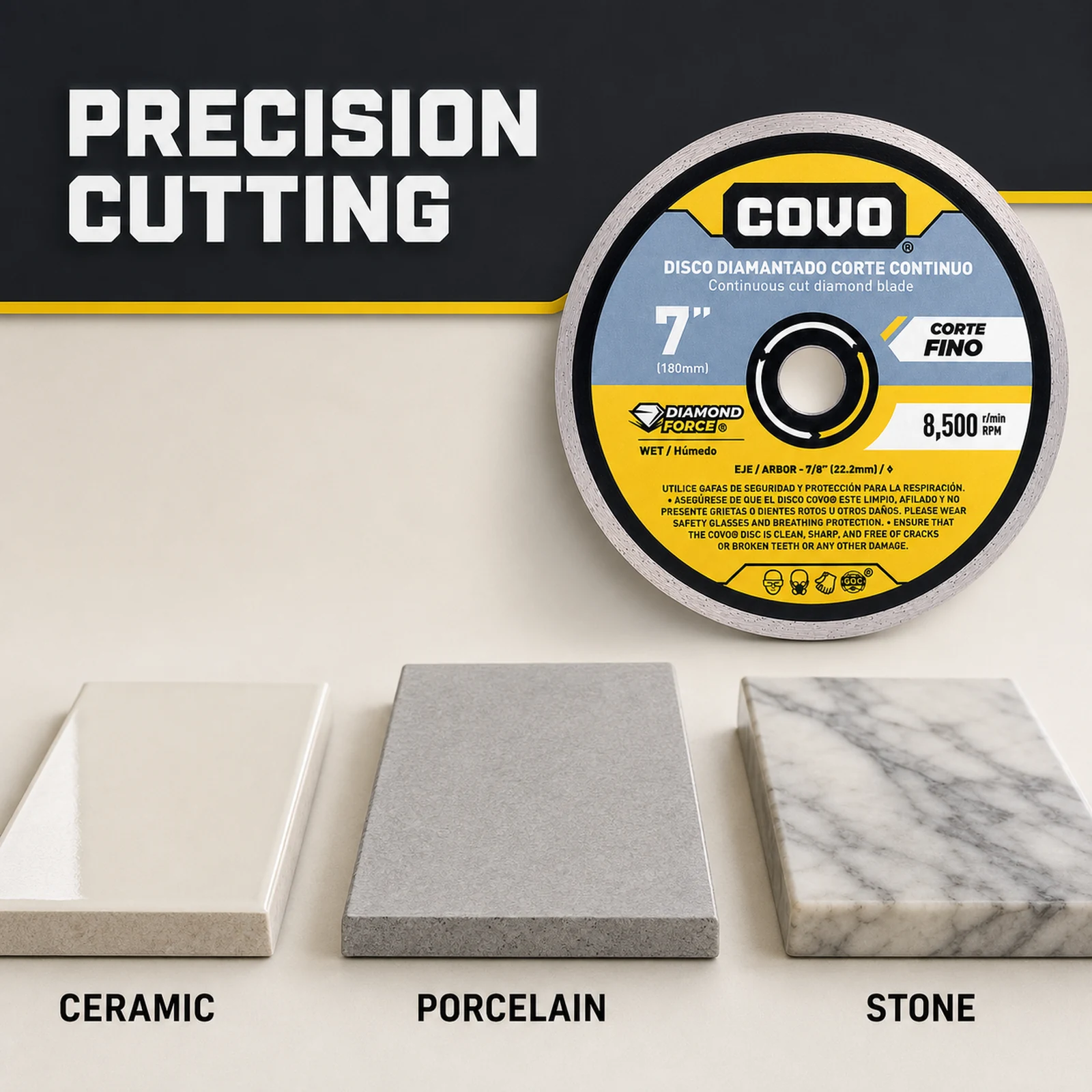
This 7‑inch continuous‑rim diamond blade is engineered for high‑precision, chipping‑free cutting of smooth concrete, trowelled concrete, precast concrete panels, fine stone, and ceramic tiles. It delivers exceptionally straight, smooth, and clean cut lines, making it ideal for decorative concrete work, municipal expansion joints, pipe trenching, and high‑end stone finishing.
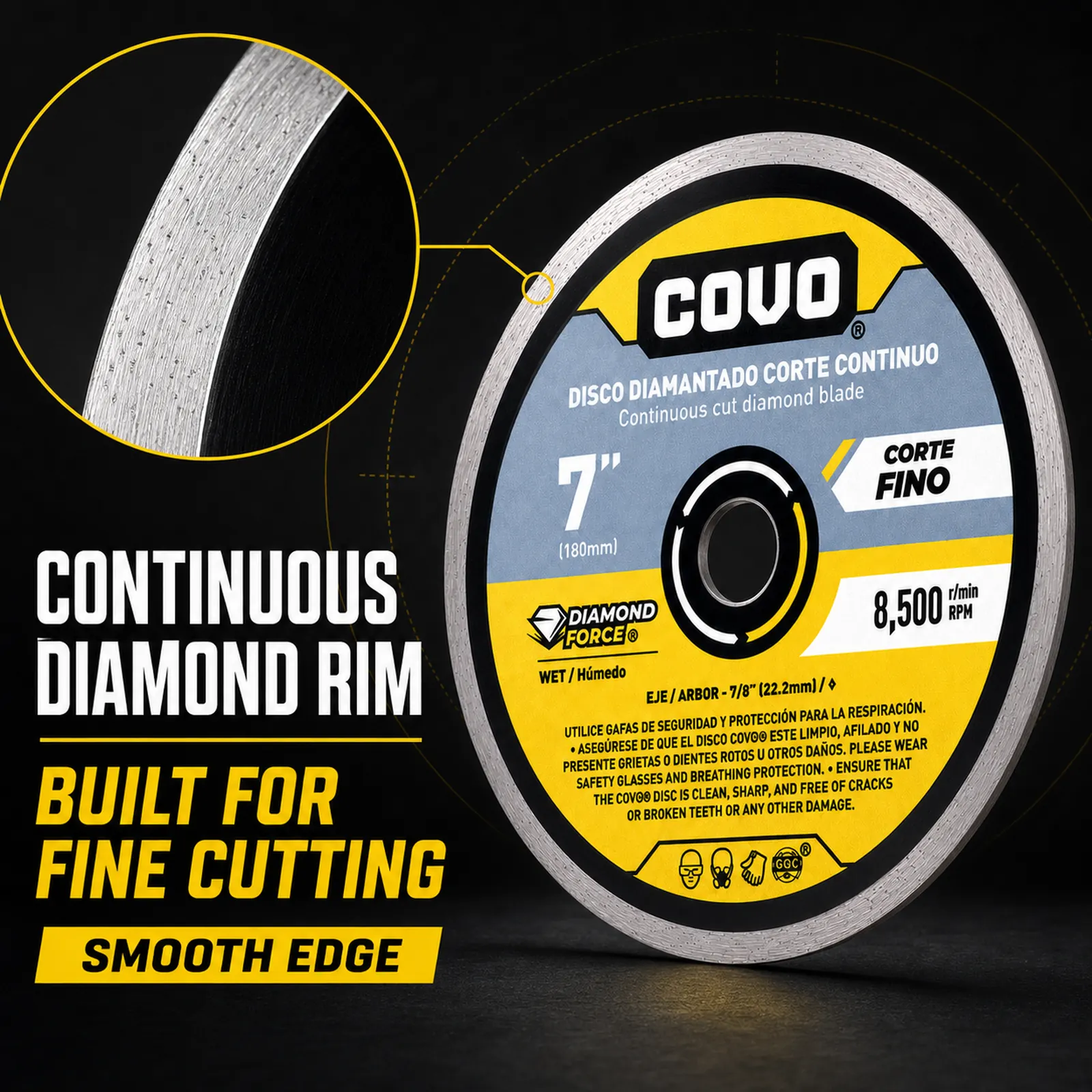
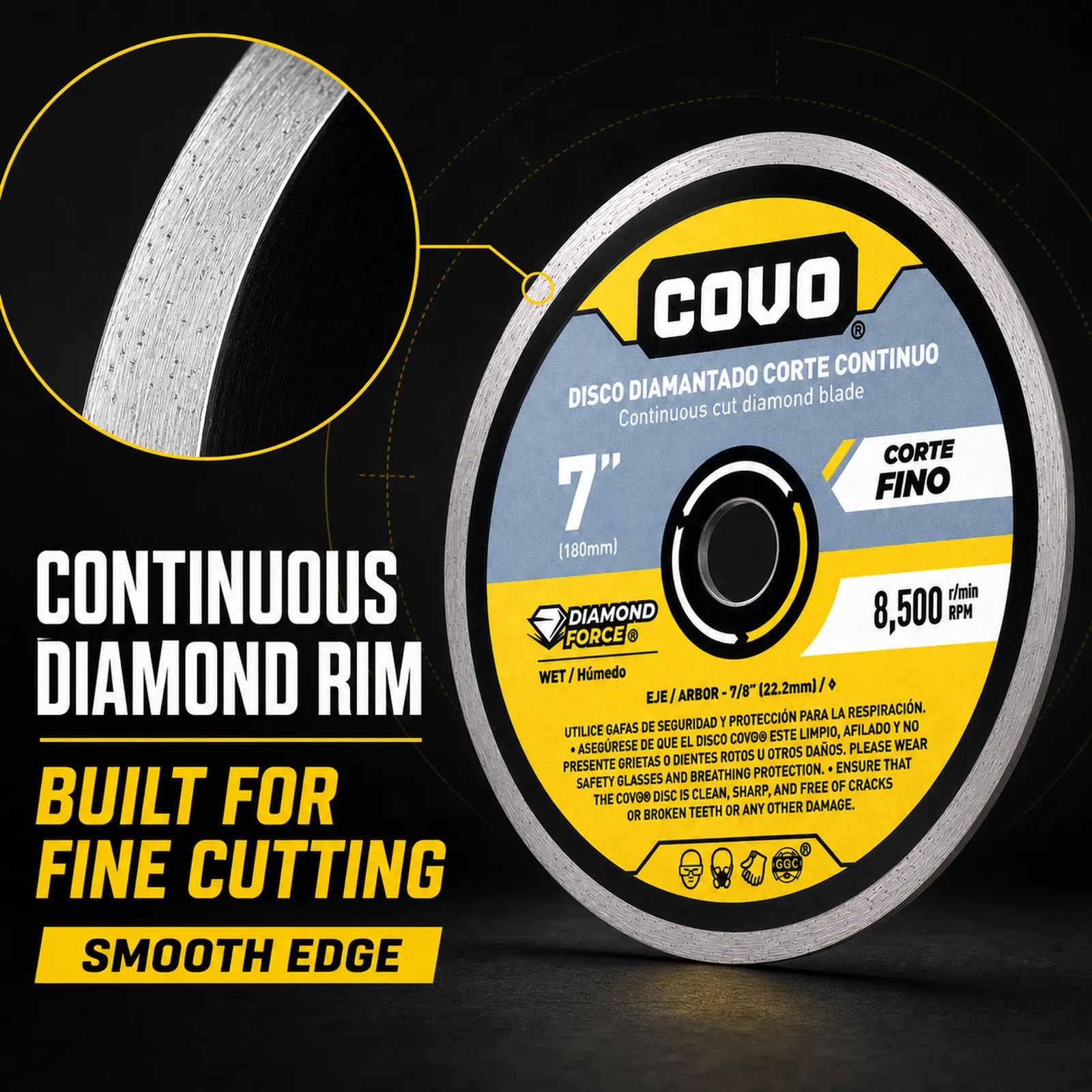
Unlike a regular 7" segmented blade (with gullets for fast rough cutting), the continuous rim features an uninterrupted ring of diamond segments with no gaps. This design minimises vibration and noise, and effectively prevents edge chipping, resulting in a ground‑like polished finish. The trade‑off is a slower cutting speed, and it is absolutely unsuitable for rebar‑embedded concrete or rough demolition waste, which would quickly destroy the diamond segments.
Moreover, the 7" diameter offers a single‑pass cutting depth of approximately 50–60mm, which is a clear advantage in municipal projects and precast processing that require deeper cuts compared to 4½" blades.