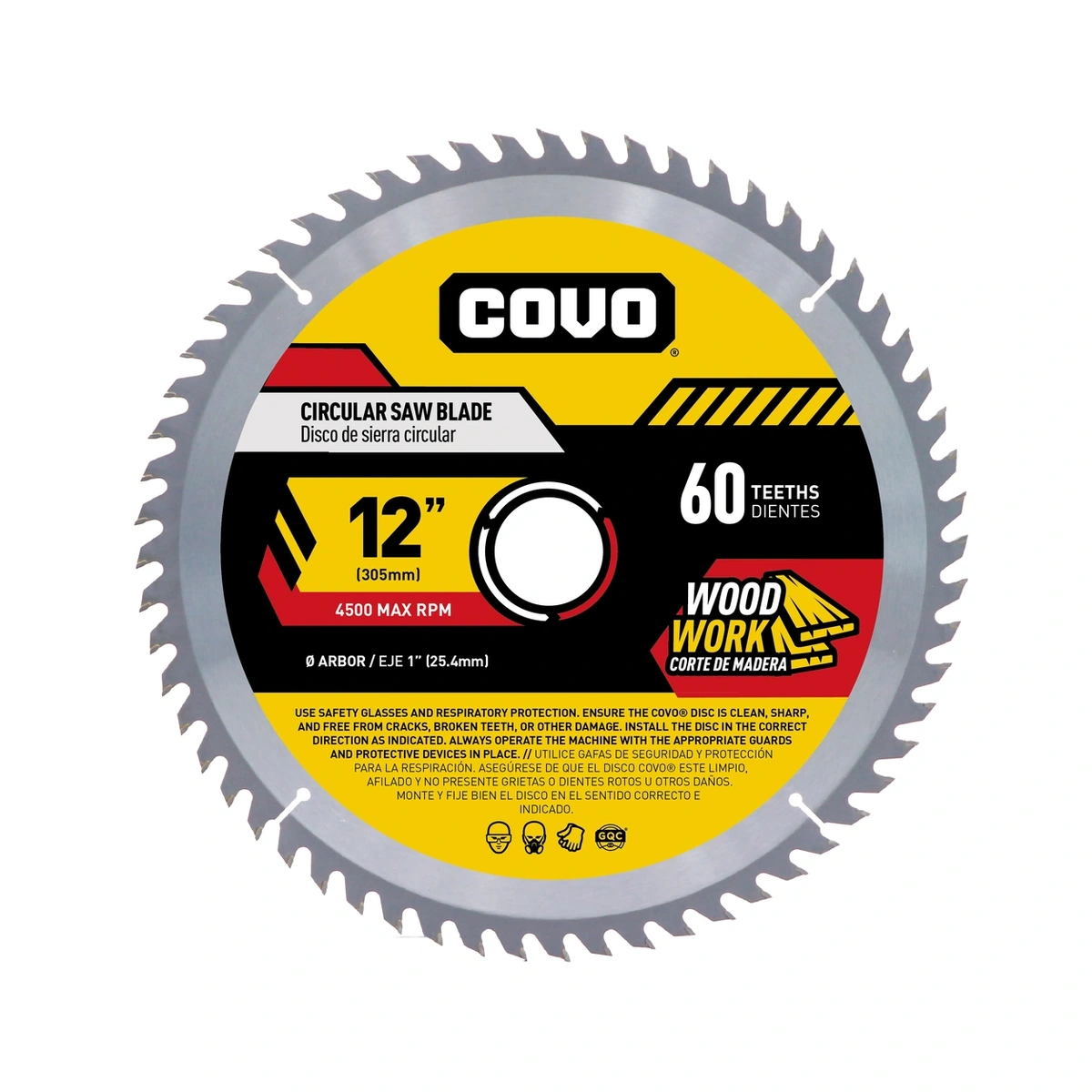
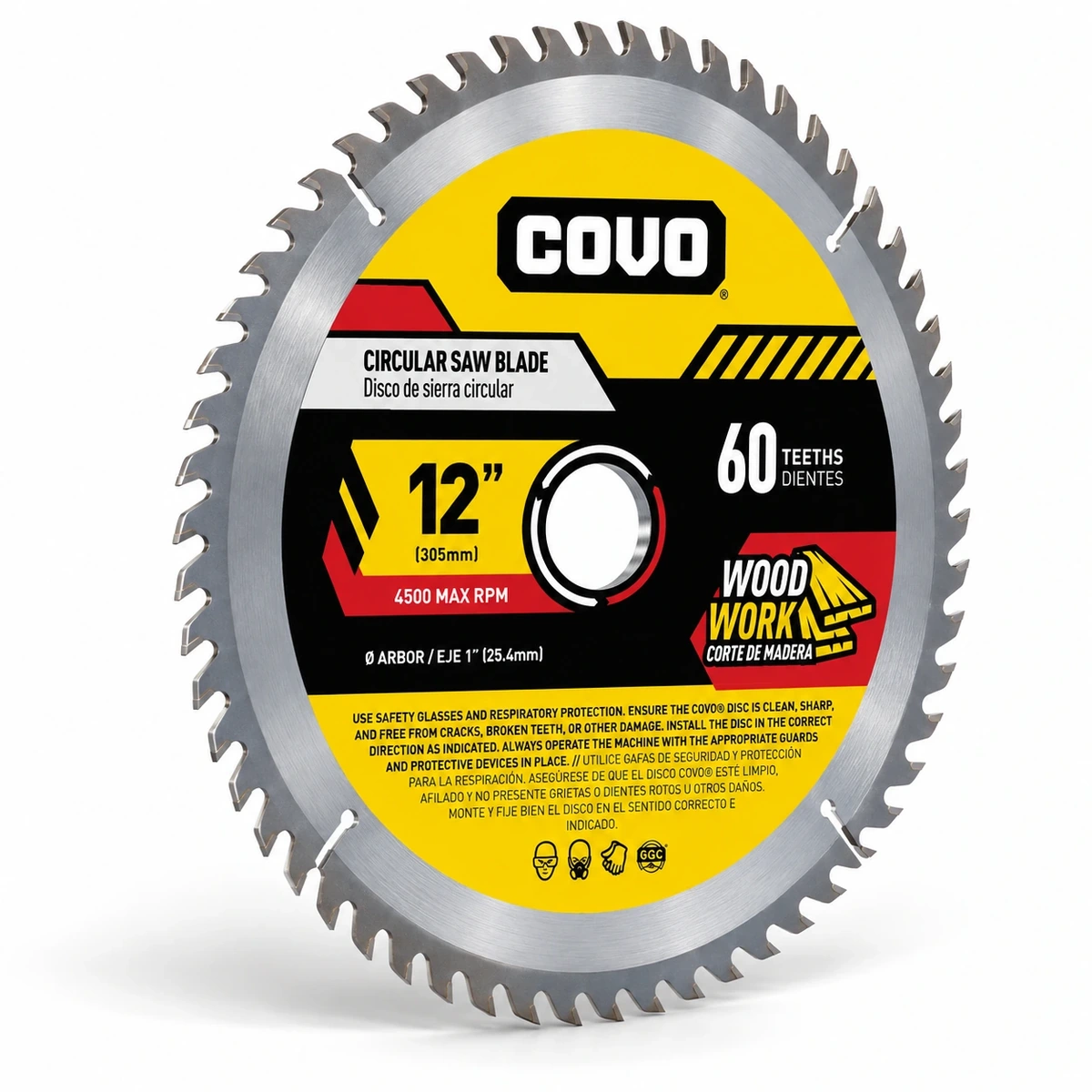
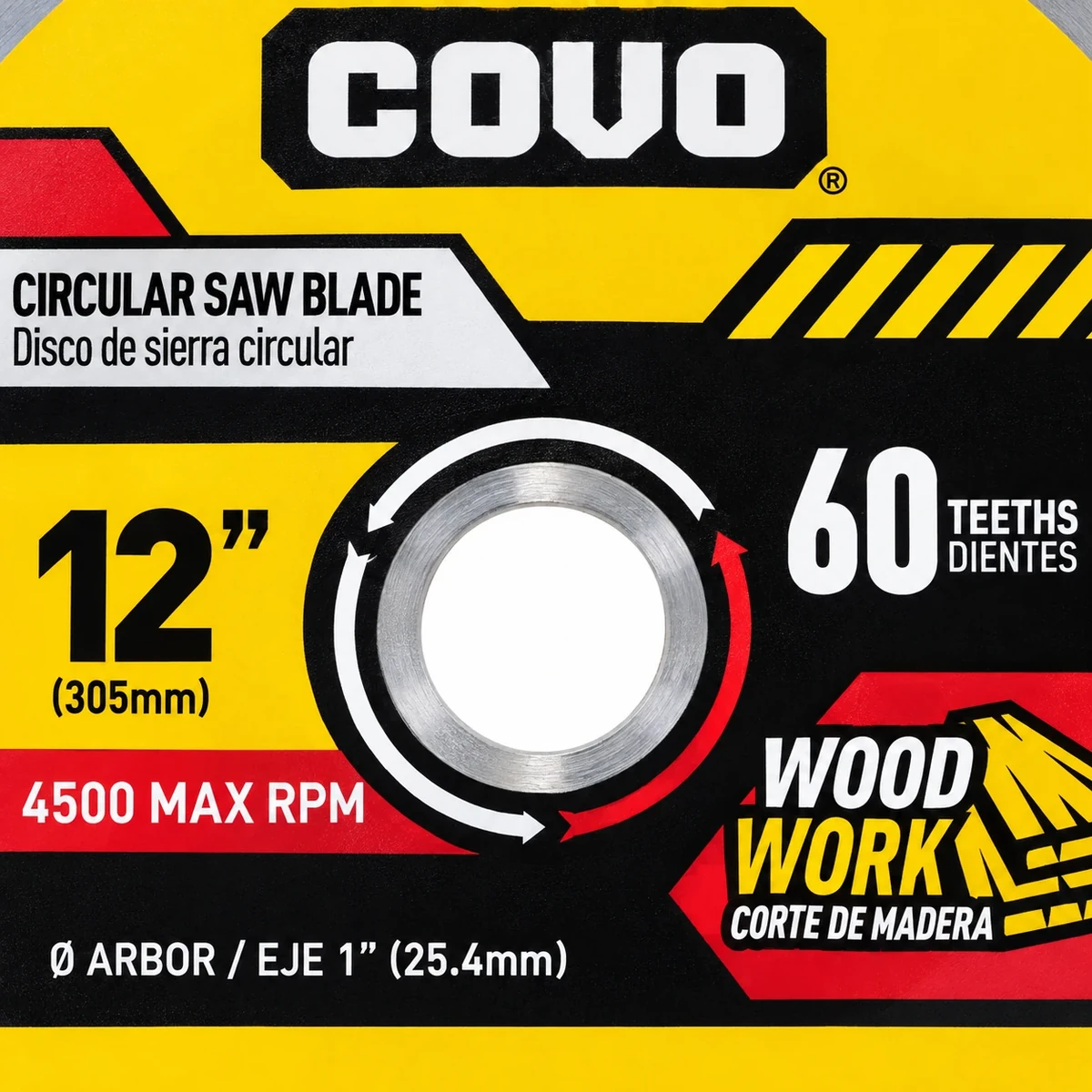
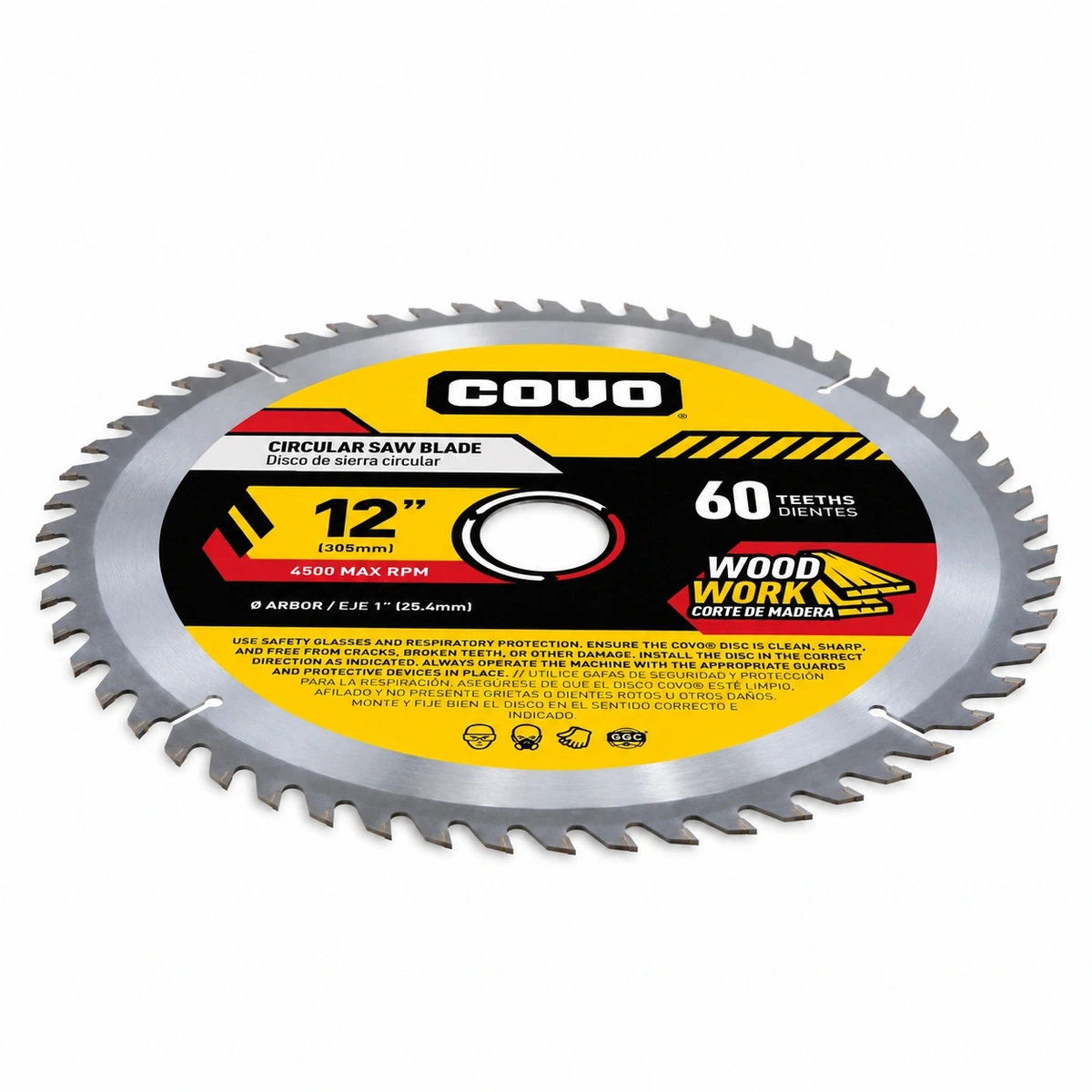
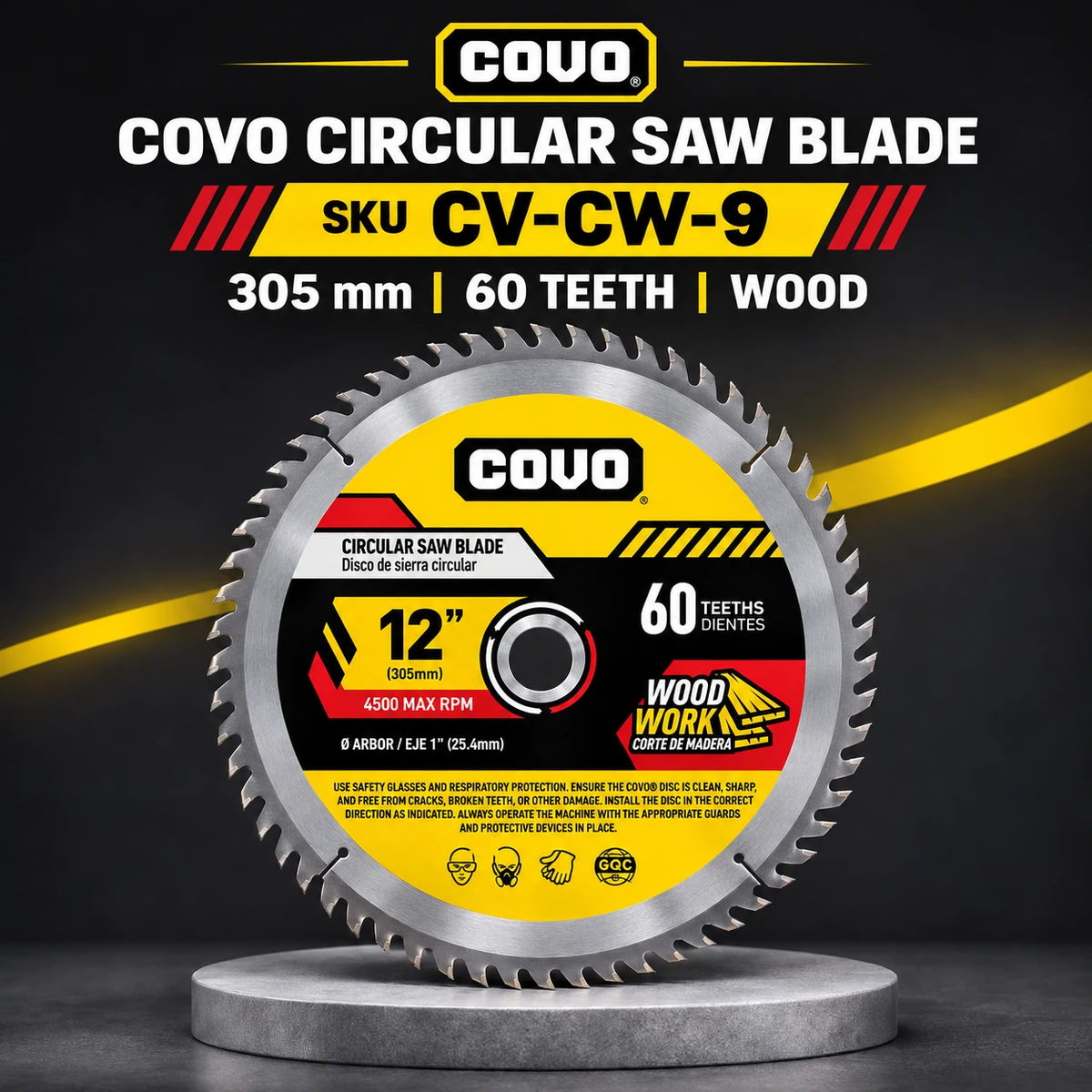
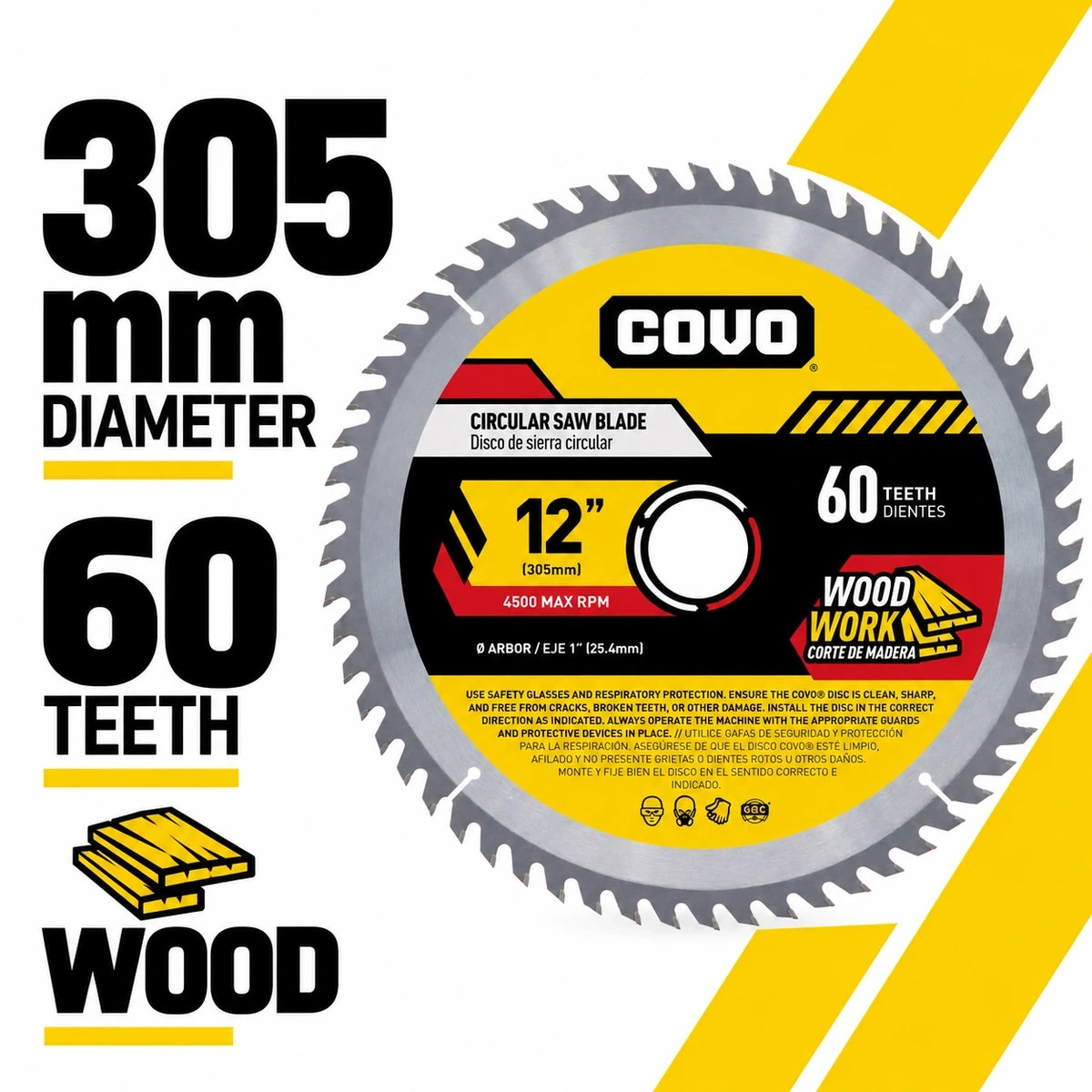
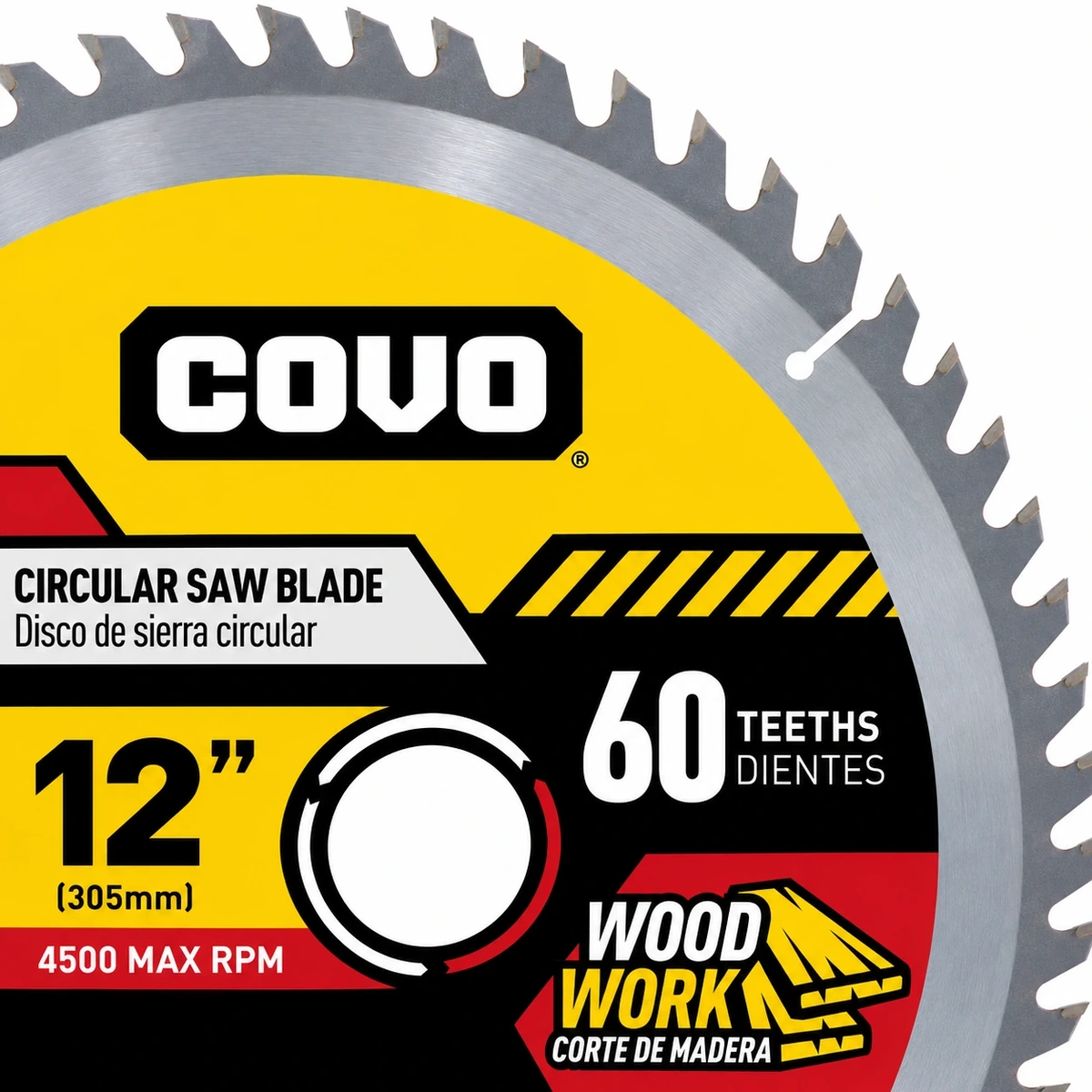
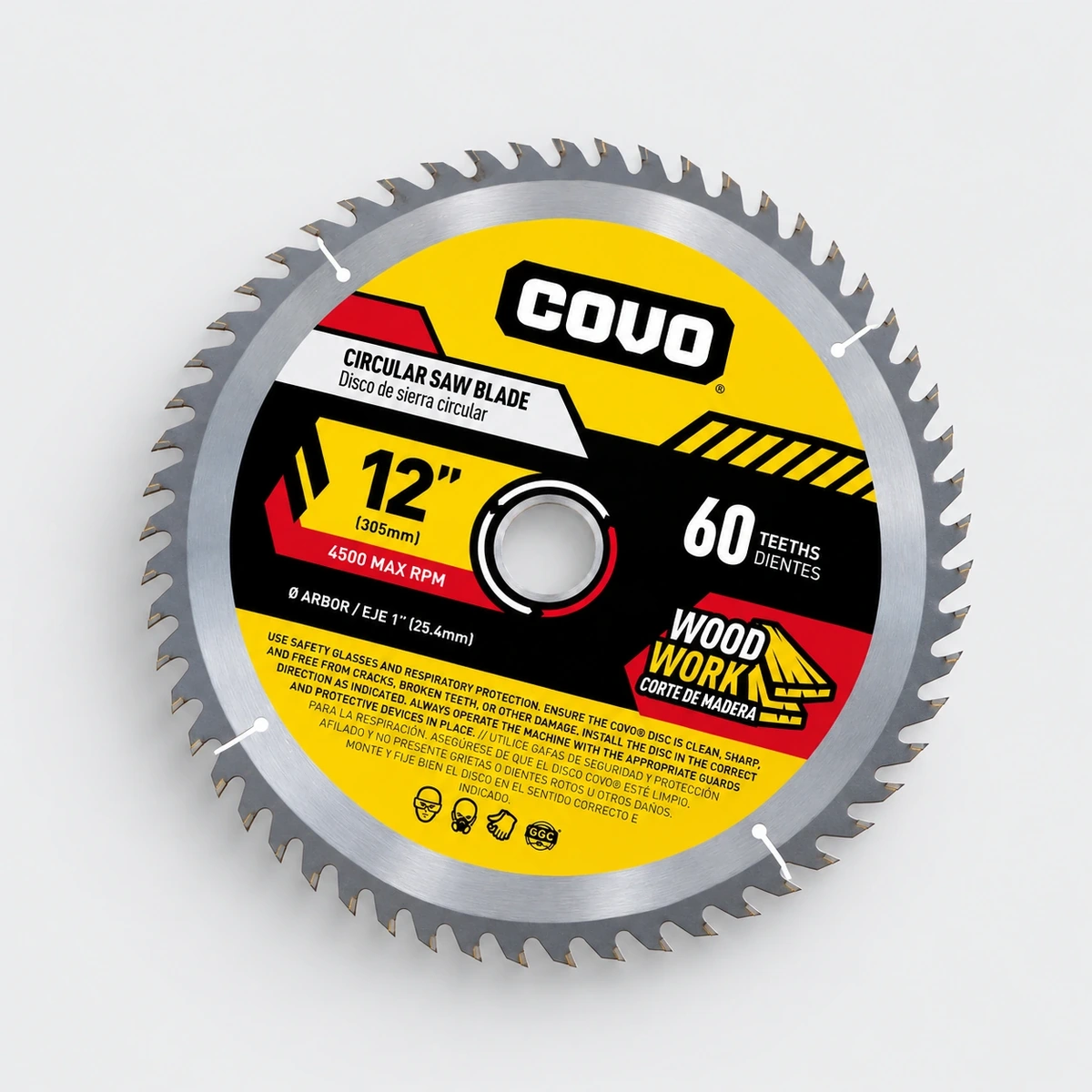
Product Specifications
Specification | Details |
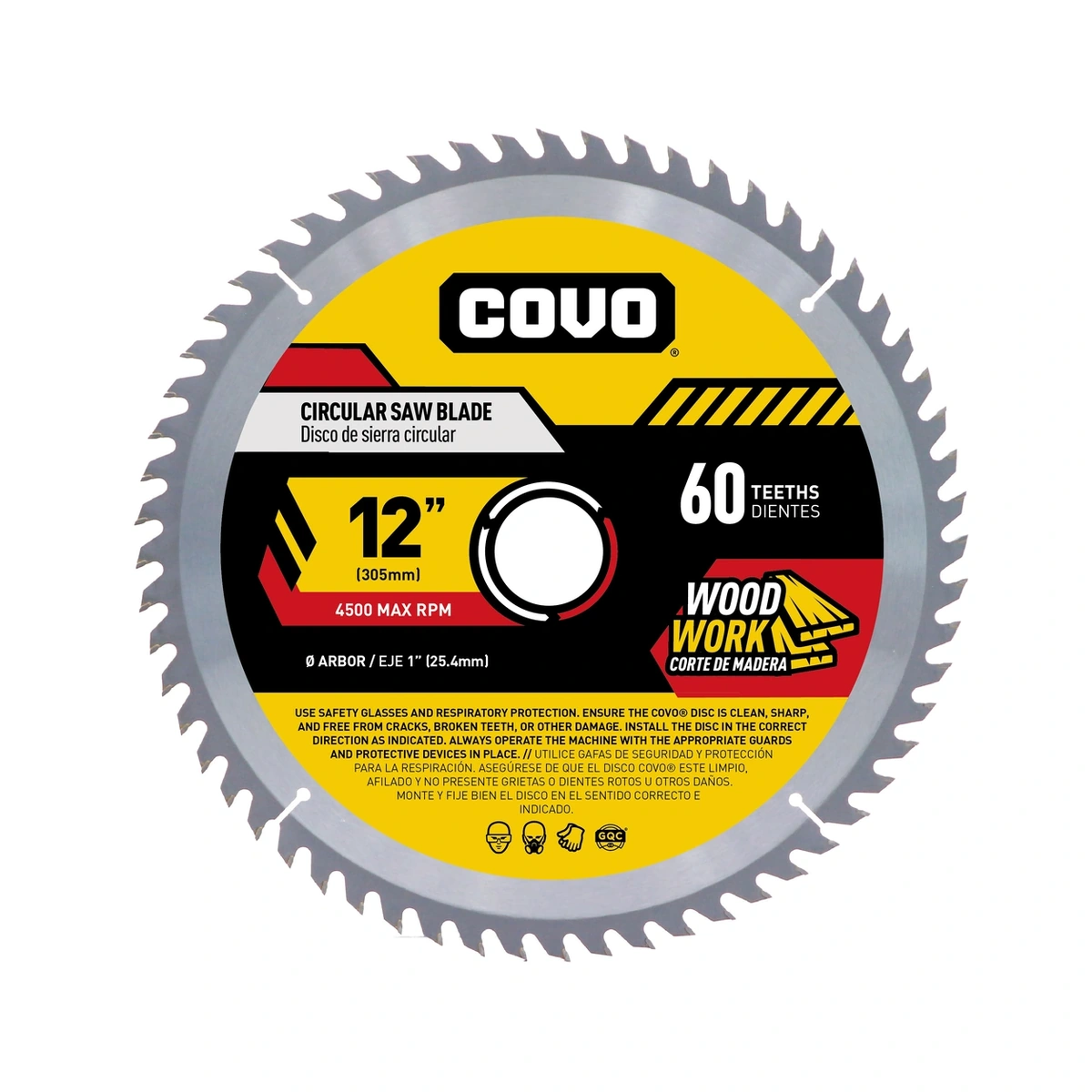
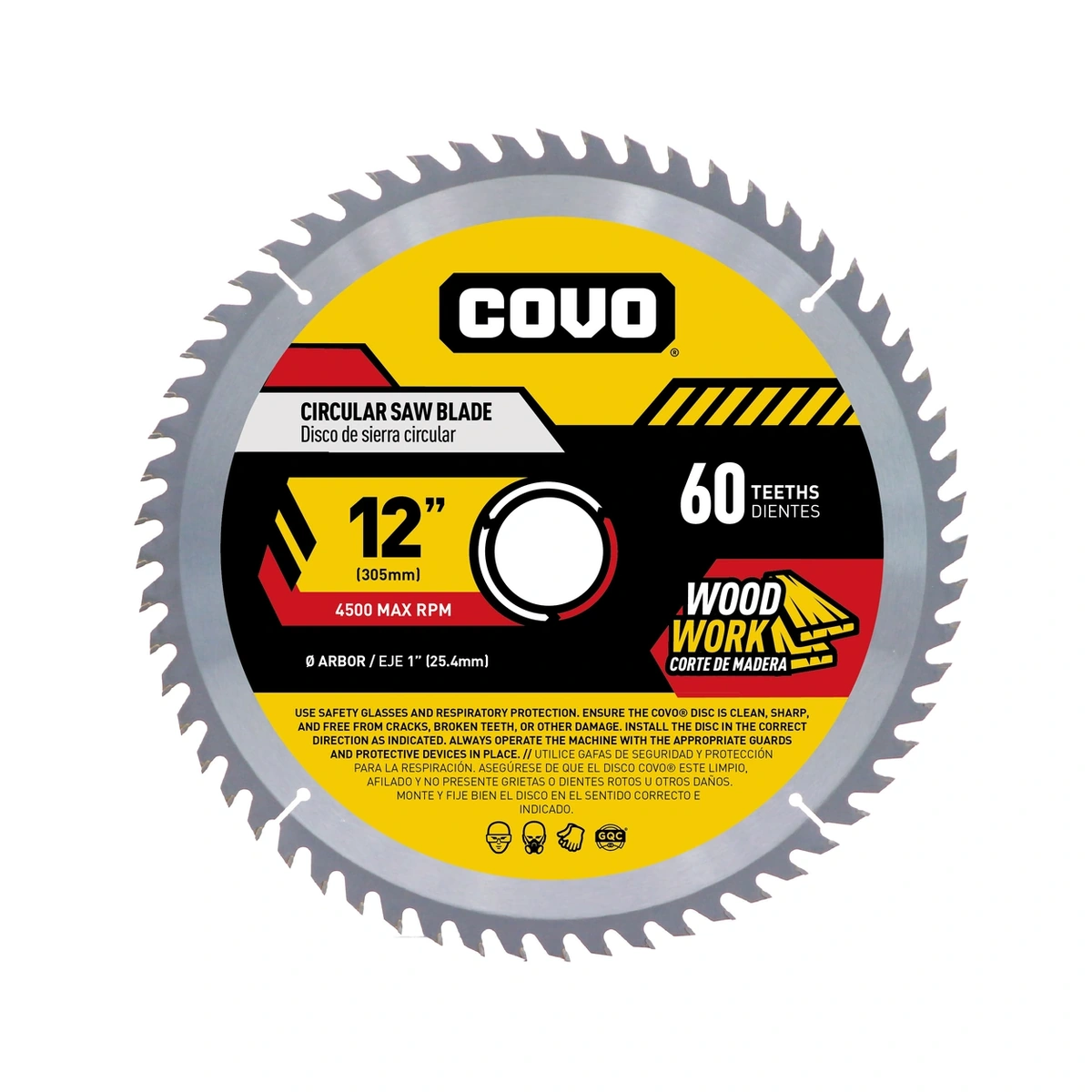
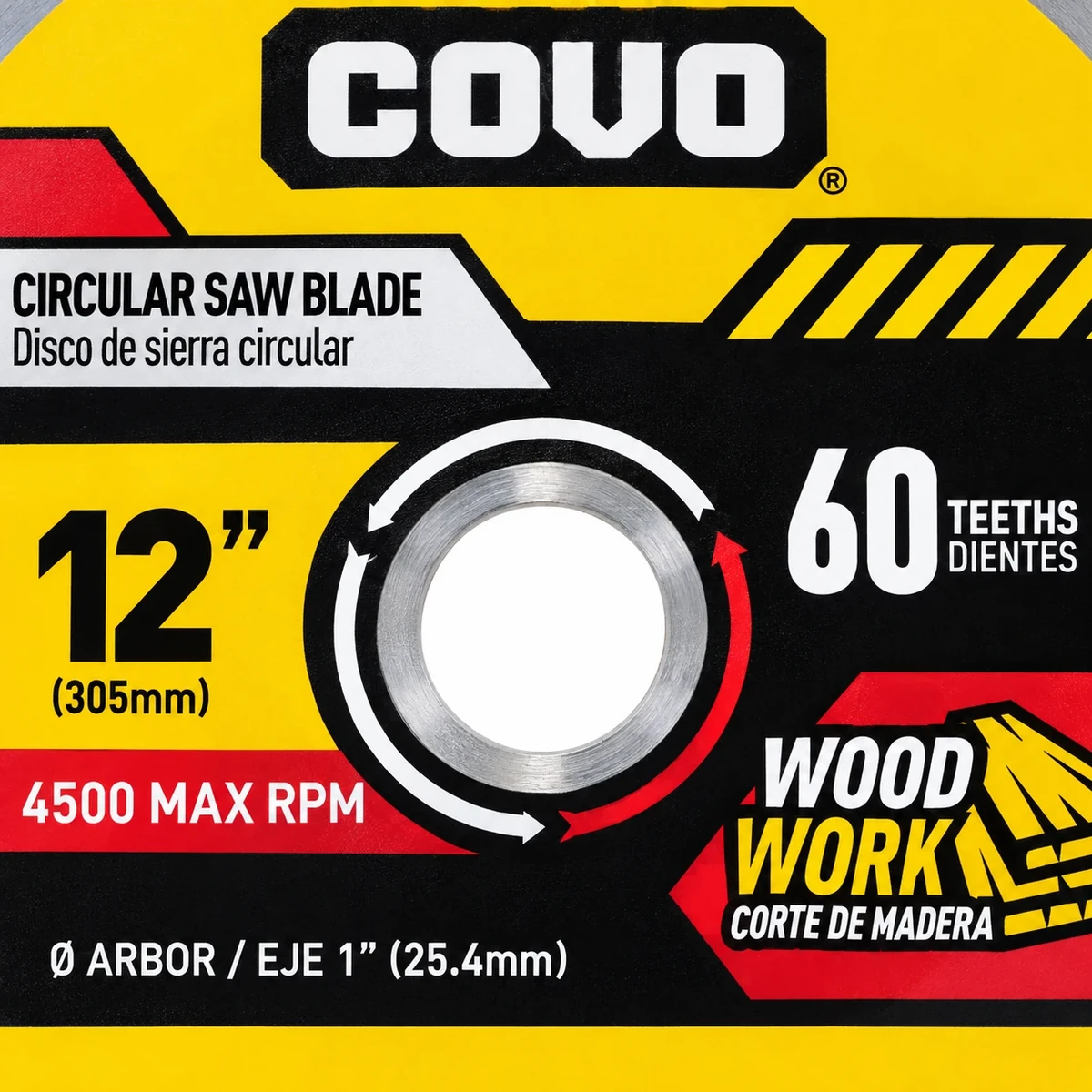
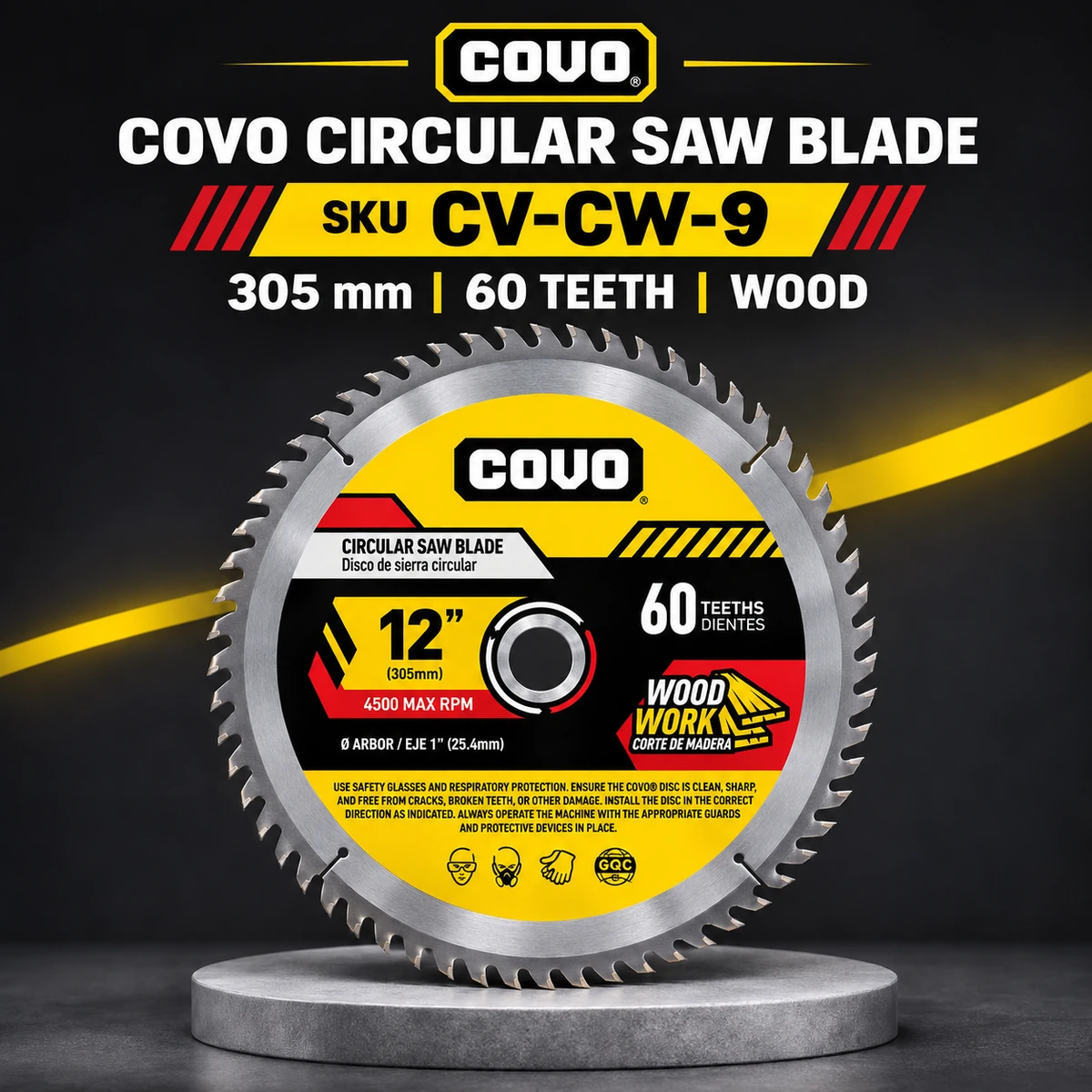
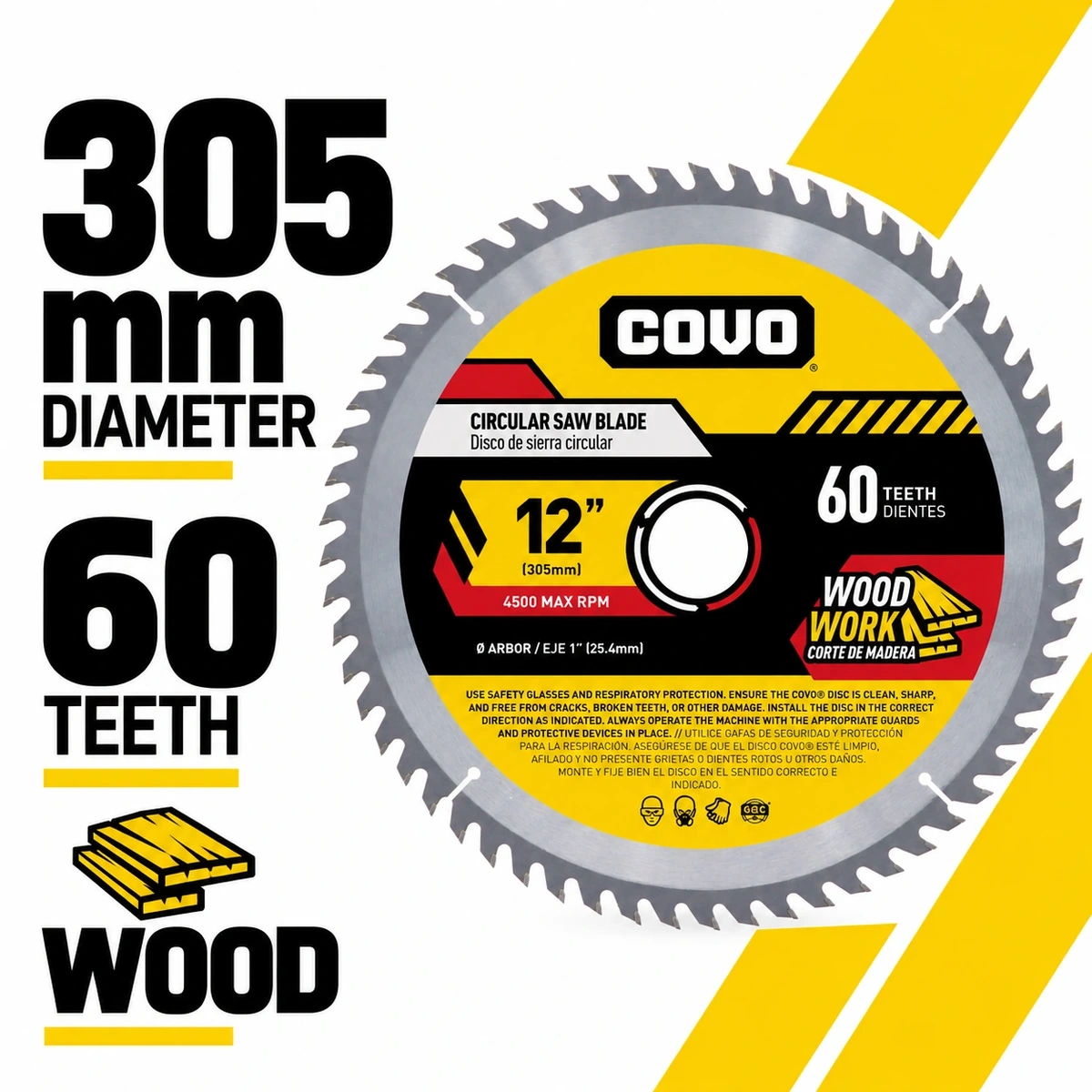
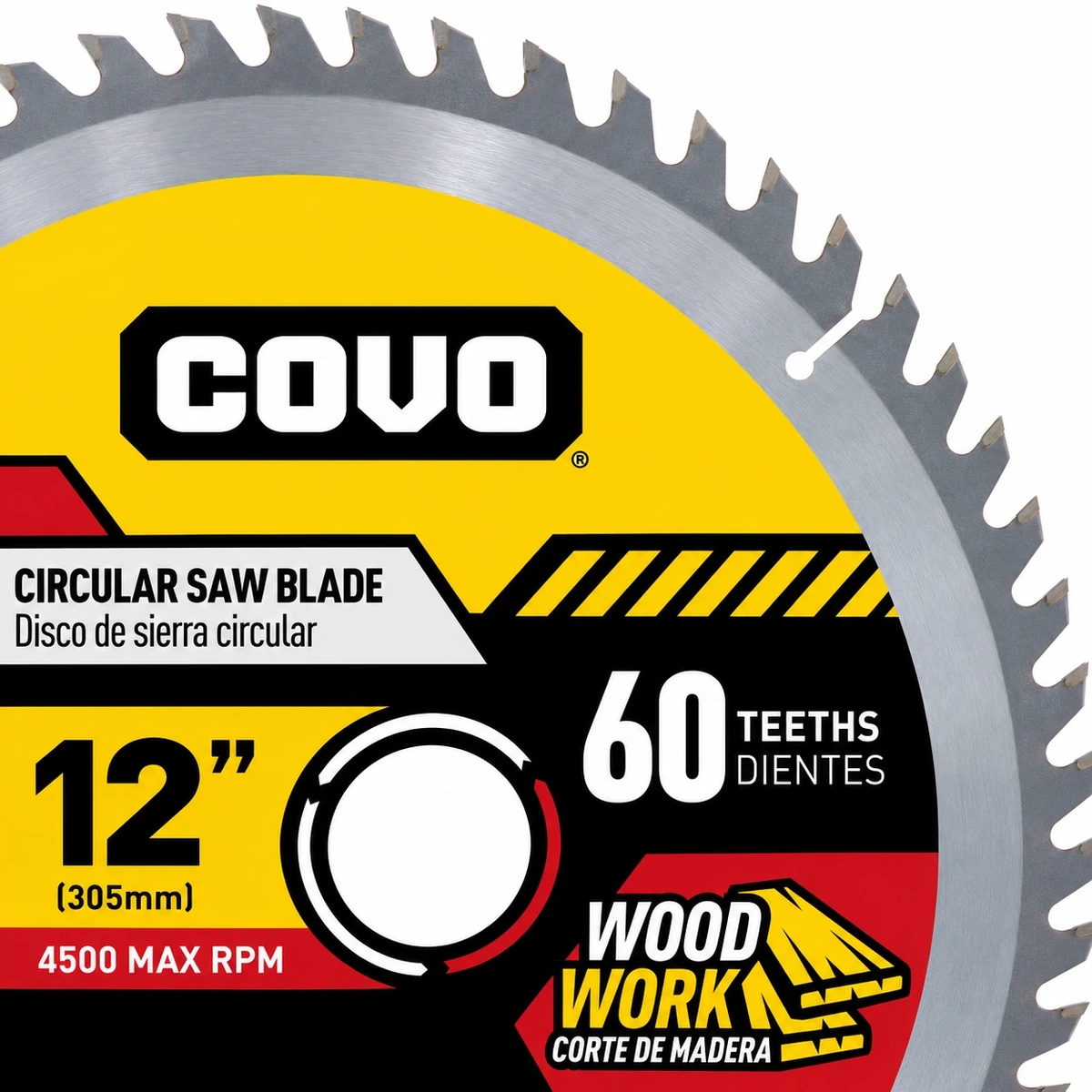
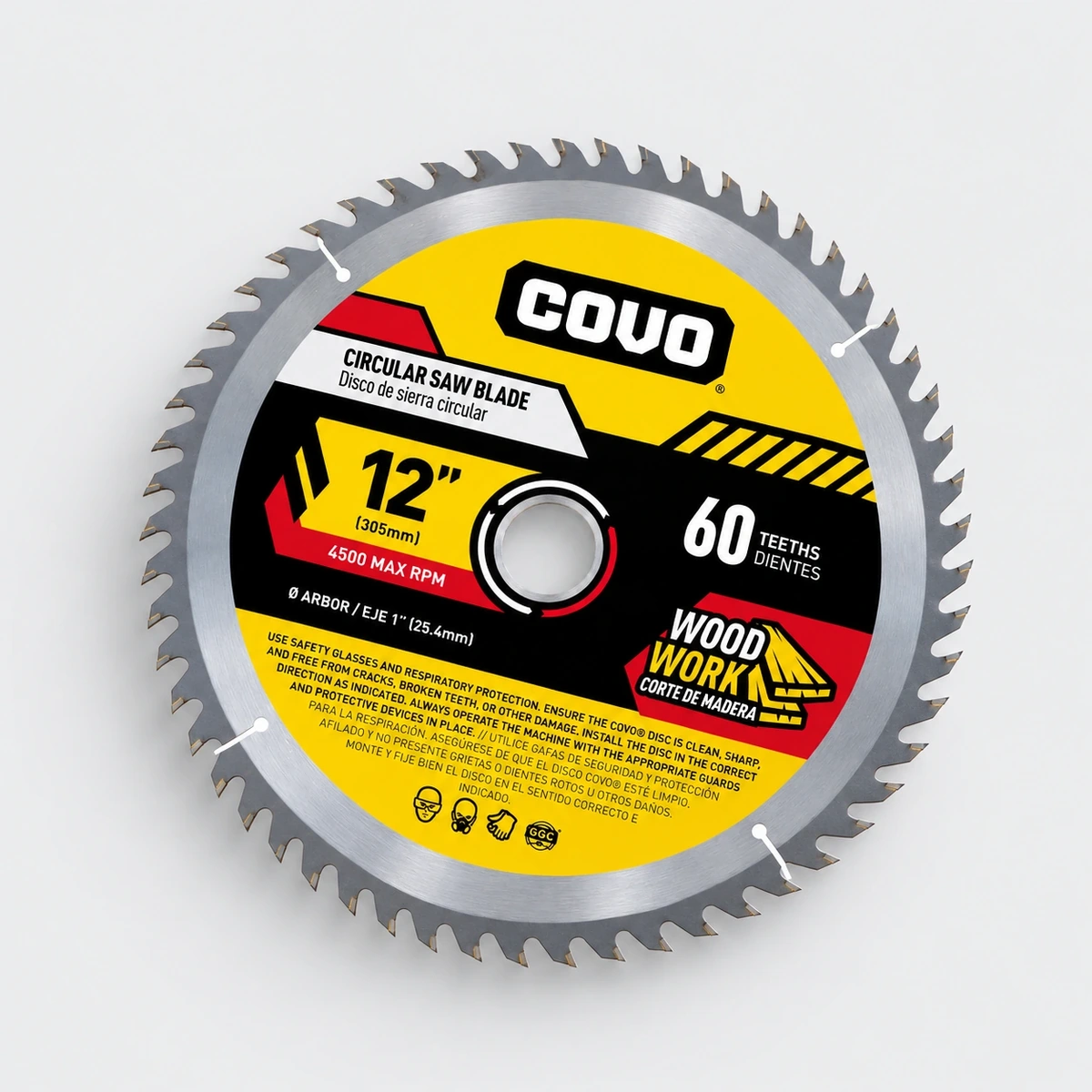
Blade Diameter | 305mm / 12″ |
Number of Teeth | 60T |
Arbor Size | 60T |
Kerf Width | 60T |
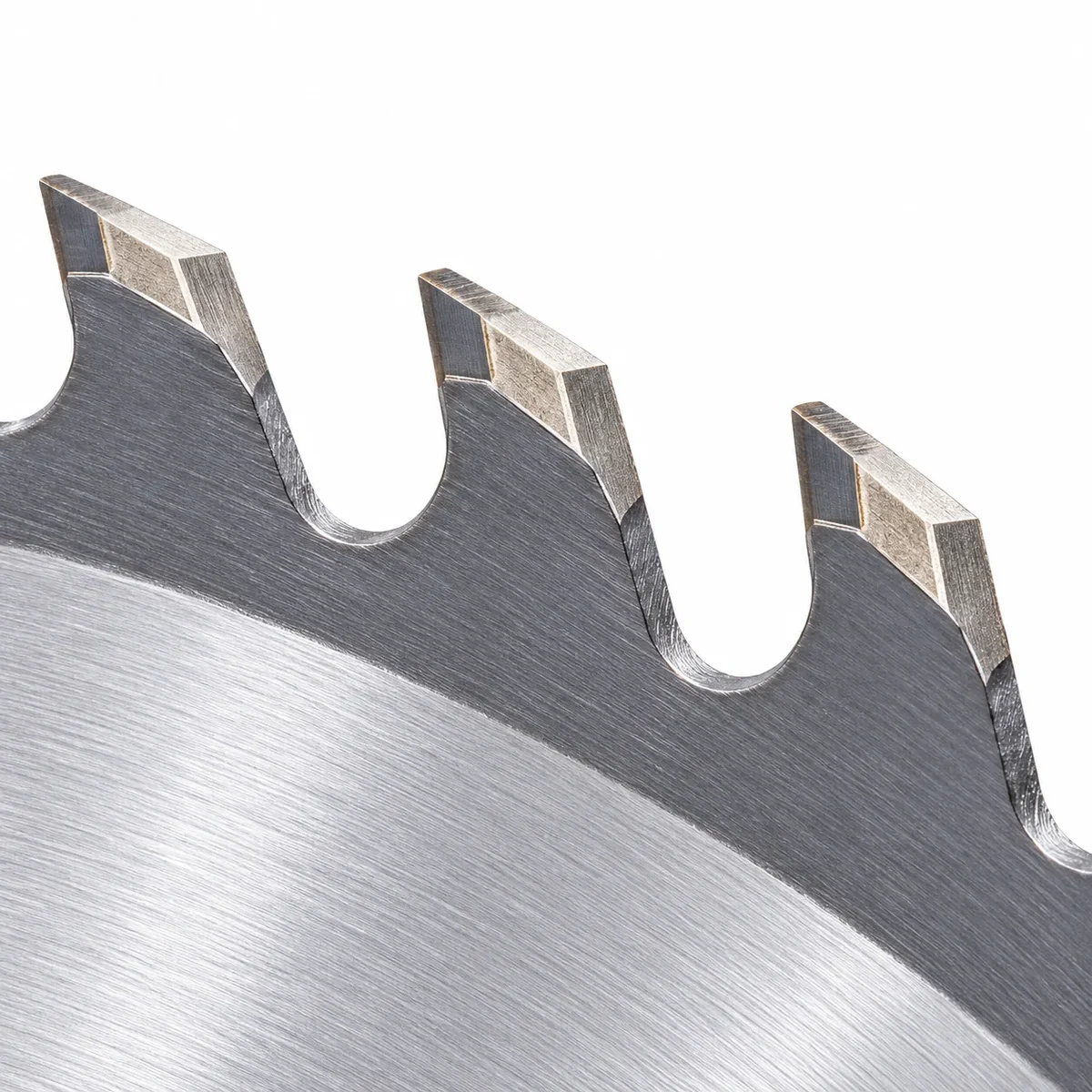
Tooth Material | TCT |
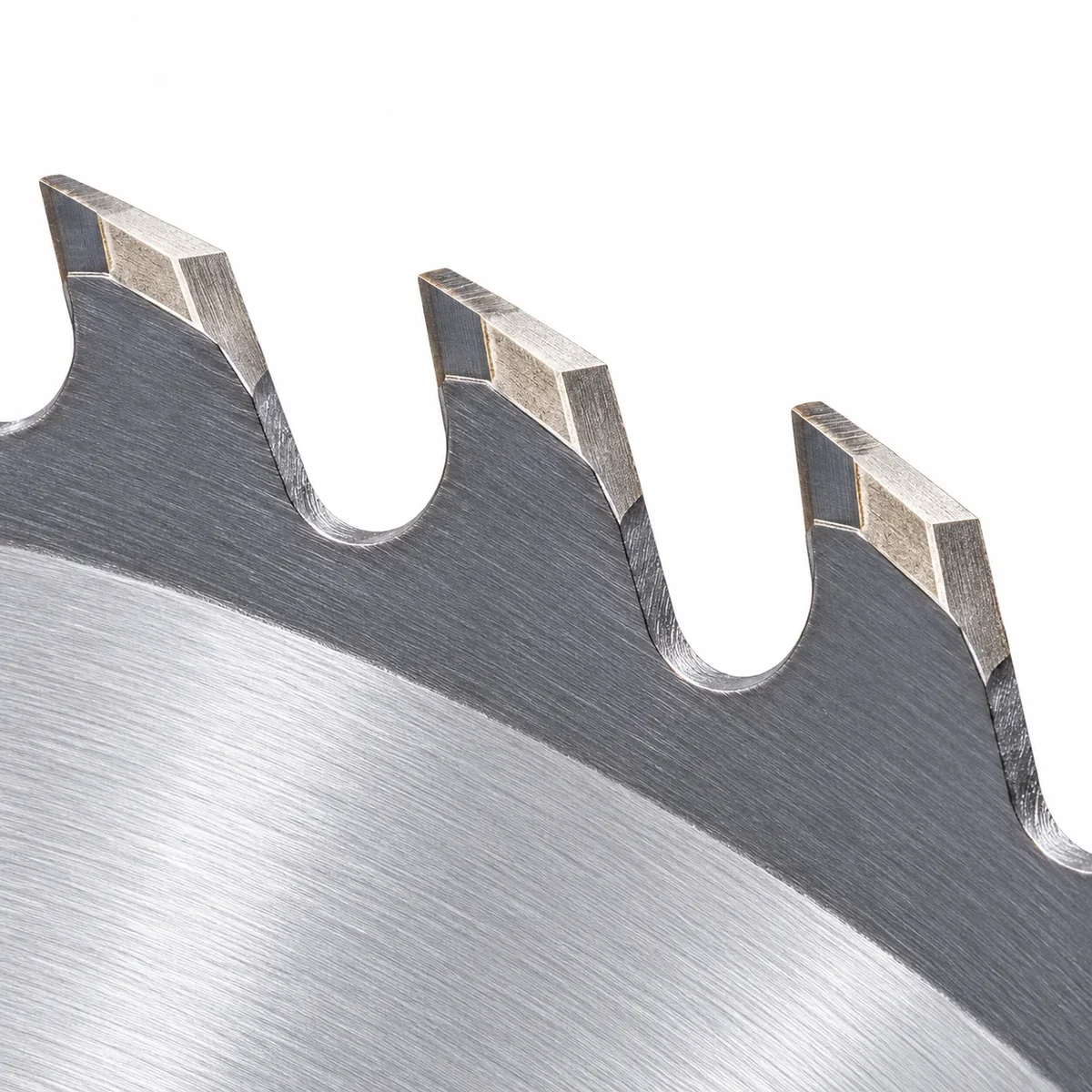
Tooth Geometry | ATB |
Max. Safe Speed | 5000 rpm |
Reduction Ring | 20mm / 3/4″ |
Cutting Result | Fine Cut |
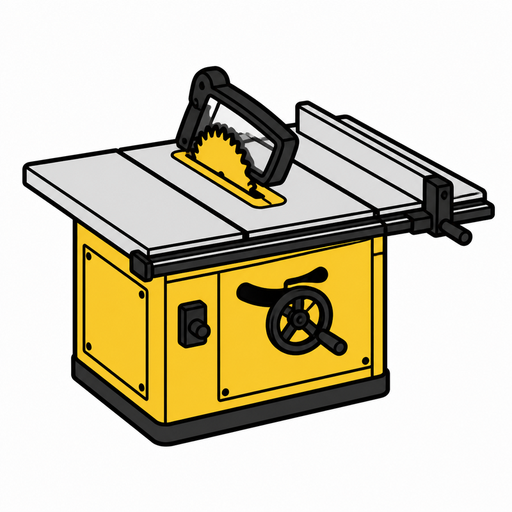
Compatible Machines

Application


Safety Instructions

Eye protection
Please wear safety glasses

Hand Protection
Please wear protective gloves

Proper Disposal
Dispose of damaged or worn blades safely

Respiratory Protection
Please wear face respiratory mask
Frequently Asked Questions
The 60-tooth blade has smaller, denser teeth, and the 12" large diameter has greater inertia – making proper maintenance and safe operation especially critical.
Longevity tips:
- Clean resin regularly: The smaller gullet spaces on a 60-tooth blade mean resin builds up more easily. Use a dedicated blade cleaner (or soak in an ammonia-based solution) regularly to remove residue from teeth and gullets.
- Avoid cutting wet or nail-embedded wood: Wet wood creates more resin; nails directly damage carbide tips.
- Set the correct cutting depth: Adjust the blade depth so it extends only about 3mm (1/8") beyond the wood thickness – reducing friction and heat extends blade life.
- Let the blade do the work: Do not force the workpiece – let the blade cut at its own pace. The 60-tooth blade has higher resistance, and excessive pressure causes overheating and accelerated wear.
- Professional sharpening: When cutting speed drops or finish becomes rough, send the blade to a professional sharpening service. 60-tooth blades require high precision – CNC grinding is recommended to maintain consistent tooth geometry and sharpness.
- Use the right blade for the right material: This blade is for wood only – never use it on metal, plastic, concrete, or other materials.
Large-diameter safety precautions (critical):
- Inspect the blade: Check for cracks, warping, bending, or missing teeth before each use. Damage to a 12" blade is extremely serious – never use a damaged blade!
- Install correctly: Ensure the blade is concentric with the arbor, flanges are at least 1/3 of the blade diameter (approx. 100mm) and not deformed, and the locking nut is tightened securely. Confirm the rotation arrow matches the spindle direction.
- Check max RPM: Confirm the machine speed does not exceed the maximum RPM marked on the blade (typically 4,000–5,000 RPM for 12" blades). Over-speeding is extremely hazardous!
- Use riving knife and anti-kickback devices: A riving knife and anti-kickback pawls are mandatory on table saws to prevent severe kickback from workpiece binding.
- Wear full PPE: Safety goggles, ear protection, dust mask, and gloves are standard. Large blades are louder – ear protection is especially important.
- Keep the work area clean: Ensure no debris is around the blade to prevent foreign objects from being drawn into the cut.
This 60-tooth blade is inherently optimised for minimal chipping, but to achieve consistent, reliable chip-free results in batch production, we recommend the following professional approaches:
Single-blade setup (basic):
- Use a zero-clearance insert: Install one on your table saw to provide maximum support to the panel edges, eliminating tear-out.
- Cut with veneer side down: For single-faced panels, position the veneer side facing down – chipping occurs on the hidden underside.
- Control feed speed: Reduce feed speed when cutting veneered panels – avoid forcing the material.
- Keep the blade sharp: Dullness dramatically increases chipping risk on 60-tooth blades – maintain a regular sharpening schedule.
Professional setup (recommended for batch production):
- Scoring blade + main blade combination: This is the industry standard in high-end cabinet shops and panel processing centres. A small-diameter scoring blade (typically 2-tooth or 4-tooth) is installed ahead of the main blade, pre-cutting a shallow groove on the underside to sever the veneer fibres, then the main blade (this product) completes the full cut. This setup delivers zero-chipping cutting – the most reliable method for high-quality batch production of veneered panels.
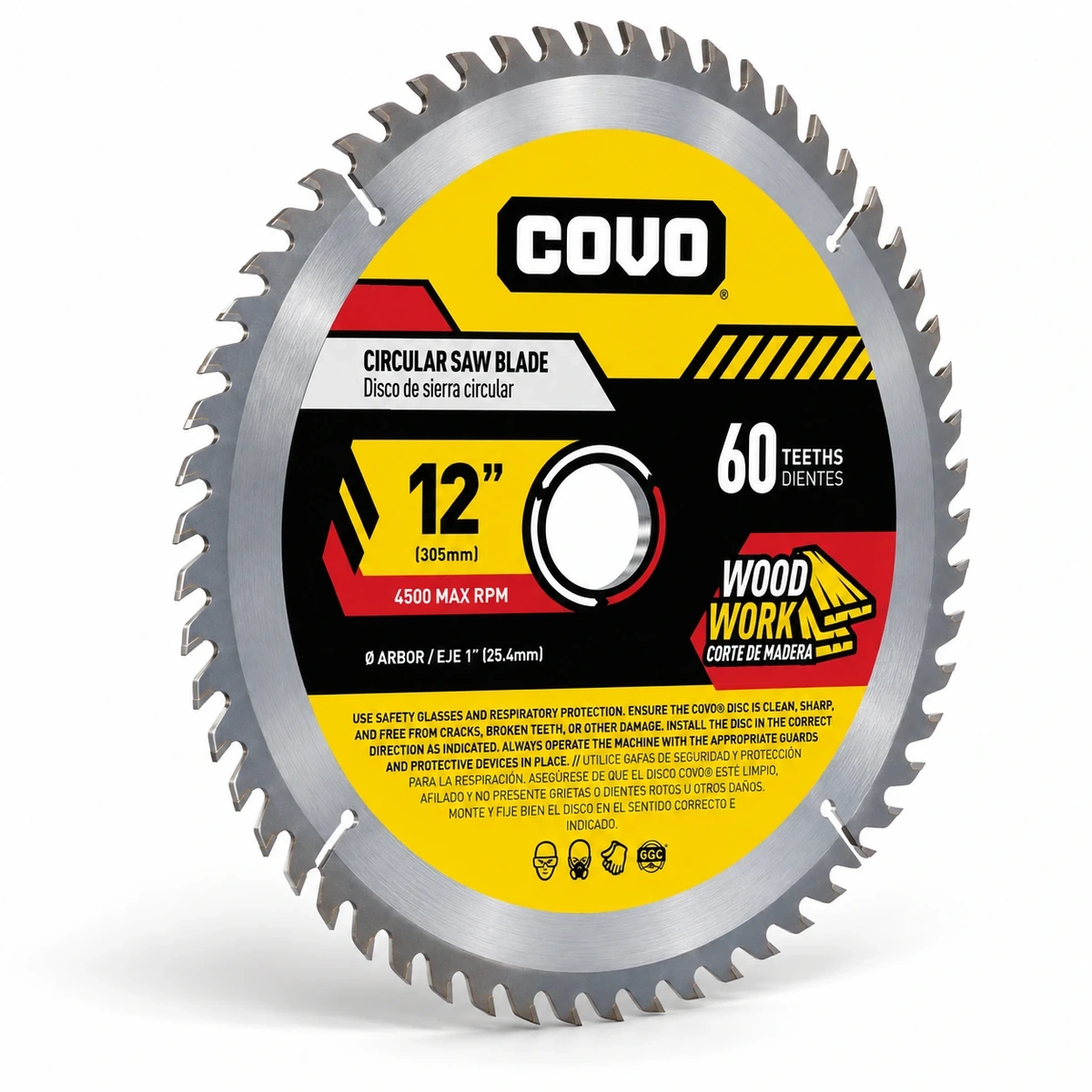
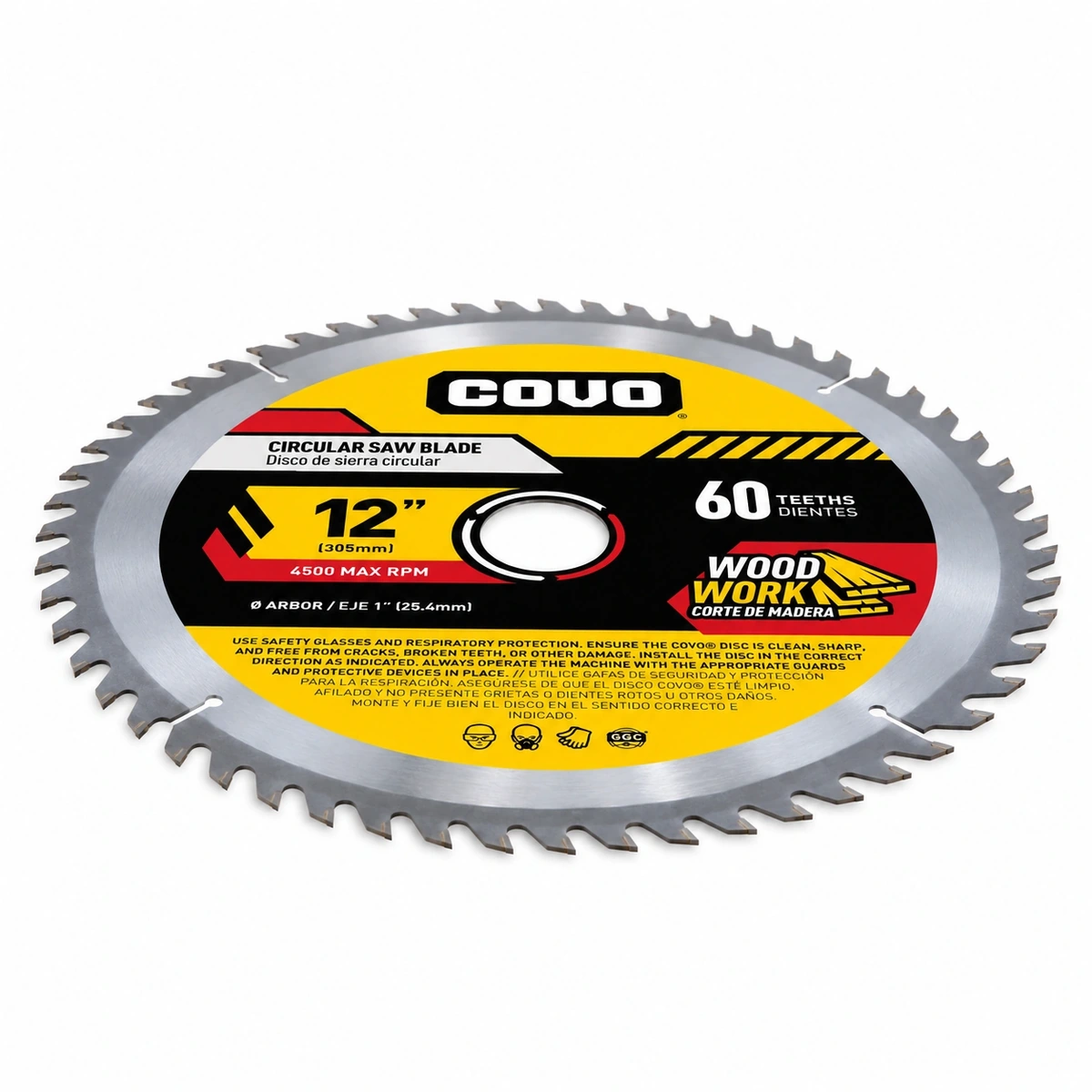
This 12" (305mm) 60-tooth carbide-tipped circular saw blade is designed for high-precision, ultra-smooth finish cutting of wood. It performs best on plywood, MDF (medium-density fiberboard), veneered panels, laminates, solid furniture stock, and fine joinery. It is the top choice for cabinet making, furniture production, panel processing, interior finishing, and display case fabrication.
60 teeth vs. 24 teeth and 40 teeth:
| Comparison | 24 Teeth (Rough) | 40 Teeth (General) | 60 Teeth (This Blade) |
|---|---|---|---|
| Cutting Speed | Fastest | Medium | Slower |
| Finish Smoothness | Rough | Smooth | Very Smooth |
| Best Use | Ripping, framing | Cross-cutting, general | Fine cross-cutting, veneer, MDF |
| Chipping Risk | High | Medium | Low |
| Chip Evacuation | Strong | Medium | Smaller |
Unique advantages of the 12" (305mm) large size:
- Greater cutting depth: Provides approximately 100mm single-pass cutting depth – ideal for batch processing of thick panels.
- Higher tip speed: Larger diameter delivers higher peripheral speed at the same RPM, achieving an even finer finish with 60 teeth.
- Professional equipment compatibility: Designed for table saws, sliding table saws, and panel saws – not for hand-held circular saws.
- More stable cutting: Larger blades run smoother with less vibration on professional machines, delivering superior cut quality.